 language
 english


Reflow Process Soldering | A Complete Guide to SMT Reflow Soldering
Reflow process soldering is a key method used in surface mount technology (SMT) to attach electronic components to a printed circuit board (PCB). In this process, solder paste is first printed onto the PCB pads, and components are placed on top of the paste. The board then passes through a reflow oven where controlled heat melts the solder, forming strong electrical and mechanical connections between the components and the PCB.
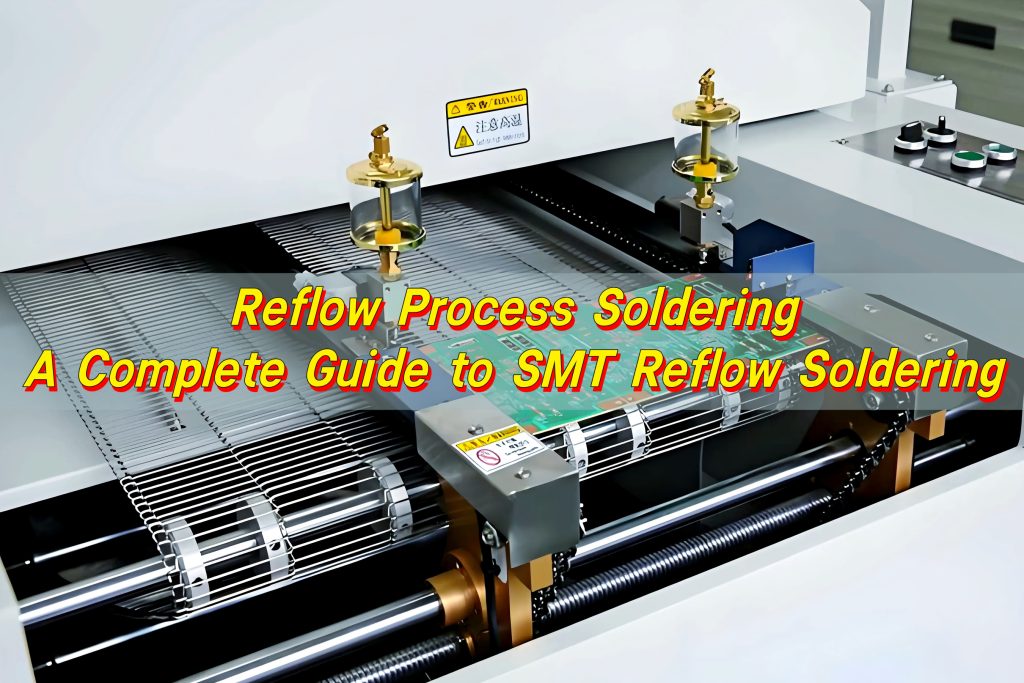
Companies like Best Technology Co., Ltd., with extensive experience in PCB manufacturing and SMT assembly, rely on optimized reflow techniques to achieve stable production quality. With advanced SMT facilities in China and Vietnam, the company supports global customers who require dependable PCB assembly and consistent solder joint performance.
What is the process of reflow soldering?
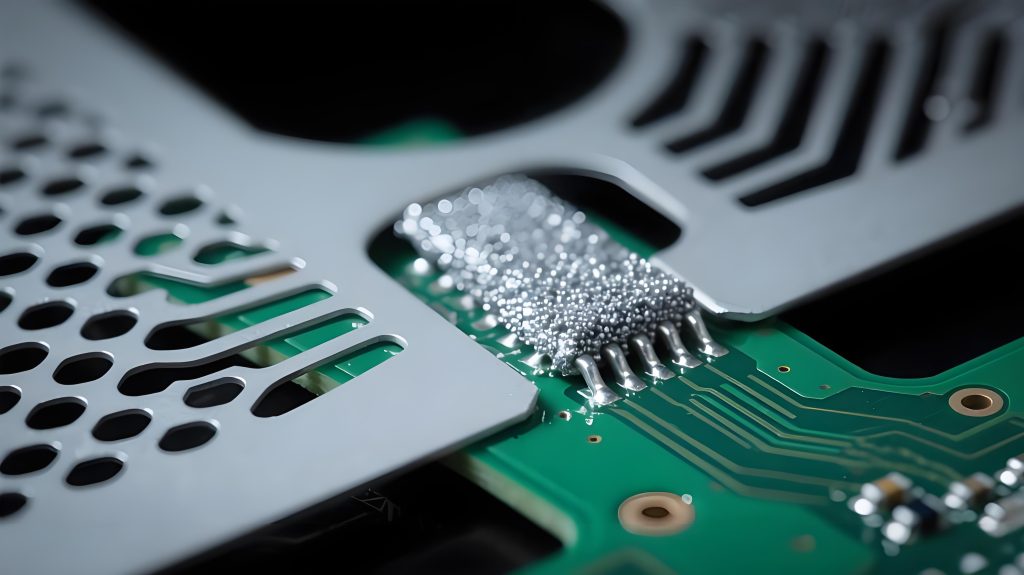
The reflow soldering process is a controlled heating method used to attach surface-mount components onto a PCB. During this process, solder paste is first printed onto the board, components are placed on top of the paste, and the entire assembly passes through a reflow oven where the solder melts and forms electrical connections.
Instead of applying solder individually to each joint, this technique allows hundreds or even thousands of connections to be formed simultaneously. Because the heating cycle is carefully controlled, the solder melts and solidifies at the correct time without damaging the components or the PCB.
The SMT reflow process normally includes several coordinated stages:
- Solder paste printing onto PCB pads
- Component placement using pick-and-place machines
- Controlled heating inside a reflow oven
- Cooling to solidify solder joints
Each stage contributes to the final solder joint quality. Even small changes in temperature, timing, or paste composition can influence the final results.
A simplified reflow soldering process step by step looks like this:
- Solder paste printing
A stencil printer deposits a measured amount of solder paste onto each pad of the PCB. - Component placement
Automated machines place surface-mount components precisely onto the solder paste deposits. - Pre-heating stage
The board gradually warms inside the oven to prepare the paste and remove solvents. - Soak zone
Temperature stabilizes across the board so all components heat evenly. - Reflow zone
The solder paste melts and flows around component leads and pads, forming electrical connections. - Cooling stage
The board cools at a controlled rate, solidifying the solder joints.
When optimized correctly, this process creates reliable connections that support high-speed electronics and long product lifecycles.
Do you need flux for reflow?
Yes, flux is essential in reflow solder paste and plays a key role in producing high-quality solder joints. Most solder pastes already contain a carefully balanced flux formulation, which means separate flux application is usually unnecessary.
Flux serves several important functions during the heating cycle. As temperatures rise inside the reflow oven, oxidation on metal surfaces can prevent solder from bonding properly. Flux removes these oxides and allows molten solder to wet the pads and component leads effectively.
Flux inside solder paste performs multiple tasks:
- Removes surface oxides from copper pads and component leads
- Improves solder wetting behavior
- Prevents new oxidation during heating
- Helps molten solder flow evenly across pads
Without flux, solder would not spread correctly, and joints could become weak or incomplete.
Different reflow soldering processes may use different flux types depending on the product requirements. The most common categories include:
- Rosin-based flux – traditional and reliable for many electronic assemblies
- Water-soluble flux – easy to clean after soldering
- No-clean flux – leaves minimal residue and often requires no washing
Most modern SMT production lines prefer no-clean solder paste because it simplifies post-assembly processes. However, high-reliability applications such as aerospace or medical electronics may still require cleaning.
What is the difference between soldering and reflow soldering?
Soldering refers to the general method of joining metal surfaces using molten solder. Many different soldering methods exist, including manual soldering with a soldering iron, wave soldering, and reflow soldering.
Reflow process soldering is a specialized form of soldering designed specifically for surface-mount components and automated manufacturing lines. Instead of applying solder wire directly to joints, the solder is pre-applied as paste and melted through controlled heating.
| Feature | Traditional Soldering | Reflow Soldering |
|---|---|---|
| Method | Solder wire applied manually or by machine | Solder paste applied before heating |
| Heating | Direct heat from soldering iron | Controlled heating inside reflow oven |
| Production speed | Slower | Very fast for large volumes |
| Application | Repairs, prototypes, through-hole parts | SMT assembly lines |
| Automation level | Low to moderate | Highly automated |
Traditional soldering remains useful for repairs or low-volume assembly. However, modern electronics manufacturing depends heavily on the reflow soldering process because it supports high precision and mass production.
What are the advantages of reflow soldering over wave soldering?
Wave soldering and reflow soldering are both used in PCB assembly, but they serve different purposes. Wave soldering is commonly used for through-hole components, while reflow soldering is ideal for surface-mount parts. As electronics have become smaller and more complex, the reflow process soldering method has gained clear advantages in many manufacturing environments.
Some of the most important advantages include:
- Excellent compatibility with surface-mount components
- Precise thermal control during assembly
- High production efficiency in automated lines
- Reduced solder bridging in fine-pitch designs
- Ability to solder thousands of joints simultaneously
Wave soldering still plays an important role in through-hole assembly, but reflow soldering dominates modern SMT production. Because most modern electronic devices use surface-mount parts, reflow soldering has become the preferred technique in many assembly factories.
| Aspect | Reflow Soldering | Wave Soldering |
|---|---|---|
| Best for | Surface-mount components | Through-hole components |
| Process type | Heating entire board in oven | Passing board over molten solder wave |
| Precision | Very high for small components | Moderate |
| Component size | Supports micro-scale packages | Better for larger leads |
| Automation | Highly automated SMT lines | Semi-automated processes |
What is a reflow soldering temperature profile?
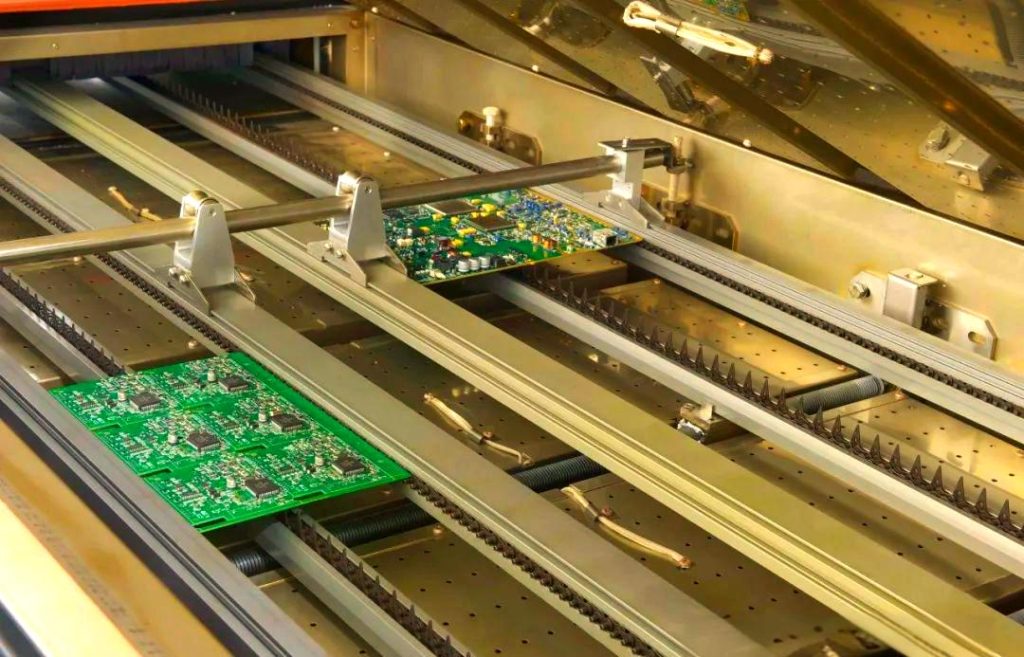
A reflow soldering profile describes how the temperature changes inside the oven during the heating cycle. It is one of the most important factors affecting solder joint quality. Every electronic assembly requires a carefully tuned profile that matches the solder paste, PCB material, and component sensitivity. If the profile rises too quickly or reaches excessive temperatures, components can suffer thermal stress. If it remains too cool, the solder may not melt completely.
The temperature profile generally contains four stages:
- Preheat zone
The board temperature rises gradually to prevent thermal shock. - Soak zone
Temperature stabilizes so components and PCB layers reach uniform heat. - Reflow zone
Temperature increases above the melting point of the solder alloy. - Cooling zone
The solder solidifies and forms strong metallurgical bonds.
Typical reflow soldering temperature ranges depend on the solder alloy used. Lead-free solder pastes usually require higher temperatures than traditional leaded alloys. Maintaining the correct profile ensures reliable joints and protects sensitive components during the reflow process.
What temperature does solder reflow at?
The melting temperature of solder varies depending on the alloy composition. Modern electronics manufacturing mostly uses lead-free solder due to environmental regulations.
Common solder alloys and their approximate melting temperatures include:
| Solder Alloy | Melting Temperature |
|---|---|
| Sn63/Pb37 (leaded) | ~183°C |
| SAC305 (lead-free) | ~217–220°C |
| Sn99/Cu0.7 | ~227°C |
In most SMT assembly lines, the reflow soldering temperature inside the oven reaches between 235°C and 250°C for lead-free solder pastes. This ensures the solder fully melts and forms reliable connections.
Although the peak temperature is important, the overall reflow soldering profile matters even more. The board must heat gradually, remain above the liquidus temperature long enough for proper wetting, and cool in a controlled manner. Manufacturers often test several temperature profiles before finalizing the production process. This ensures stable solder joints and prevents issues such as solder balls or incomplete wetting.
Companies experienced in PCB assembly, including Best Technology, carefully optimize these temperature profiles during SMT production to achieve consistent solder joint reliability across thousands of boards.
What is the soak time for reflow?
The soak stage occurs between the preheat phase and the reflow peak temperature. During this stage, the board temperature stabilizes and allows the flux in the solder paste to activate properly. Typical soak temperatures range between 150°C and 180°C, and the soak time usually lasts 60 to 120 seconds depending on the board design and solder paste.
This stage serves several purposes:
- Activates flux chemistry
- Removes remaining solvents from solder paste
- Equalizes temperature across the PCB
- Reduces thermal shock before the reflow peak
If the soak period is too short, temperature differences across the board may remain. If it is too long, the flux may lose activity before the solder melts. Optimizing soak time helps maintain consistent solder joints across complex PCBs with varying component sizes.
How long can solder paste sit before reflow?
Solder paste has a limited working time after printing on a PCB. If the paste sits too long before entering the reflow oven soldering process, its properties may change. In most SMT production lines, the printed PCB should enter the reflow oven within 30 minutes to 4 hours depending on the solder paste formulation and environmental conditions.
Several factors influence how long solder paste can remain on the board:
- Ambient temperature
- Humidity levels
- Flux chemistry
- Paste viscosity
- Air exposure
When paste sits too long, it may dry out or slump, which can lead to solder bridging or poor joint formation. To maintain stable production quality, manufacturers usually control environmental conditions carefully. Many SMT factories keep the production area within a narrow temperature and humidity range.
What are common defects in reflow process soldering?
Even well-controlled SMT production lines can experience occasional solder defects. Several defects may occur during reflow process soldering, especially if the temperature profile or paste deposition is not optimized.
Common defects include:
- Solder bridging – molten solder connects adjacent pads
- Cold solder joints – insufficient heat prevents proper wetting
- Tombstoning – one end of a component lifts during reflow
- Solder balls – small solder spheres form around joints
- Voiding – trapped gas pockets appear inside solder joints
| Defect | Possible Causes |
|---|---|
| Solder bridging | Excess solder paste or stencil misalignment |
| Cold joints | Low peak temperature or short reflow time |
| Tombstoning | Uneven heating or unbalanced pad design |
| Solder balls | Excess paste or rapid heating |
| Voiding | Flux gases trapped during solder melting |
Fortunately, most of these problems can be prevented through process optimization. Adjusting stencil design, refining the reflow soldering profile, and maintaining proper solder paste storage conditions can significantly reduce defect rates.
Experienced PCB assembly manufacturers continuously monitor production lines using inspection technologies such as AOI and X-ray systems. These tools detect solder defects early and help maintain high manufacturing standards. Companies like Best Technology integrate strict quality control throughout SMT production, ensuring stable performance across different reflow soldering processes and troubleshooting scenarios.
Conclusion:
The reflow process soldering method plays a central role in modern electronics manufacturing. It enables efficient SMT assembly, supports high-density circuit designs, and produces consistent solder joints across complex PCBs.
By carefully controlling the reflow soldering temperature, soak time, and oven profile, manufacturers can achieve reliable connections for thousands of components in a single production cycle. Understanding the complete reflow soldering process step by step also helps engineers identify potential issues and optimize production quality.
Reliable SMT assembly depends on proper equipment, optimized thermal profiles, and strong manufacturing experience. With more than 19 years of expertise in PCB fabrication and assembly, Best Technology Co., Ltd. provides professional SMT solutions including advanced reflow soldering services through its manufacturing facilities in China and Vietnam.
For more information about PCB manufacturing and SMT assembly services, please contact:Email: sales@bestpcb.vn