 language
 english


Electronics Board Assembly Manufacturer for PCB & PCBA Projects
Electronics board assembly is the process of turning a fabricated PCB, electronic components, solder paste, assembly files, inspection steps, and testing requirements into a working PCBA. For engineers and buyers, the real concern is not only whether a supplier can place components on a board, but whether the supplier can control the full path from PCB fabrication to BOM sourcing, SMT assembly, inspection, packing, and delivery.
EBest Circuit (Best Technology) supports PCB manufacturing, component sourcing, SMT assembly, through-hole assembly, functional testing coordination, conformal coating, packing, and small to large-batch production. If you are preparing an electronics board assembly project, send your Gerber files, BOM, pick-and-place file, assembly drawing, testing notes, or packing requirements to sales@bestpcb.vn. Our engineering team can review the production path before assembly starts.
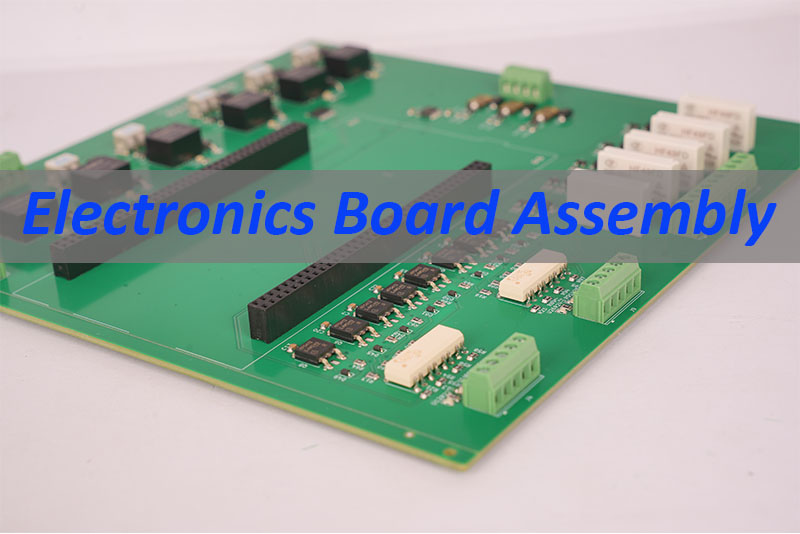
How Electronics Board Assembly Turns PCB Files into Working PCBAs
Electronics board assembly starts with customer-provided design and production files. The assembly manufacturer does not simply receive a blank PCB and place components on it. A reliable PCBA build needs several files and decisions to match each other.
A typical electronics board assembly project may include:
| File or Requirement | Why It Matters |
|---|---|
| Gerber files | Define PCB copper, solder mask, silkscreen, and outline |
| Drill file | Defines holes, vias, and plated holes |
| BOM | Defines component part numbers, quantities, and sourcing needs |
| Pick-and-place file | Guides SMT placement position and rotation |
| Assembly drawing | Shows polarity, connectors, mechanical notes, and special areas |
| Test requirement | Defines programming, functional test, or inspection needs |
| Packing note | Protects the finished PCBA during shipment |
For EBest Circuit, the process begins with a manufacturability and assembly review. The goal is to check whether the bare PCB, components, SMT PCB assembly proces, soldering method, inspection plan, and delivery requirement are aligned before production starts.
This is especially important for prototypes, small batches, fine-pitch components, BGA components, connectors, sensor boards, power boards, communication modules, and products that need testing before shipment.
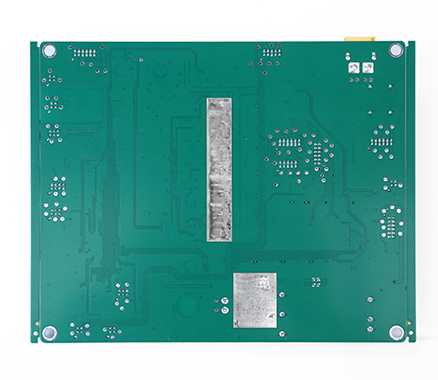
Electronic Circuit Board Assembly Process Step by Step
Electronic circuit board assembly follows a controlled production flow. At EBest Circuit, the actual SMT process can include the following steps depending on the board and components:
- Incoming BGA, PCB, and component check
Materials are received and checked before production. - Baking when required
FPC, moisture-sensitive ICs, LED components, and some PCB materials may need baking before assembly to reduce moisture-related defects. - Solder paste preparation and printing
Solder paste is recovered to room temperature, mixed, and printed through a stencil onto PCB pads. - SPI inspection
SPI checks solder paste volume, area, height, thickness, bridge risk, missing paste, and offset. - SMT placement
Components are placed according to the BOM, pick-and-place file, and silkscreen reference. - Reflow soldering
The assembled board passes through reflow to form solder joints. - Post-reflow inspection and AOI
The board is inspected for missing parts, wrong parts, tombstoning, polarity errors, bridging, insufficient solder, excess solder, lifted leads, and other defects. - X-Ray for BGA boards
If the board has BGA components, X-Ray inspection may be used to check hidden solder joints. Boards without BGA may not need X-Ray. - Post-soldering and cleaning
Through-hole parts or special connectors may need hand soldering or selective soldering. Cleaning may be required depending on the process and customer requirement. - Programming and testing
If the customer provides firmware, test instructions, or functional test requirements, programming and testing can be coordinated. - Conformal coating or glue if required
For some products, conformal coating, glue, or protection process may be added. - Final assembly, labeling, depaneling, and packing
Boards are labeled, separated, inspected, and packed using suitable protection such as anti-static bags, dividers, bubble bags, or blister trays.
This process shows why electronics board assembly is more than SMT placement. A good assembly supplier must control material handling, solder paste, printing, placement, reflow, inspection, cleaning, testing, and packing together.
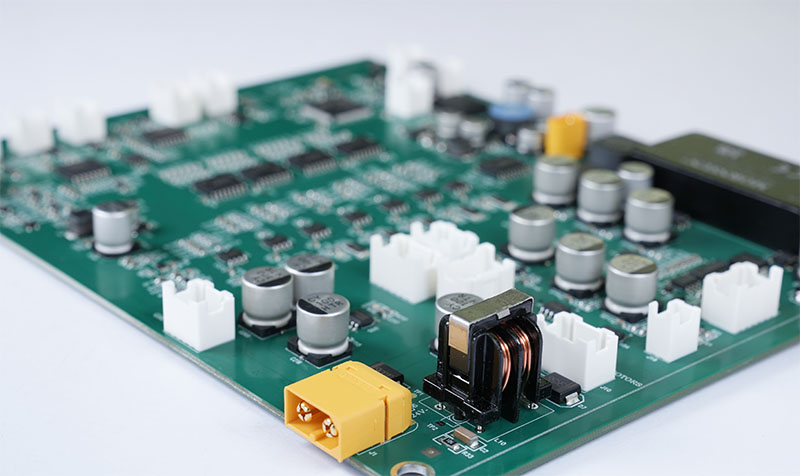
Electronic Printed Circuit Board Assembly vs Bare PCB Manufacturing
Electronic printed circuit board assembly and bare PCB manufacturing are closely related, but they are not the same service.
| Item | Bare PCB Manufacturing | Electronic Board Assembly |
|---|---|---|
| Main output | Fabricated circuit board | Working or testable PCBA |
| Main files | Gerber, drill, drawing | Gerber, BOM, placement, assembly notes |
| Main process | Lamination, drilling, plating, etching, solder mask | Solder paste, SMT, reflow, AOI, testing |
| Main risk | PCB fabrication defects | Component, soldering, polarity, test, packing risks |
| Supplier role | Build the board | Build and assemble the electronic product board |
A bare PCB can meet fabrication requirements but still fail during assembly if the BOM is unclear, the placement file is wrong, the polarity mark is missing, the solder pad is unsuitable, or the component package does not match the footprint.
That is why EBest Circuit supports both PCB fabrication and PCBA assembly. When both steps are reviewed together, the customer can reduce handoff risk between the PCB factory, component supplier, and SMT assembly factory.
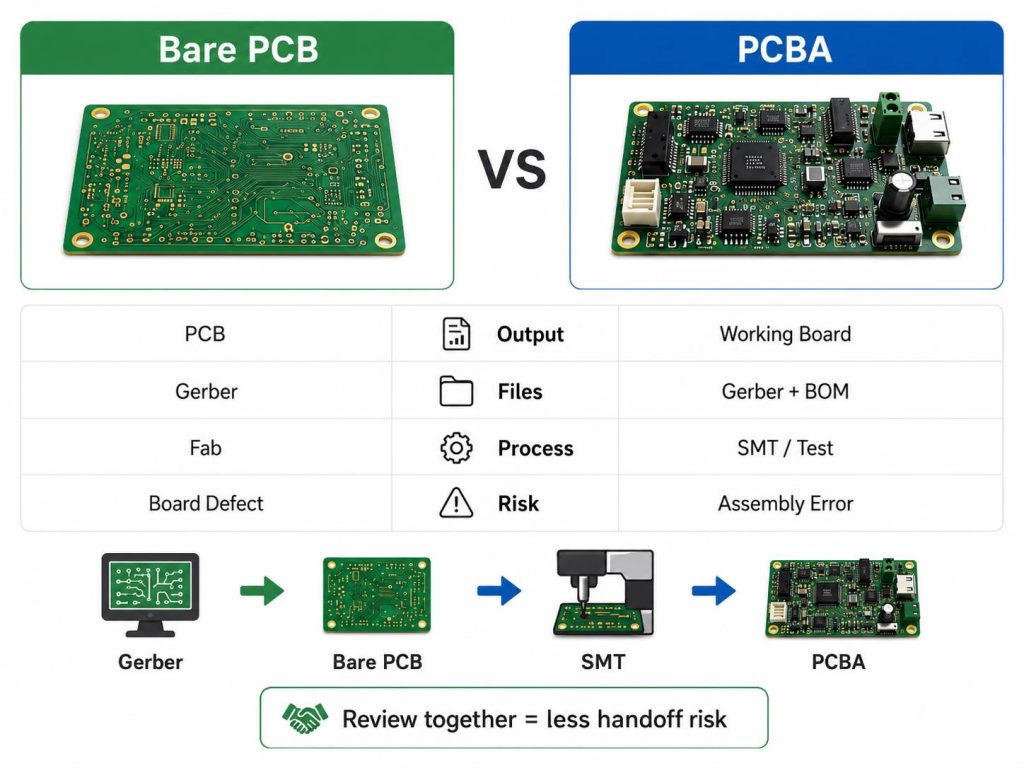
EBest Circuit Electronics Board Assembly Capabilities
EBest Circuit supports electronics board assembly for prototypes, small batches, and production projects. Our support covers both standard SMT work and more project-specific assembly requirements.
Key assembly support includes:
| Area | EBest Circuit Support |
|---|---|
| PCB types | FR4, multilayer PCB, HDI, FPC, rigid-flex, MCPCB, ceramic PCB |
| Assembly | SMT, post-soldering, connector assembly |
| Components | BOM review and approved component sourcing |
| Inspection | SPI, AOI, visual inspection, X-Ray when required |
| Testing | Programming and functional test coordination |
| Protection | Cleaning, conformal coating, glue, packing |
| Delivery | Prototype, small batch, and scalable production |
Our SMT workshop is equipped for different project needs, including JUKI and YAMAHA placement lines. For suitable projects, equipment capability can support fine components, high-speed placement, and larger PCB sizes. The exact production plan depends on board size, component package, panelization, inspection requirements, and customer files.
For customers, the most useful capability is not just machine speed. It is the ability to review the complete assembly path before production, especially when the project includes PCB fabrication, BOM sourcing, SMT, testing, and packing under one supplier.
Electronics Board Assembly Lead Time at EBest Circuit
Electronics board assembly lead time depends on more than SMT time. The schedule can be affected by PCB fabrication, component availability, stencil preparation, SMT programming, inspection, testing, and packing.
A practical lead time review usually includes:
| Stage | What Affects Time |
|---|---|
| PCB fabrication | Layer count, material, surface finish, impedance, special process |
| Component sourcing | BOM clarity, approved alternatives, stock status |
| SMT preparation | Stencil, placement program, fixture if needed |
| Assembly | Component count, BGA, fine pitch, double-sided SMT |
| Inspection | SPI, AOI, X-Ray, functional test |
| Packing | Single-unit packing, anti-static packing, custom packing |
For simple PCBA projects with available materials, assembly can move quickly after PCB and components are ready. For urgent projects, EBest Circuit can review whether fast service is realistic. For more complex boards, such as HDI PCBA, BGA boards, impedance boards, FPC assembly, rigid-flex assembly, or projects requiring testing, the schedule should be confirmed after engineering review.
This is why early file submission matters. If the customer sends the Gerber files, BOM, pick-and-place file, assembly drawing, and test notes together, EBest Circuit can check risks earlier and reduce avoidable delays.
How EBest Circuit Handles BOM Sourcing and SMT Assembly
For electronic board assembly, BOM sourcing is often as important as SMT itself. A board cannot be assembled smoothly if component part numbers are unclear, packages do not match footprints, or critical components have long lead times.
EBest Circuit supports BOM sourcing based on the customer’s approved BOM. Our team can help check:
- Manufacturer part number and description
- Quantity and reference designators
- Package and footprint consistency
- Component availability
- Possible lead time risks
- Customer-approved alternative options
- Customer-supplied and EBest-sourced material split
After BOM review, SMT preparation is based on the assembly files. The three key files for SMT programming are usually the BOM, pick-and-place file, and silkscreen or assembly reference drawing.
During SMT, the team controls solder paste printing, placement accuracy, reflow profile, inspection, and post-soldering requirements. If the board includes BGA, fine-pitch ICs, connectors, LEDs, sensors, or high-density passive components, the assembly review becomes even more important.
EBest Circuit does not need to replace the customer’s product design team. Our role is to help turn approved PCB and PCBA files into a manufacturable and assembled product with fewer production surprises.
How EBest Circuit Controls Electronics Board Assembly Quality
Electronics board assembly quality depends on process control before, during, and after SMT. Many defects are easier to prevent early than repair later.
EBest Circuit controls quality through several checkpoints:
Material and PCB preparation
- Moisture-sensitive components, FPCs, and certain PCBs may need baking before SMT. This helps reduce blistering, poor soldering, and moisture-related failures during reflow.
Solder paste and stencil control
- Solder paste must be stored, recovered, mixed, and printed correctly. Stencil condition and tension also affect printing quality.
SPI after printing
- SPI checks solder paste condition before components are placed. This helps catch missing paste, insufficient paste, excessive paste, offset, and bridging risk early.
AOI after reflow
- AOI helps detect missing components, wrong orientation, polarity issues, tombstoning, bridging, solder defects, lifted leads, and wrong parts.
X-Ray when required
- For BGA components, X-Ray can check hidden solder joints that cannot be inspected visually.
Post-soldering and cleaning inspection
- Through-hole parts, connectors, and special soldering areas are checked after soldering. Cleaning is arranged when required by the product or customer specification.
ESD and packing control
- Anti-static handling and proper packing help protect assembled boards during storage and shipment.
For customers, these quality checks are not cosmetic steps. They directly affect assembly yield, functional reliability, shipment quality, and the chance of successful prototype validation or batch delivery.
How to Choose an Electronic Board Assembly Manufacturer
Choosing an electronic board assembly manufacturer should start with the real project requirements.
A good supplier should be able to answer practical questions:
- Can they manufacture the bare PCB and assemble the PCBA together?
- Can they source components based on the approved BOM?
- Can they support prototype, small batch, and production?
- Can they handle BGA, connectors, double-sided SMT, and post-soldering?
- Can they provide SPI, AOI, X-Ray, programming, or functional test support when needed?
- Can they review DFM and assembly risks before production?
- Can they pack the final boards according to product needs?
For simple projects, a basic SMT supplier may be enough. For engineering projects with PCB fabrication, component sourcing, SMT, inspection, and delivery requirements, a one-stop PCB and PCBA partner is usually more efficient.
EBest Circuit is suitable for customers who need engineering communication, DFM review, PCB manufacturing, BOM sourcing, SMT assembly, testing support, and reliable delivery in one workflow.
EBest Circuit Electronics Board Assembly Case Study
One electronics board assembly project involved a 2-layer FR4 PCB with SMT assembly and single-unit delivery after assembly.
Project background
The customer needed a standard FR4 PCBA build for product validation. The project required PCB fabrication first, then SMT assembly, and the assembled boards needed to be shipped as individual units after SMT.
Key requirements
| Item | Requirement |
|---|---|
| PCB type | 2-layer FR4 PCB |
| Copper thickness | 1oz |
| Material | FR4 Tg135 |
| Board thickness | 1.6mm |
| Surface finish | Lead-free HASL |
| Solder mask | Black |
| Silkscreen | White |
| Delivery format | Panel delivery before SMT, single-unit delivery after SMT |
| Confirmation | Stackup and panel data confirmed before production |
What EBest Circuit focused on
- Production file confirmation: The stackup and panelization data needed customer confirmation before manufacturing.
- PCB and SMT connection: The project was not only a bare PCB order. The PCB build needed to support the following SMT process.
- Panelization review: Since the board was delivered in panel form before SMT, panel design had to support assembly handling.
- Post-SMT delivery: After SMT, the boards were separated and shipped as single units.
- Assembly protection: Packing had to protect the finished PCBA, not just the bare PCB.
For the customer, the value was a coordinated PCB and PCBA workflow. Instead of managing PCB fabrication and SMT separately, the customer could keep the manufacturing details, assembly requirements, and delivery format under one supplier.
Electronics Board Assembly FAQs
1. What does electronics board assembly include?
Electronics board assembly usually includes PCB fabrication review, solder paste printing, SMT placement, reflow soldering, AOI inspection, post-soldering, cleaning, testing, labeling, depaneling, and packing. If needed, it may also include component sourcing, programming, X-Ray, conformal coating, or final product assembly.
2. What files are needed for electronic circuit board assembly?
The most important files are Gerber files, drill files, BOM, pick-and-place file, assembly drawing, polarity notes, testing instructions, and packing requirements. If the project includes programming, the customer should also provide firmware and programming instructions.
3. Can EBest Circuit source components for electronic board assembly?
Yes. EBest Circuit can source components based on the customer’s approved BOM. If a component has stock or lead time risk, the team can help review possible alternatives for customer approval.
4. Does every PCBA need X-Ray inspection?
No. X-Ray is mainly used when hidden solder joints need inspection, such as BGA components. If the board does not include BGA or hidden solder joints, AOI and visual inspection may be enough depending on the project.
5. Can electronics board assembly support prototype and small-batch production?
Yes. EBest Circuit supports prototype, small-batch, and production PCBA projects. This is useful for engineers who need to validate the first build and then move toward a more stable production plan.
In conclusion, a reliable electronics board assembly partner should help you see the whole production path clearly before the boards enter SMT. If you are preparing a PCB or PCBA project, send your Gerber files, BOM, pick-and-place file, assembly drawing, testing notes, or packing requirements to sales@bestpcb.vn. EBest Circuit can help review your files, source approved components, assemble the boards, and support your project from prototype validation to production.