 language
 english


How To Choose A Reliable Flex Circuit Assembly Partner For Complex Electronics?
Flex circuit assembly refers to the critical process of mounting electronic components onto flexible printed circuit boards, enabling the creation of lightweight, compact, and durable devices. This comprehensive guide explores the key considerations, process capabilities, and solutions for choosing a partner capable of handling the complexities of modern flex circuit assemblies.
Pain Points to Overcome
- Inconsistent quality and reliability from vendors lacking experience with flexible materials.
- High defect rates and rework costs due to improper handling and assembly processes for delicate flex circuits.
- Difficulty in managing connectors and fine-pitch components without damage during the connectors assembly on flex circuits.
- Protracted communication cycles and inaccurate quotes, especially when dealing with overseas suppliers for China flex circuit assembly.
- Limited customization and support for specialized needs like customized soldermask for rigid-flex circuit board assembly.
Solutions for Success
- Guaranteed Quality & Proven Expertise: 20 years of industry experience, backed by strict ISO, IPC, and RoHS certifications, ensures consistent, high-quality output for all flex circuits assembly projects.
- Optimized Assembly Process: A specialized flex circuit assembly process includes dedicated fixtures, controlled soldering profiles, and stringent inspection checkpoints to prevent defects.
- Precision Component Handling: Expertise in handling delicate flex circuits and using specialized flex circuit assembly fixtures to safely mount connectors and fine-pitch components.
- Efficient Communication & Transparent Pricing: Our engineering team provides rapid feedback and detailed, accurate China flex circuit assembly quotes, eliminating cost and timeline surprises.
- Full Customization & One-Stop Service: We offer end-to-end solutions, from design (ODM/OEM) and material procurement to assembly, including high-quality PCB assembly services for rigid-flex circuit boards with customized soldermask.
As a leading China flex circuit assembly company, Best Technology provides a true one-stop solution. We are not just a PCB manufacturer; with our own SMT factory in Vietnam, we offer integrated rigid-flex circuit board assembly solutions. Our 3,000-square-meter facility handles everything from rapid prototyping to mass production, supported by a skilled team of over 160 staff. We are committed to delivering reliable, customized, and high-quality PCB assembly services for rigid-flex circuit boards, ensuring your complex electronics are built to the highest standards. For a cheap flex circuit assembly quotes that doesn’t compromise on quality, pls feel free to contact us at sales@bestpcb.vn.
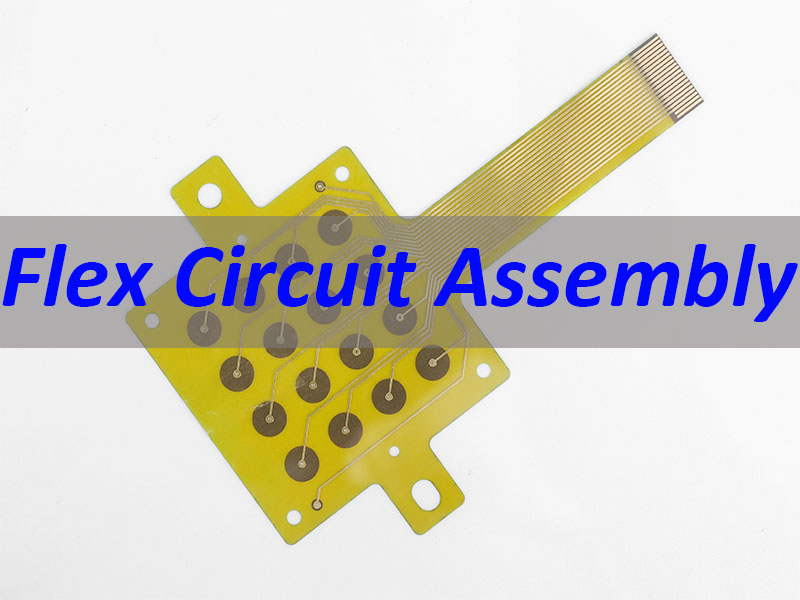
What Is Flex Circuit Assembly?
Flex circuit assembly, or flex print circuit board assembly, is the process of soldering and mounting electronic components onto a flexible printed circuit board. Unlike rigid PCB assembly, it requires specialized techniques to handle the board’s pliability, prevent damage during soldering, and ensure reliable electrical connections in dynamic or space-constrained applications. This process is essential for creating the sophisticated, bendable electronics found in modern wearables, medical devices, and aerospace systems.
Key Steps in the Flex Circuit Assembly Process:
- Solder Paste Application: Precise stencil printing of solder paste onto the flexible board’s pads.
- Component Placement: Automated machines accurately place SMD components. For connectors assembly on flex circuits, specialized fixtures are often used to prevent warping.
- Reflow Soldering: A carefully profiled reflow oven melts the solder paste. The thermal profile is critical to avoid damaging the flexible substrate.
- Inspection & Testing: Automated Optical Inspection (AOI) and functional testing are performed to ensure quality and reliability.
- Conformal Coating (Optional): A protective coating may be applied for moisture and chemical resistance.
- Final Assembly: Integration of the assembled flex circuit into the final product housing or connection with other PCBs.
In summary, flex circuit assembly demands precision, specialized equipment, and deep process knowledge to transform a bare flexible board into a functional electronic module.
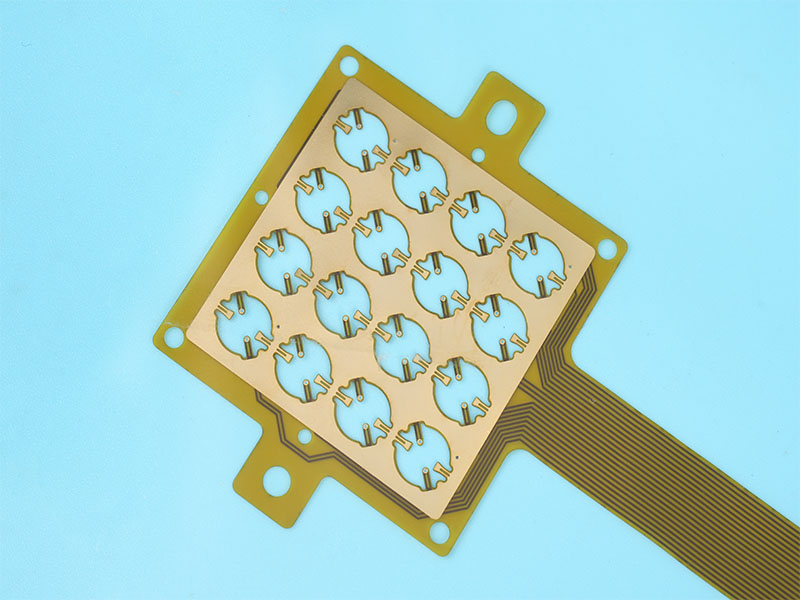
How Does The Flex Circuit Assembly Process Ensure Reliability?
A reliable flex circuit assembly process is built on controlled procedures, specialized tooling, and rigorous quality checks designed specifically for flexible materials. The goal is to prevent common failure points like cracked solder joints, delamination, and conductor damage.
Reliability Assurance Measures:
| Measure | Purpose & Implementation |
|---|---|
| Dedicated Fixtures | Use custom carriers to prevent board movement and warpage during soldering. |
| Controlled Thermal Profiling | Implement gentle reflow profiles to protect sensitive flexible substrates. |
| Material Compatibility | Select adhesives and solder pastes that match the substrate’s thermal properties. |
| Strain Relief Design | Apply DFM feedback to add reinforcement at bend areas and stress points. |
| 100% Electrical Testing | Conduct in-circuit and functional testing on every unit before shipment. |
Process Verification: Reliability is verified through a multi-stage system: Pre-Production Inspection of design files, In-Process Quality Control (IPQC) monitoring critical parameters, and a Final Audit against IPC standards. This ensures every flex printed circuit assembly meets stringent durability requirements.
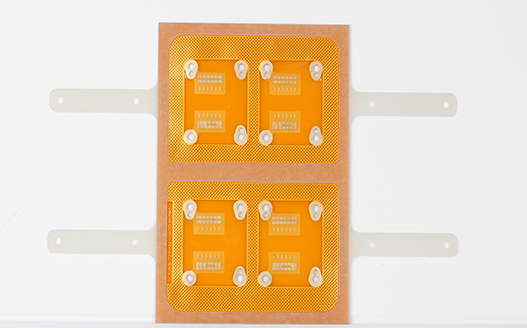
What Are The Key Differences In Flex Circuit Board Assembly Vs Rigid PCB?
While the core steps of SMT assembly are similar, flex circuit board assembly differs significantly from rigid PCB assembly in handling, process parameters, and design considerations. These differences are crucial for achieving a reliable end product.
Comparative Analysis: Flex vs. Rigid PCB Assembly
| Aspect | Rigid PCB Assembly | Flex Circuit Board Assembly |
|---|---|---|
| Substrate Handling | Stable, self-supporting. | Flimsy; requires specialized support fixtures. |
| Thermal Management | Standard, higher-temperature cycles. | Gentle, carefully profiled cycles to prevent damage. |
| Stiffener Requirement | Generally not required. | Often critical for component mounting areas. |
| Design for Assembly (DFA) | Focus on component spacing. | Adds considerations for flex zones and bend radii. |
| Soldering Challenges | Standard process. | Higher risk of joint cracking; may require underfill. |
Implication for Partner Selection: Choosing a partner experienced in these nuances is non-negotiable. A vendor skilled only in rigid boards may use incorrect processes, leading to failures. A true expert in flex circuits assembly will have dedicated protocols to manage these unique challenges effectively.
What Process Capabilities Define A High-Quality Flex Circuit Assembly?
A high-quality flex circuit assembly partner is defined by a combination of advanced technical capabilities, stringent quality systems, and deep material expertise. These capabilities directly impact the yield, reliability, and performance of the final assembled product.
Core Process Capabilities Table:
| Capability Category | Key Parameters & Standards |
|---|---|
| Precision Placement | Handles 01005 components; ±0.025mm accuracy. |
| Specialized Soldering | Expertise in soldering connectors; controlled reflow for flex. |
| Fixture & Tooling | Custom flex circuit assembly fixtures for each board. |
| Material Expertise | Knowledge of PI/PET laminates, adhesives, stiffeners. |
| Quality & Certification | IPC-A-610 Class 2/3. ISO 9001 & 13485 certified. |
| Testing & Inspection | 3D SPI, AOI, X-ray, FCT, ICT. |
A top-tier partner also offers Design for Excellence (DFX) support, providing early feedback to optimize designs for manufacturability, and demonstrates scalability from rapid prototyping to high-volume production. For complex designs requiring rigid-flex circuit board assembly with available customization, these competencies are indispensable.
Why Choose Rigid-Flex Circuit Board Assembly Solutions For Complex Designs?
Rigid-flex circuit board assembly solutions are the optimal choice for complex electronics because they integrate the stability of rigid boards with the versatility of flexible circuits into a single, reliable unit. This eliminates connectors and cables between board sections, enhancing reliability, saving space, and reducing weight—critical factors in aerospace, medical implants, and advanced consumer electronics.
Advantages of Rigid-Flex Assembly:
- Enhanced Reliability: Eliminates connector and cable harness failures; more resistant to vibration and shock.
- 3D Design Freedom: Allows electronics to be folded into tight, non-planar spaces.
- Weight & Space Savings: Reduces overall package size and mass by removing interconnects.
- Simplified Assembly: One assembly process replaces multiple steps, reducing errors.
- Improved Signal Integrity: Shorter, integrated interconnects benefit high-speed applications.
For engineers tackling miniaturization and reliability challenges, partnering with a provider offering high-quality PCB assembly services for rigid-flex circuit boards is a strategic decision that directly impacts product performance.
How Are Connectors Assembly On Flex Circuits Handled Without Damage?
Connectors assembly on flex circuits is a critical and delicate operation, as the flexible substrate offers little support against the insertion force and thermal stress during soldering. Improper handling can lead to pad lifting, warping, or misalignment. Expert assemblers use a combination of specialized techniques and tooling to prevent damage.
Key Techniques for Safe Connector Assembly:
- Precision Stiffeners: A rigid stiffener is laminated to the flex area where the connector mounts, providing a stable soldering platform.
- Custom Assembly Fixtures: Dedicated flex circuit assembly fixtures hold the circuit perfectly flat during soldering to prevent stress.
- Adhesive Bonding: Epoxy may be used for heavy connectors to provide mechanical reinforcement.
- Controlled Soldering Process: A calibrated, gentle reflow profile minimizes thermal stress.
- Sequential Soldering: Strategic order of soldering steps (e.g., selective soldering) localizes heat exposure.
By implementing this multi-faceted approach, a skilled assembly partner ensures robust, reliable connections for the longevity of the final product.
What Fixtures Are Used In Flex Circuit Assembly Fixtures For Precision?
Precision in flex circuit assembly is impossible without the correct flex circuit assembly fixtures. These specialized tooling solutions are designed to counteract the inherent floppiness of the flexible substrate, holding it perfectly in place throughout the assembly process.
Primary Types of Flex Circuit Assembly Fixtures:
| Fixture Type | Primary Use Case |
|---|---|
| Vacuum Plates | Hold thin, single-sided flex circuits flat via suction. |
| Dedicated Pallets/Carriers | Secure complex or rigid-flex boards in conveyorized systems. |
| Magnetic Fixtures | Clamp boards with metal stiffeners using magnetic force. |
| Soft-Top/Silicone Fixtures | Support boards with delicate finishes or double-sided components. |
Design & Selection: Fixtures must be precision-machined, heat-resistant, and designed for minimal thermal mass. Investing in well-designed fixtures is a hallmark of a professional assembly house, leading to higher yields and superior quality.
Why Does Quality Matter In Rigid-Flex PCB Assembly?
Quality matters in rigid-flex PCB assembly because these designs combine flexible substrates, rigid sections, plated vias, and fine-pitch components into a single structure. This integration introduces mechanical stress points, thermal expansion differences, and higher assembly complexity. Even a minor process deviation can affect solder joint reliability, bending performance, or long-term product stability.
A capable assembly partner must go beyond standard SMT capability. They need to understand flex material handling, bend radius constraints, coverlay protection, and connector reinforcement. This is especially critical in high-reliability applications such as medical devices, aerospace electronics, industrial controls, and compact wearable systems.
Key quality factors include:
- DFM review: Evaluate stack-up design, bend zones, pad geometry, and component placement before production begins
- Custom fixtures: Stabilize flexible areas during printing, placement, and reflow to prevent deformation
- Controlled soldering process: Minimize thermal and mechanical stress on flex layers and sensitive components
- Advanced inspection: Apply AOI, X-ray, electrical testing, and functional validation to ensure assembly integrity
- Full traceability: Track materials, process parameters, and test records for consistent quality control
For engineers, high-quality rigid-flex PCB assembly is not just about manufacturing—it directly impacts product reliability, development efficiency, and lifecycle performance. Choosing the right partner helps reduce rework, accelerate validation, and ensure consistent results in demanding environments.
Case Of Flex Circuit Assembly From Best Technology
A recent project for a European automotive sensor manufacturer required a high-density, double-sided flex circuit with multiple fine-pitch connectors for a tight-space engine compartment application.
Challenge: Preventing warping during reflow and ensuring solder joint reliability on a thin (0.1mm) polyimide substrate.
Our Solution:
- DFM Analysis: Recommended adding polyimide stiffeners near connectors.
- Custom Fixturing: Manufactured a dedicated aluminum pallet to hold the board flat.
- Process Optimization: Developed a tailored, low-thermal-mass reflow profile.
- Rigorous Testing: Implemented 3D AOI, X-ray, and 100% functional testing.
The Result: Achieved a 99.8% first-pass yield with zero field returns after 12 months, showcasing our reliable rigid-flex PCB assembly services.
How To Get Accurate China Flex Circuit Assembly Quotes For Your Project?
Obtaining an accurate and competitive China flex circuit assembly quotes requires providing your potential partner with clear, comprehensive information. Vague requests lead to inaccurate estimates.
Information Checklist for an Accurate Quote:
- Complete Design Files: Gerber files, BOM, Assembly Drawing.
- Technical Specs: Material type, thickness, layer count, special requirements.
- Assembly Details: Component types, soldering tech, post-assembly needs.
- Project Volumes: Prototype and production quantities.
- Quality Requirements: Required standards (IPC Class, ISO certs).
By supplying this data upfront to a reputable partner like Best Technology, you enable a swift and accurate assessment for a solid project foundation.
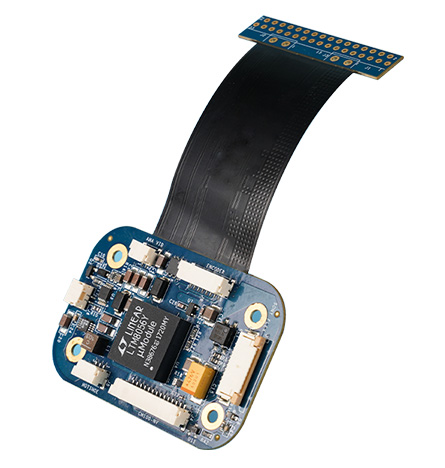
In summary, flex circuit assembly is the pivotal manufacturing step that transforms a delicate flexible printed circuit into a robust, functional electronic component, enabling the advanced, compact devices of today. This guide has outlined the critical considerations—from process capabilities and quality controls to the nuances of handling connectors and rigid-flex designs—for selecting a capable partner.
Choosing the right flex circuit assembly partner is fundamental to the success of complex electronics. It requires a vendor with proven expertise in specialized processes, a commitment to quality, and the ability to provide end-to-end solutions. Best Technology stands as a leader in this field. With 20 years of experience, our integrated one-stop service—from design and fabrication to high-quality PCB assembly services for rigid-flex circuit boards in our own Vietnam SMT factory—ensures reliability, precision, and value for your most challenging projects. Pls feel free to contact our experts today at sales@bestpcb.vn for a detailed consultation and a transparent quote.
FAQs About Flex Circuit Assembly
Q1: What is the typical turnaround time for flex circuit assembly prototypes?
A: For standard designs, providers like us offer quick-turn prototyping in 5-7 working days, depending on complexity.
Q2: Can you handle both turnkey and consignment assembly models?
A: Yes. We offer full turnkey (we source everything) and consignment (you supply parts) models for the flex circuit assembly process.
Q3: How do you ensure the quality of solder joints on flexible circuits?
A: Through a multi-stage regimen: 3D SPI, AOI, and X-ray inspection, combined with controlled processes and fixtures.
Q4: What are the main cost drivers in flex circuit assembly?
A: Key factors are Board Complexity, Component Density & Type, Production Volume, and Additional Services (testing, fixtures).
Q5: Do you provide design support for flex and rigid-flex PCBs?
A: Yes. We offer comprehensive rigid-flex circuit board assembly and PCBA design services, including DFM feedback and material selection.