 language
 english


What is a single sided PCB board? China single-side pcb board
Single sided pcb board is the most straightforward form of printed circuit board. It uses only one conductive copper layer on one side of the substrate, while the other side remains non-conductive. Components are mounted on one side, and all electrical pathways are routed across that single copper layer. Despite its simplicity, this structure continues to play a vital role in cost-sensitive electronics, high-volume production, and stable low-density circuit designs.
From consumer electronics to industrial control modules, the single sided pcb board remains a practical solution when circuit complexity is moderate and reliability must be consistent. Manufacturers in China, including experienced providers like Best Technology, have refined the fabrication process to deliver highly consistent quality with competitive pricing and fast turnaround.
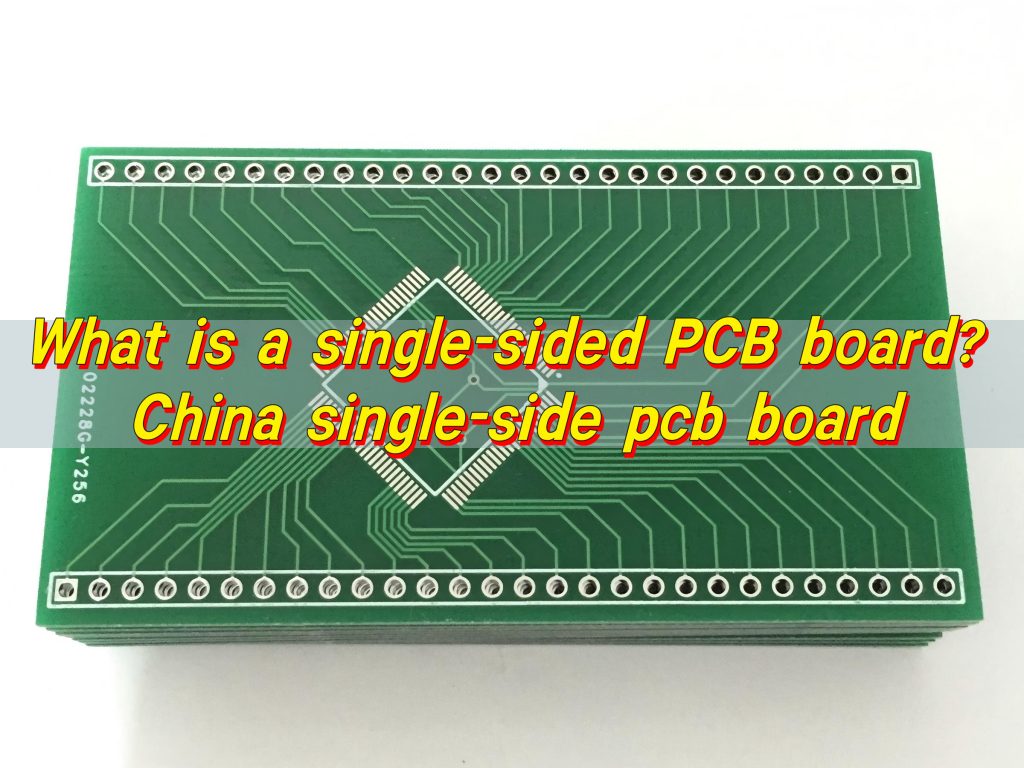
What is a single-sided PCB?
Single sided pcb board is defined by its single copper layer bonded to a dielectric substrate, typically FR4 or phenolic resin. Unlike more advanced PCB types, it does not allow routing on both sides or between multiple layers.
In practical engineering terms, this means:
- All traces are designed on one side only
- Components are usually placed on the opposite side (though SMT can also be used)
- No plated-through vias are required for interlayer connections
- Manufacturing complexity remains low
This structure results in a streamlined production process, fewer failure points, and lower fabrication costs. Engineers often select single sided pcb boards for circuits where signal routing is simple and predictable.
In China’s PCB manufacturing ecosystem, this board type is widely produced with tight process control. Best Technology, for example, leverages automated production lines and strict inspection protocols to maintain uniform copper thickness, accurate trace geometry, and stable dielectric performance.
What is a single side copper panel pcb board?
A single side copper panel pcb board—often referred to as a copper clad laminate (CCL)—is the raw material used before circuit patterning. It consists of a dielectric base material laminated with a thin copper foil on one side.
This panel serves as the foundation for PCB fabrication and undergoes several processes:
- Photoresist coating
- UV exposure with circuit pattern
- Etching to remove unwanted copper
- Surface finishing (HASL, ENIG, OSP, etc.)
The copper layer thickness is a key parameter. Common options include:
- 1 oz (35 µm) – standard applications
- 2 oz (70 µm) – higher current handling
- 0.5 oz (17 µm) – fine trace designs
Single sided copper clad pcb boards are widely used because they provide a stable base for circuit formation while maintaining excellent adhesion between copper and substrate.

How thick is a single sided PCB?
The thickness of a single sided pcb board depends on the application, mechanical requirements, and electrical constraints. Typical thickness ranges include:
- 0.4 mm – compact electronics
- 0.8 mm – lightweight devices
- 1.0 mm – general-purpose applications
- 1.6 mm – industry standard
- 2.0 mm+ – high mechanical strength
The total thickness is composed of:
- Substrate thickness (core material)
- Copper thickness (usually negligible in total stack height)
- Solder mask layer
From a design perspective, thickness affects:
- Mechanical rigidity
- Heat dissipation
- Connector compatibility
- Assembly stability
Manufacturers like Best Technology offer flexible thickness customization based on end-use requirements, ensuring the board integrates seamlessly into final products.
What is a single sided PCB used for?
Single sided pcb board is commonly used in applications where circuit density is moderate and cost efficiency is a priority. Its simplicity translates into high manufacturing yield and consistent performance.
Typical applications include:
- Power supplies and adapters
- LED lighting systems (especially low-power drivers)
- Household appliances
- Consumer electronics (toys, radios, calculators)
- Industrial control panels
- Automotive auxiliary circuits
These applications share common characteristics:
- Limited routing complexity
- Stable operating conditions
- High production volume
For LED lighting and power modules, single sided copper pcb boards are particularly popular due to their efficient thermal conduction when paired with appropriate materials.

What are the three types of PCBs?
PCBs are generally categorized into three main types based on layer count and structure:
- Single sided PCB
- Double sided PCB
- Multilayer PCB
Each type serves a distinct engineering purpose. A brief overview:
- Single sided pcb board: simplest structure, lowest cost
- Double sided pcb: copper layers on both sides, moderate complexity
- Multilayer pcb: multiple internal layers, high-density design
These types form a progression in capability. As circuit complexity increases, designers move from single layer to multilayer solutions.
What is the difference between single sided and double sided PCB board?
Single sided pcb board and a double sided pcb differ primarily in structure, routing flexibility, and application scope. Single sided boards rely on one conductive layer, while double sided boards utilize both sides of the substrate and connect them through vias.
Below is a clear comparison:
| Feature | Single Sided PCB Board | Double Sided PCB |
|---|---|---|
| Copper Layers | One side only | Both sides |
| Routing Capability | Limited | More flexible |
| Vias | Not required | Required |
| Cost | Lower | Moderate |
| Manufacturing Complexity | Simple | Higher |
| Applications | Basic electronics | More complex circuits |
| Assembly Options | Mainly through-hole | SMT + through-hole |
From a design standpoint, single sided boards are preferred when:
- Signal routing is simple
- Cost must be minimized
- Production volume is high
Double sided boards become necessary when circuit density increases or component count grows.
How much does a custom single sided PCB board cost?
The cost of a custom single sided pcb board depends on several variables. While it is generally the most economical PCB type, pricing can vary based on specifications.
Key cost drivers include:
- Board size and quantity
- Material type (FR4, CEM-1, aluminum, etc.)
- Copper thickness
- Surface finish
- Tolerance requirements
- Lead time
Typical pricing trends:
- Prototype (small batch): higher unit cost
- Mass production: significantly reduced cost
- Standard FR4 boards: most economical option
- Special materials: higher cost
China single-side pcb board suppliers, including Best Technology, offer strong pricing advantages due to:
- Mature supply chain
- High production capacity
- Optimized labor and material costs
Additionally, integrated services—such as component sourcing and assembly—can further reduce total project cost by simplifying logistics and minimizing vendor fragmentation.
What materials are used for single sided PCB boards?
Material selection plays a critical role in the performance and durability of a single sided pcb board. The most commonly used materials include:
- FR4 (glass fiber epoxy) – balanced performance and cost
- CEM-1 / CEM-3 – cost-effective alternatives for simple circuits
- Aluminum (MCPCB) – enhanced thermal conductivity
- Flexible substrates (polyimide) – for bendable designs
Each material offers unique advantages:
- FR4 provides mechanical strength and electrical insulation
- CEM materials reduce cost for consumer products
- Aluminum improves heat dissipation in LED applications
- Flexible materials enable compact, dynamic designs
Best Technology supports a wide range of material options, allowing engineers to align performance requirements with budget constraints.

How to choose a reliable single sided PCB manufacturer?
Selecting the right manufacturer is critical to ensuring consistent quality, reliable delivery, and long-term project success. When evaluating a single sided pcb board supplier, several factors should be carefully reviewed.
Key evaluation criteria:
- Manufacturing experience and track record
- Certifications (ISO, IATF, UL, etc.)
- Production capacity and lead time
- Quality control systems
- Engineering support capability
- Supply chain stability
A reliable manufacturer should also provide value-added services such as:
- DFM (Design for Manufacturability) analysis
- Component sourcing
- Assembly and testing
- Box build integration
Best Technology stands out as a one-stop PCB and PCBA partner with nearly two decades of experience. The company offers:
- PCB fabrication and assembly services
- Component sourcing with stable supply chain
- Advanced assembly capabilities including BGA and flexible PCB assembly
- Full turnkey solutions from PCB to final product
Our commitment to quality is supported by certifications such as ISO 9001, ISO 13485, IATF 16949, and UL compliance , ensuring that products meet stringent international standards.
Conclusion:
The single sided pcb board remains a foundational technology in the electronics industry. Its simplicity, cost efficiency, and reliable performance make it a preferred choice for a wide range of applications, from consumer devices to industrial systems.
For businesses seeking dependable PCB production with optimized cost and consistent quality, single sided pcb boards remain a practical and proven option. For project inquiries or technical support, feel free to contact: sales@bestpcb.vn