 language
 english


SMT Line | Full Surface Mount Technology Production Lines
An SMT line is the backbone of modern electronics manufacturing. It connects multiple advanced machines into one smooth and coordinated process, allowing printed circuit boards to be assembled with speed, precision, and consistency. From consumer electronics to automotive systems, SMT production lines play a vital role in delivering reliable and high-performance products.
At Best Technology, years of experience in PCB manufacturing and assembly have shown that a well-designed SMT line is not just about machines. It is about how those machines work together, how operators manage them, and how the entire process is optimized for stability and output.
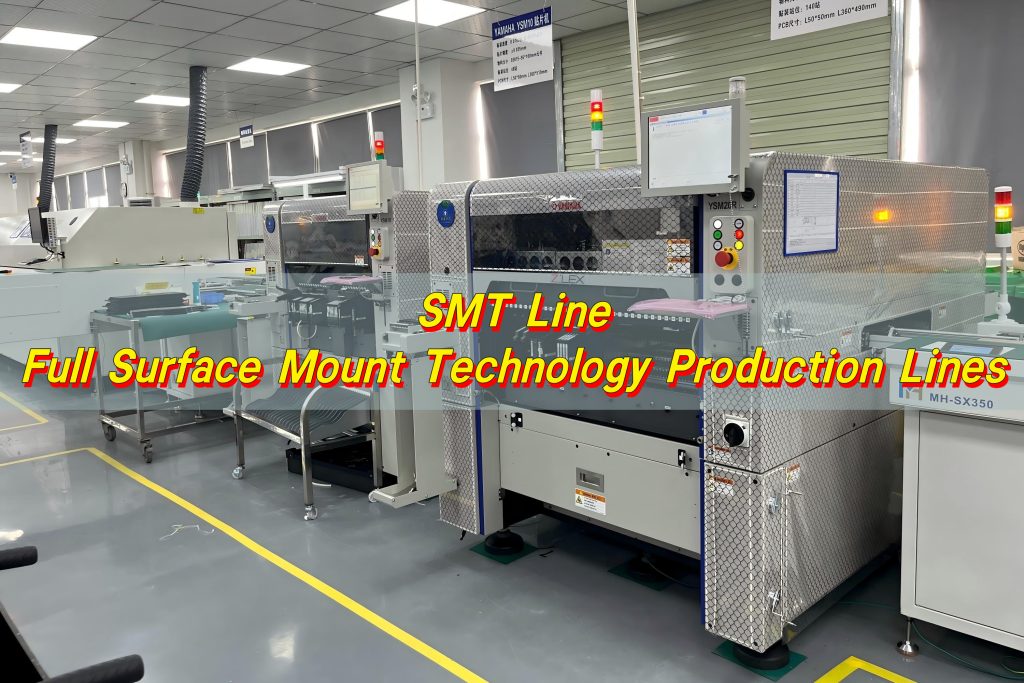
What core equipment makes up a complete SMT line?
A complete SMT line consists of several key machines, each performing a specific task in the assembly process. These machines are arranged in sequence to ensure smooth workflow and minimal handling.
The most essential equipment includes:
- Solder paste printer
Applies solder paste accurately onto PCB pads using a stencil. This step defines the foundation of component placement quality. - Pick and place machine
Mounts electronic components onto the PCB at high speed. Advanced models can place tens of thousands of components per hour. - SPI (Solder Paste Inspection)
Checks the quality, volume, and alignment of solder paste before components are placed. - Reflow oven
Heats the PCB to melt the solder paste and permanently attach components. - AOI (Automated Optical Inspection)
Detects defects such as misalignment, missing parts, or solder issues after reflow. - Conveyor systems
Transfer PCBs between machines efficiently without manual intervention.
Some advanced SMT lines also include:
- AXI (Automated X-ray Inspection) for hidden solder joints
- Loader and unloader systems for automation
- Buffer systems to balance production flow
Each piece of equipment plays a critical role. When integrated properly, they create a seamless SMT production line that delivers both speed and precision.
How does an SMT line improve production efficiency in PCB manufacturing?
An SMT line greatly enhances efficiency by automating repetitive tasks and reducing human error. Instead of manual assembly, machines handle precise placement and soldering, which improves both speed and consistency.
One major advantage is continuous operation. Once the line is set up, PCBs move from one stage to another without interruption. This reduces idle time and increases throughput.
Another benefit is high placement speed. Modern pick and place machines can handle complex boards with thousands of components in a short time. This allows manufacturers to meet tight deadlines without compromising quality.
Efficiency improvements also come from:
- Reduced labor dependency
- Faster changeover between product types
- Improved yield rates due to fewer defects
- Better traceability with digital monitoring systems
At Best Technology, optimized SMT lines have helped reduce production cycles while maintaining strict quality standards. This balance between speed and accuracy is essential in today’s competitive market.
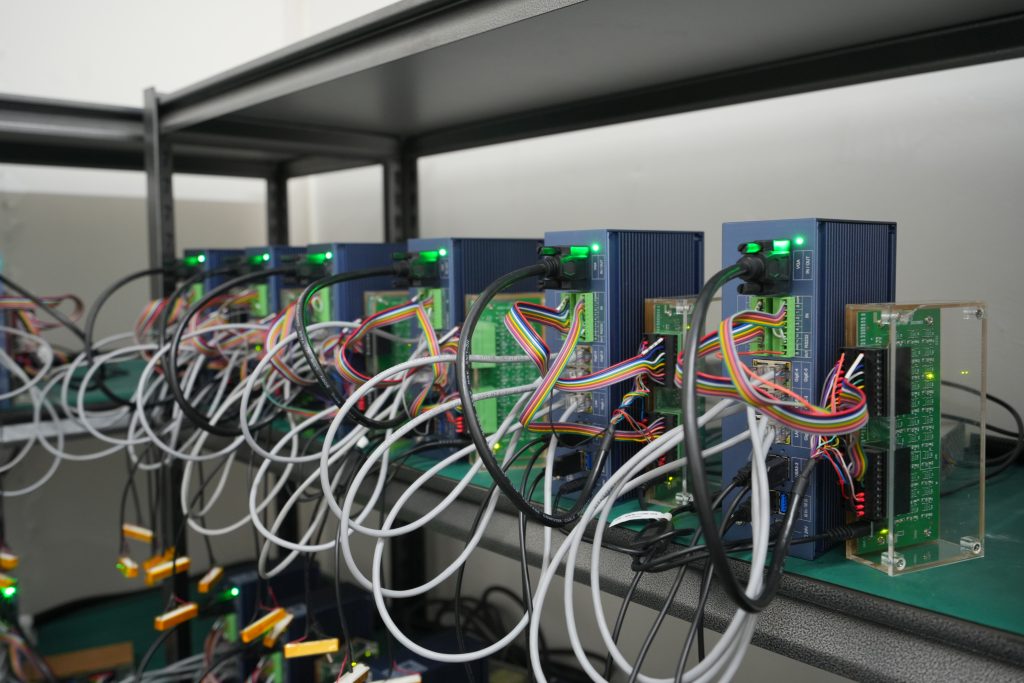
What factors determine the speed and capacity of an SMT assembly line?
The speed and capacity of an SMT assembly line depend on multiple interconnected factors. It is not only about machine specifications but also about how the entire system is configured.
Key factors include:
- Pick and place machine performance
The number of heads, placement speed, and accuracy directly affect output. - PCB complexity
Boards with more components or fine-pitch parts require more time for placement and inspection. - Solder paste printing quality
Poor printing can slow down the process due to rework or inspection delays. - Reflow oven profile settings
Proper temperature profiles ensure efficient soldering without damaging components. - Line balance
Each machine must operate at a similar pace to avoid bottlenecks. - Operator skill level
Skilled operators can quickly adjust parameters and handle issues, improving overall efficiency.
For example, if the pick and place machine is faster than the printer, the line may slow down due to waiting time. A well-balanced SMT line ensures that each stage supports the next without delays.
How to maintain stability and accuracy in high-speed SMT production?
Maintaining stability and accuracy in a high-speed SMT line requires careful control of both equipment and process parameters. Even small variations can lead to defects or reduced yield.
Consistency begins with regular machine calibration. Pick and place machines must maintain precise alignment, while printers need accurate stencil positioning.
Environmental control is also important. Factors such as temperature, humidity, and dust can affect solder paste behavior and component placement.
To ensure stable production:
- Perform routine maintenance on all machines
- Use high-quality solder paste with consistent properties
- Monitor placement accuracy using real-time systems
- Implement strict process control and documentation
- Train operators to identify and resolve issues quickly
At Best Technology, stability is achieved through a combination of advanced equipment and disciplined process management. This approach ensures that every PCB meets the required standards, even at high production speeds.
What quality inspection processes are integrated into modern SMT lines?
Quality inspection is an integral part of modern SMT lines. Instead of relying on final checks, inspection is embedded throughout the process to catch issues early.
The most common inspection systems include:
- SPI (Solder Paste Inspection)
Ensures correct paste volume and alignment before component placement. - AOI (Automated Optical Inspection)
Detects visible defects after reflow, such as missing or misaligned components. - AXI (Automated X-ray Inspection)
Examines hidden solder joints, especially for BGA and QFN packages. - Functional testing
Verifies that the assembled PCB works as intended.
These inspection steps provide multiple layers of quality control. Early detection reduces rework and improves overall yield.
Modern SMT lines often use data integration systems. These systems collect inspection results and provide insights for continuous improvement. This data-driven approach helps manufacturers refine processes and maintain high quality standards.
How does SMT line layout affect overall production workflow?
The layout of an SMT line has a direct impact on production efficiency and workflow. A well-planned layout minimizes movement, reduces delays, and ensures smooth transitions between stages.
There are several common layout types:
- Straight line layout
Machines are arranged in a linear sequence. This is the most common and easy to manage. - U-shaped layout
Allows operators to manage multiple machines within a compact space. - Dual lane layout
Supports higher throughput by processing two PCBs simultaneously.
Each layout has its advantages. The choice depends on production volume, available space, and product complexity.
A good layout should:
- Minimize PCB travel distance
- Allow easy access for maintenance
- Support efficient operator movement
- Reduce bottlenecks between machines
At Best Technology, SMT line layouts are designed based on specific project needs. This customized approach ensures optimal workflow and maximum productivity.
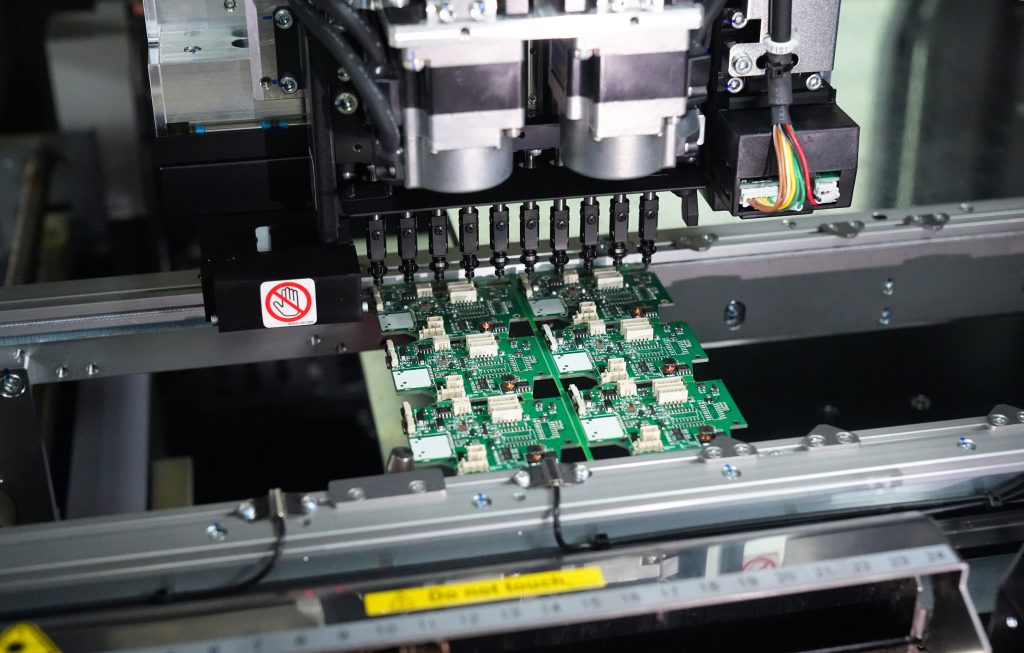
Can a single SMT line handle both small and large PCB assemblies?
A single SMT line can handle both small and large PCB assemblies, but it requires flexibility in equipment and setup. Modern SMT machines are designed to accommodate different board sizes and component types.
Key considerations include:
- Adjustable conveyor width
Allows handling of various PCB dimensions. - Flexible feeders
Support a wide range of component sizes. - Programmable placement systems
Enable quick switching between product types.
However, handling diverse PCB sizes may affect efficiency. Large boards may require slower processing, while small boards can be produced faster.
The comparison below highlights the differences:
| Feature | Small PCB Assemblies | Large PCB Assemblies |
|---|---|---|
| Production speed | High | Moderate |
| Component density | Often high | Varies |
| Handling complexity | Low | Higher |
| Setup time | Short | Longer |
With proper planning and equipment configuration, one SMT production line can support mixed production. This flexibility is valuable for manufacturers serving multiple industries.
What training is required for operators to run an SMT line safely?
Operating an SMT line requires both technical knowledge and practical skills. Proper training ensures safety, efficiency, and consistent product quality.
Operators typically need training in:
- Machine operation and programming
- Solder paste handling and storage
- Basic troubleshooting techniques
- Quality inspection standards
- Safety procedures and equipment handling
Hands-on experience is especially important. Operators must understand how to respond to real-time issues, such as misalignment or machine errors.
Training also includes understanding the entire SMT line process. This helps operators see how each stage affects the next, leading to better decision-making.
At Best Technology, operator training is treated as a key investment. Skilled operators contribute directly to stable production and high-quality output.
How do reflow ovens work with other machines in an SMT line?
The reflow oven is a critical part of the SMT line. It works closely with both upstream and downstream equipment to ensure proper soldering.
After components are placed on the PCB, the board enters the reflow oven. The oven heats the board through multiple temperature zones, gradually melting the solder paste and forming strong joints.
The process includes:
- Preheating stage
- Soaking stage
- Reflow stage
- Cooling stage
Coordination with other machines is essential. The solder paste printer must apply the correct amount of paste, and the pick and place machine must position components accurately. Any deviation can affect reflow results.
The reflow oven must also match the speed of the SMT line. If it runs too slowly, it can create a bottleneck. If too fast, solder joints may not form properly.
Proper synchronization ensures that the entire SMT assembly line operates efficiently and delivers consistent results.
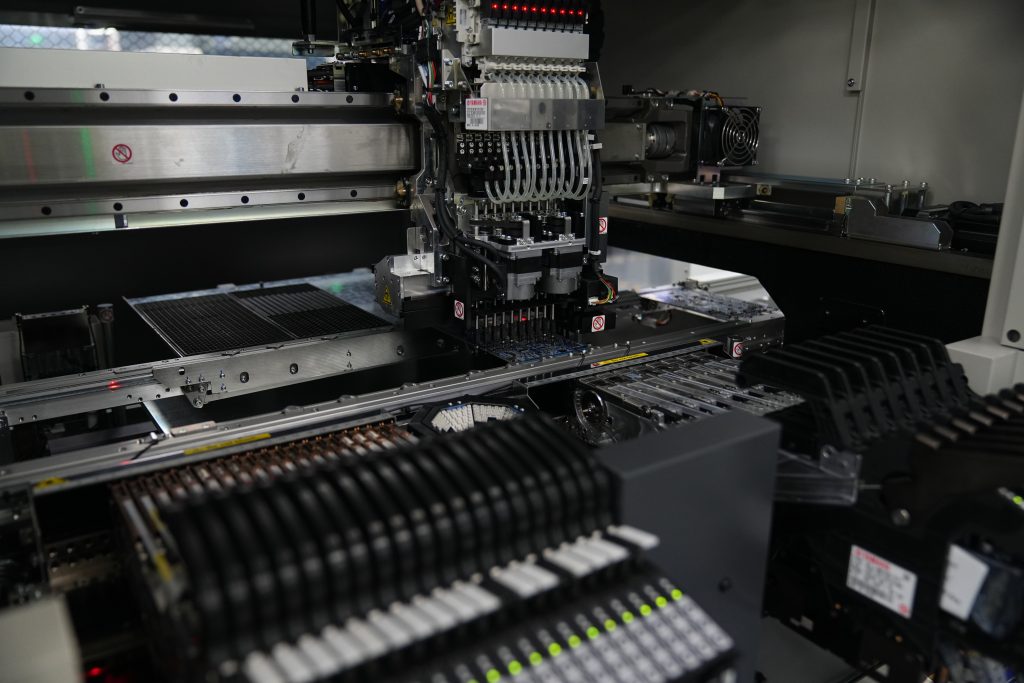
How to reduce downtime and defects in SMT line operation?
Reducing downtime and defects is a priority for any SMT production line. Even small interruptions can impact output and delivery schedules.
Effective strategies include:
- Preventive maintenance
Regular checks help identify issues before they cause failures. - Process optimization
Fine-tuning parameters improves efficiency and reduces errors. - Real-time monitoring systems
Detect problems early and allow quick response. - High-quality materials
Reliable solder paste and components reduce defect rates. - Operator training
Skilled operators can quickly resolve issues and maintain smooth operation.
Another important factor is data analysis. By reviewing production data, manufacturers can identify patterns and make improvements.
At Best Technology, a proactive approach is used to minimize downtime. This includes advanced equipment, strict quality control, and continuous process improvement.
Summary:
An SMT line is a highly coordinated system that combines advanced equipment, skilled operators, and optimized processes. From solder paste printing to final inspection, each stage plays a vital role in delivering high-quality PCB assemblies.
A well-designed SMT production line improves efficiency, enhances accuracy, and supports flexible manufacturing. By focusing on layout, equipment selection, training, and quality control, manufacturers can achieve reliable and consistent results.
Best Technology continues to support customers with professional SMT solutions, combining technical expertise with practical experience to meet diverse production needs. For more information or project inquiries, feel free to contact: sales@bestpcb.vn