 language
 english


Full And Partial Turnkey PCB Assembly | One-Stop Service For Prototype To Volume
Full and partial turnkey PCB assembly describes a comprehensive outsourcing model where a manufacturer manages most or all steps of transforming your design into a functional printed circuit board assembly. This article will dissect both models, explaining how they work, their differences, and when to choose each for optimal project efficiency from prototype to high-volume production.
Are you tired of navigating the complexities of PCB production alone? The journey from a design file to a box of working assemblies is fraught with potential bottlenecks. What are the most common pain points that engineers and procurement managers face?
- Supply Chain Disruptions: Managing multiple component vendors leads to shortages, long lead times, and allocation nightmares.
- Cost Overruns: Hidden costs from expedited shipping, minimum order quantities (MOQs), and last-minute supplier changes erode budgets.
- Inconsistent Quality: Vetting and qualifying multiple suppliers for boards and parts often results in quality variances and reliability issues.
- Project Delays: Coordinating between PCB fab, component procurement, and assembly houses creates scheduling conflicts and extended timelines.
- Logistical Headaches: Handling international shipments, customs clearance, and logistics for boards and parts from different sources consumes valuable time.
The solution to these interconnected challenges lies in partnering with a manufacturer that offers flexible, integrated services. A proficient PCB assembly with component sourcing services can transform this fragmented process.
- Established Vendor Network: Leverage the manufacturer’s pre-vetted, global supply chain to secure parts even during shortages.
- Consolidated Cost Control: Get a single, upfront quote encompassing all materials and labor, eliminating surprise expenses.
- Unified Quality Standard: One supplier is accountable for the entire process, ensuring quality from bare board to final assembly.
- Streamlined Scheduling: Integrated procurement and production under one roof synchronize workflows, drastically reducing lead times.
- Simplified Logistics: Receive finished assemblies at your doorstep from a single point of origin, handled by your partner’s logistics team.
At Best Technology, we specialize in turning these pain points into streamlined processes. As a professional PCB manufacturer with deep supply chain expertise, we offer both complete turnkey PCB assembly services and partial turnkey options tailored to your needs. From quick-turn prototypes to high-volume runs, our one-stop service model ensures quality, reliability, and dependability. For a consultation on your next project, pls feel free to contact us at sales@bestpcb.vn.
What Is Full and Partial Turnkey PCB Assembly?
This section defines the core concepts of turnkey PCB assembly, outlining the fundamental differences between the full and partial approaches. In essence, “turnkey” means you provide the design, and the manufacturer delivers a working product ready to use—you just “turn the key.”
- Full Turnkey Assembly: The manufacturer acts as a single-point solution, managing every step after receiving your design files (Gerbers, BOM, pick-and-place file). This includes sourcing all components (even providing alternates during shortages), fabricating the bare PCB, performing the assembly, and conducting thorough testing.
- Partial Turnkey Assembly: Also known as consigned and turnkey PCB assembly, this is a hybrid model. The client provides some or all of the physical components (consigned parts), while the manufacturer provides the rest and handles the PCB fabrication, assembly, and testing services. This offers a balance of control and convenience.
The table below summarizes the key distinctions:
| Aspect | Full Turnkey PCB Assembly | Partial Turnkey PCB Assembly |
|---|---|---|
| Parts Supply | Manufacturer provides all parts | Client provides some; rest by manufacturer |
| Sourcing | Fully handled by manufacturer | Shared between client and manufacturer |
| Client Effort | Low | Higher |
| Cost Control | More predictable | More flexible |
| Best Fit | Fast, simplified projects | Projects with owned or critical components |
In summary, full turnkey offers maximum convenience and a hands-off approach, while partial turnkey provides a collaborative model for clients who wish to retain control over certain aspects of the supply chain.
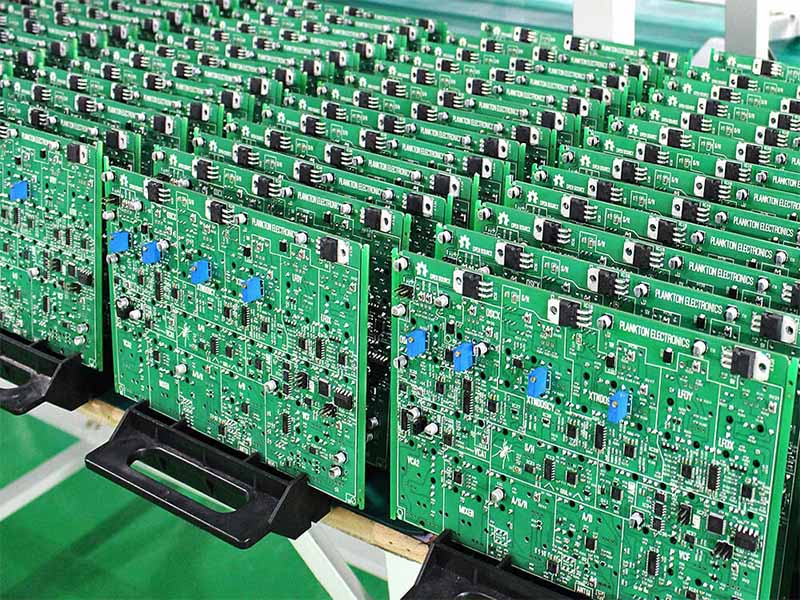
How Does Full And Partial Turnkey PCB Assembly Work In Practice?
Understanding the workflow demystifies the process and highlights the efficiency gains. Whether full or partial, the journey from design to delivery follows a structured, collaborative path.
- Design & Quote Submission: You provide the complete design package. The manufacturer analyzes the files, prepares a detailed quotation covering all services (PCB fab, part cost, assembly, testing), and defines the project timeline.
- Procurement & Kitting (The Key Differentiator):
- For Full Turnkey: The manufacturer’s procurement team sources all components from their approved network, ensuring parts meet specifications and are allocated for your project.
- For Partial Turnkey: Your consigned parts arrive at the manufacturer’s facility. They inspect, log, and store them. The manufacturer then procures any remaining parts to complete the BOM.
- PCB Fabrication: The bare boards are manufactured in-house or at a partner facility, undergoing electrical testing and quality inspection.
- Assembly & Soldering: Components are placed onto the boards using automated SMT and/or through-hole lines, followed by reflow or wave soldering.
- Testing & Quality Control (QC): Assemblies undergo inspections (AOI, X-Ray) and functional testing to ensure they match the design specifications and are fully operational.
- Final Packaging & Shipping: Approved assemblies are packaged according to your requirements (ESD-safe, vacuum-sealed) and shipped directly to your specified location.
This streamlined pipeline, especially for full and partial turnkey PCB assembly, eliminates the need for you to manage multiple vendors and logistics threads, compressing the overall project timeline significantly.
What Is The Difference Between Complete Turnkey PCB Assembly Services And Partial Turnkey?
While both models fall under the turnkey umbrella, the choice between them hinges on control, cost structure, and risk management. The distinction primarily lies in the division of responsibilities for component sourcing and ownership.
Complete turnkey PCB assembly services represent the most comprehensive outsourcing model. The manufacturer assumes total responsibility and risk for the Bill of Materials (BOM). You pay a single price per assembled unit, which includes all components, fabrication, labor, and overhead. This model simplifies budgeting, accelerates time-to-market, and is ideal when you want to focus purely on design and core business functions, leaving all supply chain complexities to your partner.
Partial Turnkey is defined by shared responsibility. The client provides (consigns) some components—often expensive, proprietary, or already in inventory—while the manufacturer supplies the remaining “commodity” parts and handles all assembly services. This impacts the financial and logistical dynamics:
| Decision Factor | Complete (Full) Turnkey | Partial Turnkey |
|---|---|---|
| Upfront Cost | Lower | Higher |
| Cost Risk | Mostly on manufacturer | Shared or on client |
| Supply Chain | Managed by manufacturer | Client handles some parts |
| Project Speed | Usually faster | May take longer |
| Control | Lower | Higher |
Therefore, the core difference is not in the assembly quality but in the allocation of supply chain management and financial risk. Full turnkey offers simplicity and speed; partial turnkey offers control and potential cost savings on specific parts, at the expense of greater client involvement.
When Should You Choose Consigned And Turnkey PCB Assembly?
The decision between consigned and turnkey PCB assembly is strategic and depends on your project’s specific priorities, resources, and constraints. Use the following guidelines to determine the best fit.
- Choose Partial (Consigned) Turnkey When:
- You have existing inventory of expensive or long-lead-time components you wish to utilize.
- Your design requires proprietary, customized, or tightly-controlled components that you must source directly.
- You have strong in-house procurement expertise and can secure certain parts at better costs or terms than the assembler.
- Your project is cost-sensitive on specific BOM lines, and you want to directly manage that portion of the budget.
- You are prototyping and want to test with specific component versions or vendors before committing to full turnkey for production.
- Choose Full Turnkey When:
- Your priority is minimizing time-to-market and reducing internal management overhead.
- You lack a dedicated procurement team or do not want to manage supplier relationships.
- Your BOM consists mainly of standard, readily available components.
- You want a predictable, all-inclusive cost with no hidden procurement fees or logistical hassles.
- You are a startup or a small team where operational simplicity is critical.
In essence, choose partial turnkey to leverage existing assets and maintain control. Choose full turnkey to maximize efficiency, predictability, and speed. Many companies use partial for prototypes or low-volume runs and switch to full turnkey for scaling to volume production.
How Does PCB Assembly With Component Sourcing Services Improve Efficiency?
Integrating PCB assembly with component sourcing services is a primary driver behind the efficiency of the turnkey model. It creates a synergistic workflow that eliminates traditional bottlenecks.
- Parallel Processing Over Sequential Waits: Instead of waiting for you to procure parts before assembly can begin, sourcing and PCB fabrication happen concurrently, compressing the critical path.
- Bulk Purchasing Power & Market Intelligence: Assemblers have established relationships and buy components in volume for multiple projects, often securing better pricing and priority allocation, especially during shortages.
- Reduced Administrative & Logistics Overhead: Your team is freed from creating POs, tracking shipments, managing customs, and handling receivables for dozens of individual part numbers.
- Proactive Alternate Sourcing: A skilled sourcing team can preemptively identify potential shortages and qualify alternate parts (form-fit-function compatible) without requiring a redesign, keeping your project on schedule.
- Consolidated Quality Gateway: All incoming components are inspected using the assembler’s unified QC standards, preventing faulty or counterfeit parts from entering the production line.
This integrated approach transforms component procurement from a reactive, client-managed task into a proactive, value-added service within the production flow, directly boosting overall project efficiency and resilience.
What Are The Advantages Of Full And Partial Turnkey PCB Assembly?
Adopting a turnkey model, whether full or partial, delivers significant strategic benefits that go beyond simple outsourcing. These advantages justify its popularity for projects of all scales.
- Single Point of Accountability: One partner is responsible for the final quality of the assembled board, simplifying communication and issue resolution.
- Faster Time-to-Market: By managing the entire supply chain and production pipeline, turnkey partners eliminate coordination delays between separate entities.
- Cost Predictability: Full turnkey provides a clear, all-inclusive cost. Partial turnkey offers clarity on assembly costs while letting you control specific part expenses.
- Access to Specialized Expertise: You leverage the manufacturer’s knowledge in DFM (Design for Manufacturability), component market trends, and advanced assembly processes.
- Scalability and Flexibility: A good turnkey partner can seamlessly scale your project from a few prototype units to thousands, adjusting procurement and production planning accordingly.
- Risk Mitigation: The manufacturer absorbs risks related to supply chain volatility, component obsolescence, and inventory management for full turnkey projects.
Ultimately, the core advantage is the transformation of a complex, multi-vendor process into a streamlined, managed service, allowing you to focus innovation efforts on product design and development.
Why Do Engineers Prefer PCB Assembly With Component Sourcing Services?
Engineers value precision, reliability, and the removal of obstacles that hinder innovation. A service that integrates PCB assembly with component sourcing services aligns perfectly with these priorities.
- Focus on Core Competency: It allows engineers to concentrate on circuit design, validation, and testing, rather than navigating distributor websites and managing lead times.
- Design for Manufacturability (DFM) Feedback Loop: Early in the quoting process, the assembler’s engineering team can provide real-time DFM feedback, suggesting component alternates or layout tweaks to improve yield and reduce cost.
- Access to Broader Component Options: Manufacturers often have insight into newer, more available, or more cost-effective parts that an engineer might not have considered.
- Reduced Prototyping Iteration Time: The integrated model allows for much quicker build cycles for prototypes, enabling faster design verification and iteration.
- Assured Supply for Production: Knowing a professional team is managing the supply chain for production builds reduces the anxiety of last-minute part shortages derailing a product launch.
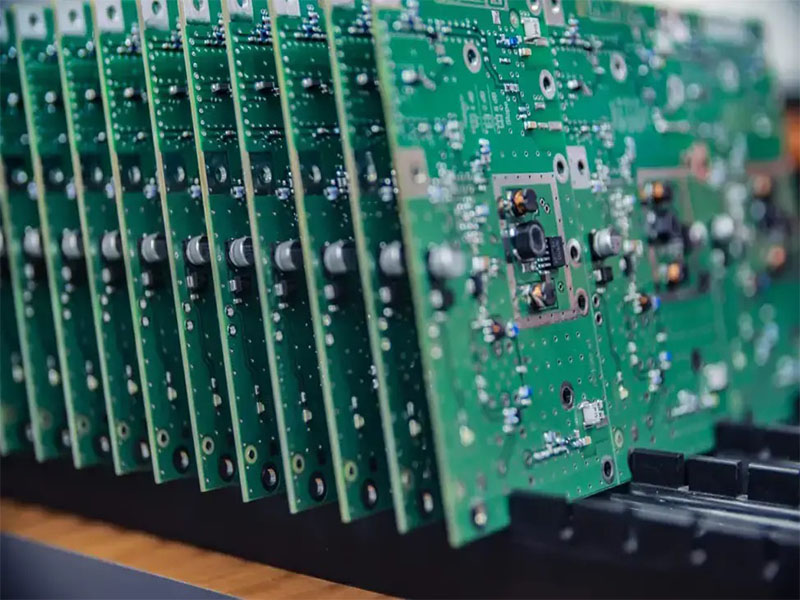
For engineers, this service is less about outsourcing a task and more about gaining a competent extension of their own team—one that handles the logistical complexities so they can focus on creating the best possible product.
In Summary, full and partial turnkey PCB assembly represents a strategic outsourcing partnership that streamlines the journey from design to functional hardware. This article has outlined how these models work, their key differences, and how to choose the right approach to enhance efficiency, manage risk, and accelerate product development.
Choosing the right partner is critical to unlocking these benefits. Best Technology stands out with its deep supply chain integration, engineering-driven support, and flexible service model tailored from prototype to high-volume production. Pls feel free to contact our team anytime at sales@bestpcb.vn to discuss your requirements and receive a comprehensive quote.
FAQs About Full And Partial Turnkey PCB Assembly
Q: How do I know if my BOM is suitable for full turnkey assembly?
A: If your BOM consists primarily of standard, off-the-shelf components from major distributors, it is highly suitable. If you have many custom, proprietary, or military-spec parts, a partial turnkey model might be discussed initially.
Q: Who owns the leftover components in a full turnkey project?
A: Typically, the manufacturer owns and manages the inventory. For small overage, they are often kept for future rework or small orders. Policies on bulk leftovers should be clarified in the agreement upfront.
Q: Can I switch from partial to full turnkey (or vice versa) for the same project?
A: Yes, this is common. Many clients start with partial turnkey for prototyping (using their own samples) and transition to full turnkey for volume production to benefit from the assembler’s purchasing power and streamlined logistics.
Q: How is quality assurance handled in a turnkey model?
A: Reputable turnkey providers implement a comprehensive quality management system (QMS) covering incoming component inspection, in-process checks (e.g., SPI, AOI), and final functional testing. You receive detailed reports and can often specify the test coverage required.
Q: Are turnkey services only for large volume orders?
A: No. Many providers, including Best Technology, offer full and partial turnkey PCB assembly for prototype and low-volume batches. The efficiency benefits apply at any scale, though the cost structure may vary.