 language
 english


How to Select a Reliable PCBA Contract Manufacturing Service Supplier?
PCBA contract manufacturing allows companies to turn circuit designs into finished electronic products without building their own production lines. Today’s electronics projects move fast. Product lifecycles are shorter. Supply chains change often. Because of this, choosing the right PCBA contract manufacturing partner becomes an important business decision. A reliable partner not only assembles boards but also supports sourcing, testing, and process control. This article explains how contract manufacturing works, what service models exist, and how to compare options in a clear and practical way.

What Is PCBA Contract Manufacturing?
PCBA contract manufacturing refers to outsourcing circuit board assembly to a specialized service provider. Instead of investing in expensive equipment, companies send design files, BOM lists, and assembly instructions to a manufacturing partner.
First, the provider reviews the design and prepares production data. Next, components are sourced and verified. After that, automated assembly lines place parts and perform soldering. Finally, inspection and testing confirm performance before shipment.
Moreover, contract manufacturing allows flexible production volume. Some projects require quick prototypes, while others move directly into mass production. A good provider adapts to both stages without requiring major changes from the customer.
Additionally, this model helps reduce operational complexity. Companies can focus on product design, marketing, and innovation while the manufacturing partner manages technical assembly details.
What Are Types of PCBA Contract Manufacturing Service?
Below are types of PCBA contract manufacturing service:
- Turnkey PCBA Service: The manufacturer manages the entire process, including component procurement, assembly, testing, and logistics, providing a “one-stop” solution that minimizes client involvement in supply chain management.
- Consignment PCBA Service (Pure Assembly): The client supplies all components and materials, while the manufacturer handles only the assembly and production processes, offering greater cost transparency but requiring strong client-side supply chain oversight.
- Hybrid Model (Partial Turnkey): A flexible approach where the client provides critical or specialized components, and the manufacturer procures standard parts and performs assembly, balancing cost control and convenience.
- JDM/ODM Service: Involves deeper collaboration, such as Joint Design Manufacture (JDM) or Original Design Manufacture (ODM), where the manufacturer contributes to design, engineering, and production, ideal for complex or innovation-driven projects.
- Prototype and Small-Batch Service: Focuses on low-volume production (e.g., 5–100 units) for R&D, testing, or pilot runs, emphasizing speed and flexibility to support product development.
- Mass Production Service: Tailored for high-volume orders (e.g., thousands of units), leveraging economies of scale, automated processes, and optimized supply chains for cost efficiency and rapid delivery.
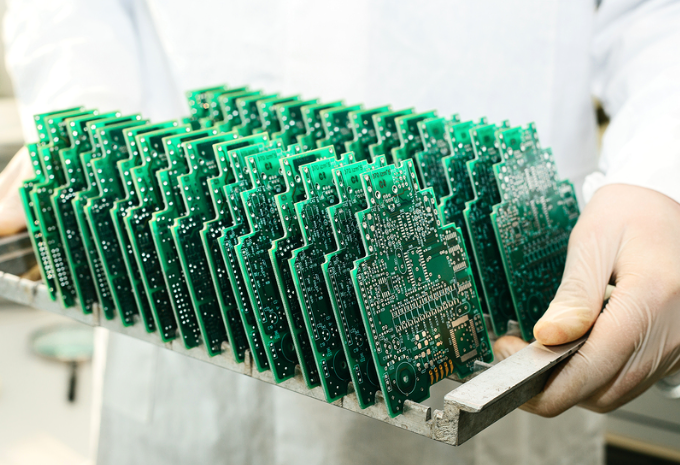
How to Select a Reliable PCBA Contract Manufacturing Service Supplier?
Below is a guide to select a reliable PCBA contract manufacturing service supplier:
1. Verify Industry Certifications and Compliance
- Prioritize partners with certifications matching your product field: ISO 9001 (basic quality management system), IPC-A-610 (international standard for electronic assembly acceptability), ISO 13485 for medical devices, IATF 16949 for automotive products, and GJB 9001C for military projects. Comply with regional standards (RoHS, REACH for Europe; FDA for the U.S.) to avoid regulatory barriers. Request official certification documents and regular audit reports.
2. Evaluate Technical Capabilities and Equipment
- Focus on three key points: SMT line capability (supporting 01005 chips to BGA/CSP packages, adapting to miniaturized and high-density designs), DIP assembly capacity (matching through-hole component requirements), and advanced testing equipment (AOI for surface defect detection, X-ray for hidden solder joint inspection, ICT/FCT for functional verification). Confirm their ability to handle complex designs (high-density PCBs, flexible circuits) and prototype-to-mass production scalability.
3. Assess Quality Control (QC) Processes
- Inquire about three core links: incoming material inspection (IMI) for counterfeit part screening (via visual inspection, X-ray, or third-party testing), in-process checks during soldering/assembly, and final functional testing. Request DPPM (Defects Per Million Opportunities) data—electronic industry benchmarks vary by field: 50-500 for consumer products, <20 for industrial/automotive products, and near-zero for medical devices.
4. Review Supply Chain Management Capabilities
- Evaluate two aspects: component sourcing (cooperating with authorized distributors to avoid counterfeits, instead of unvetted suppliers) and inventory management (JIT delivery for cost control, safety stock for critical components to mitigate shortage risks). Confirm full traceability via MES systems, which record component batches, production processes, and test data.
5. Gauge Communication and Responsiveness
- Test responsiveness during evaluation: the partner should reply to inquiries, quote requests, and design feedback within 24 hours. Confirm a dedicated point of contact (POC) is assigned to provide real-time updates on production progress, potential delays, and design issues. Pay attention to their DFM (Design for Manufacturability) feedback capability—proactive identification of design flaws (e.g., inappropriate solder pad size) early can reduce rework costs and production delays.
6. Confirm Cost Transparency and Flexibility
- Request a detailed quote breaking down components, labor, testing, packaging, and shipping costs, with clear pricing scaling rules (e.g., unit price discounts for high-volume orders vs. small-batch production costs). Assess flexibility: can they accommodate necessary mid-production design changes without excessive delays (usually no more than 3 working days) or cost increases (within 10% of the original cost).
7. Check Post-Delivery Support and Warranty
- Confirm clear warranty terms: general PCBA warranty periods are 6-12 months, with detailed defect resolution processes (e.g., replacement or rework within 5 working days for confirmed defects). Inquire about post-delivery services: can they provide troubleshooting guidance for PCBA failures? Do they offer rework/repair for defective units? Request 2-3 existing client references to verify their track record of prompt and fair issue resolution.
8. Evaluate Past Project Experience
- Prioritize those with experience in your field (industrial, automotive, medical, etc.)—PCBA for medical devices requires stricter traceability, while automotive PCBA needs to meet IATF 16949 standards and low DPPM requirements. Ask for case studies or project examples, including production volume, design complexity, and solutions to key challenges (e.g., solving high-density PCB soldering defects).
Quality Control Standards of PCBA Contract Manufacturing
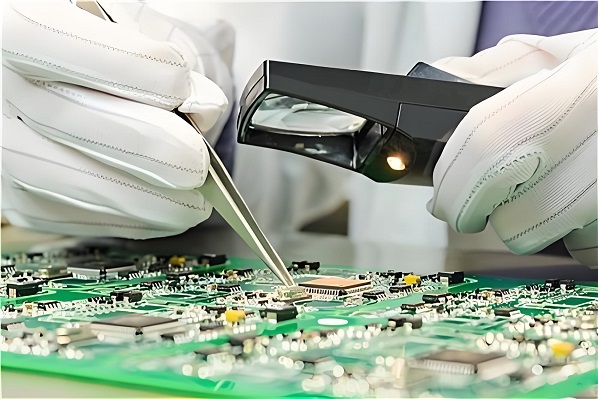
- IPC-A-610 Standard: Defines acceptability criteria for electronic assemblies, categorizing products into Class 1 (general electronics), Class 2 (dedicated service electronics), and Class 3 (high-reliability applications like aerospace/medical). It covers solder joint integrity, component placement, cleanliness, and visual defects.
- ISO 9001 Certification: Establishes a quality management system (QMS) for process consistency, traceability, and continuous improvement. It mandates documented procedures, risk management, and customer-focused metrics to reduce defects and enhance production stability.
- Incoming Quality Control (IQC): Involves rigorous inspection of all materials (e.g., components, PCBs) upon receipt. Checks include counterfeit detection, material certification, and dimensional verification to prevent substandard inputs.
- In-Process Quality Control (IPQC): Monitors assembly stages via real-time checks, such as solder paste inspection (SPI), automated optical inspection (AOI) pre/post-reflow, and X-ray analysis for hidden joints (e.g., BGA). This minimizes defects during SMT/THT processes.
- Final Quality Assurance (FQA): Conducts end-of-line audits, including functional testing (FCT), in-circuit testing (ICT), and visual inspections against IPC-A-610. Ensures products meet specifications before packaging and shipment.
PCBA Contract Manufacturing Process
Below are processes of PCBA contract manufacturing:
1. Design Validation & Preparation
- Design File Review: Verification of Gerber files, BOM, assembly drawings, and centroid data for manufacturability (DFM/DFA analysis) to optimize component placement and thermal management.
- Material Procurement: Sourcing components with anti-counterfeit checks (e.g., XRF testing) and PCB fabrication (layer stacking, ENIG surface finish).
2. SMT (Surface Mount Technology) Assembly
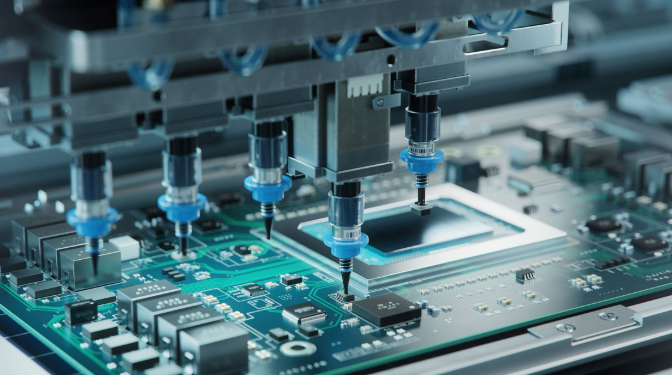
- Solder Paste Printing: Application of solder paste via stencil (30–150μm thickness), monitored by SPI for consistency and defects.
- Component Placement: High-precision pick-and-place machines mount components (e.g., 01005 resistors, BGAs) with ≤0.025mm accuracy.
- Reflow Soldering: Controlled thermal profiling (preheat → soak → reflow → cooling) to form reliable solder joints per IPC-J-STD-001.
- Automated Optical Inspection (AOI): Post-reflow checks for misalignment, tombstoning, or solder bridges.
3. THT/DIP (Through-Hole Technology) Assembly
- Component Insertion: Manual or automated insertion of connectors, transformers, and large capacitors.
- Wave/Selective Soldering: Wave soldering for high-volume boards or selective soldering for heat-sensitive parts, ensuring hole-fill ≥75% per IPC-A-610.
- Hand Soldering & Rework: Correction of defective joints or specialized component attachment.
4. Testing & Quality Assurance
- In-Circuit Test (ICT): Validates electrical connectivity, component values, and short circuits.
- Functional Test (FCT): Simulates real-world operation (e.g., power-up, signal transmission) with firmware programming.
- X-Ray & Reliability Checks: BGA void inspection (≤15% for Class 3), thermal cycling, and burn-in testing to screen early failures.
5. Conformal Coating & Final Assembly
- Protective Coating: Spraying acrylic/silicone coatings (0.1–0.3mm) for moisture, dust, and corrosion resistance.
- Shielding & Integration: EMI shield installation and mechanical assembly (e.g., heat sinks, connectors).
6. Packaging & Delivery
- Laser Marking: Serial numbers, compliance labels, or QR codes for traceability.
- ESD-Safe Packaging: Vacuum-sealed anti-static bags with moisture barriers for shipment.
What Is Typical Lead Time of PCBA Contract Manufacturing Service?
| Production Type | Typical Lead Time |
| Prototype (Components in Stock) | 3–7 working days |
| Prototype (Need Sourcing) | 7–12 working days |
| Small Batch (100–1,000 units) | 1–2 weeks |
| Medium Batch (1,000–10,000) | 2–3 weeks |
| High-Volume Production | 2–4+ weeks |
| Complex Assembly (BGA/HDI) | +3–7 additional days |
| Custom Functional Testing | +3–10 additional days |
How Much Does PCBA Contract Manufacturing Cost?
The cost of PCBA contract manufacturing depends on several main factors. First, electronic components usually make up the largest part of the total price. If parts are hard to find or come from premium brands, the cost will increase. Next, PCB complexity also affects pricing. Boards with more layers or dense layouts require more setup and inspection time.
Assembly technology also matters. Fine-pitch parts, BGA packages, or mixed SMT and through-hole designs may need additional inspection steps. Testing requirements can add cost as well. Functional testing or burn-in improves reliability but increases production time.
Production volume plays an important role. Larger orders usually reduce the cost per unit because setup expenses are shared across more boards. In addition, the sourcing model affects pricing. Turnkey service includes component purchasing, while consigned service focuses only on assembly.
FAQs of PCBA Contract Manufacturing
Q1: What Information Is Needed to Start PCBA Contract Manufacturing?
A1: Most projects begin with design files, BOM lists, pick-and-place data, and assembly drawings. Clear documentation helps the manufacturing team review the design quickly and prepare production without delays.
Q2. What Is the Difference Between Turnkey and Consigned PCBA Contract Manufacturing?
A2: Turnkey service includes component sourcing, assembly, and testing handled by the manufacturer. Consigned service means the customer provides all materials, and the provider focuses on assembly only. The choice depends on sourcing preference and project control.
Q3: Can PCBA Contract Manufacturing Support Both Prototype and Mass Production?
A3: Yes. Many providers offer flexible production stages. Small batches help validate designs, while volume production focuses on efficiency and stable output. Choosing a partner that supports both stages simplifies scaling later.
Q4: How Is Quality Verified During PCBA Contract Manufacturing?
A4: Quality verification usually includes incoming material inspection, SPI, AOI, X-ray inspection for hidden joints, and functional testing. These steps help confirm assembly accuracy and maintain consistent performance.
Q5: How Can Communication Be Improved During a PCBA Contract Manufacturing Project?
A5: Clear file preparation, quick responses to engineering questions, and regular progress updates help maintain smooth collaboration. A dedicated project contact often improves efficiency and keeps schedules on track.