 language
 Vietnam
 english


Custom Drone PCBA Manufacturers in the USA
Custom drone PCBA plays a critical role in modern UAV systems, directly determining flight stability, power reliability, signal integrity, and overall mission safety. This article explains how custom drone PCBA is designed and manufactured, why it differs from standard PCBA, what cost and technical factors matter most, and how to choose reliable custom drone PCBA manufacturers in the USA for long-term success.
EBest Circuit (Best Technology) firmly believes that a long-term commitment to engineering quality and customer success will pay back over time and ultimately pay off through sustainable, win-win partnerships. In practice, our true payoff lies in delivering a genuine one-stop PCBA service in a highly competitive market. More importantly, backed by ISO 9001, ISO 13485, IATF 16949, and AS9100D certifications—together with a NO MOQ policy and highly personalized service—our manufacturing model enables us to outdo most competitors in flexibility, compliance, and execution discipline. With this in mind, if you have any pertinent custom PCB for drone projects, please feel free to contact us at sales@bestpcb.vn.
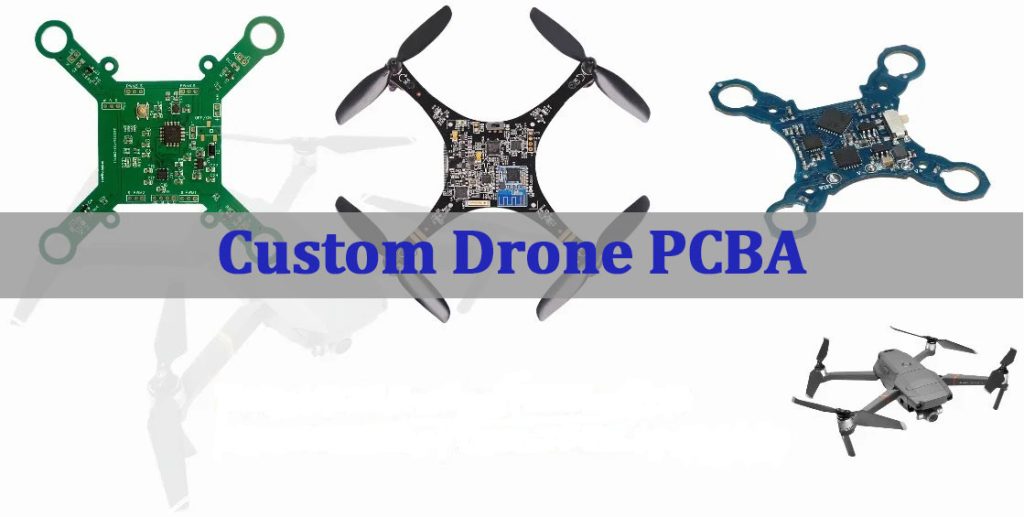
How Is a Custom Drone PCBA Designed for Flight Control Systems?
Custom drone PCBA design starts with flight control requirements rather than generic electronics layouts. Unlike consumer boards, drone PCBAs must operate under vibration, thermal fluctuation, and strict weight constraints.
From an engineering perspective, the flight control system integrates multiple critical subsystems on a single board, including the MCU, IMU, power regulation, communication modules, and safety monitoring circuits. These elements must work together with minimal latency and maximum reliability.
In real drone builds, engineers focus on:
- Stable power delivery to flight controllers and sensors
- Noise isolation between high-current motor paths and sensitive signal lines
- Redundant grounding strategies to protect IMU accuracy
- Layout symmetry to reduce vibration-induced stress
As a result, custom drone PCBA design is always application-driven rather than template-based.
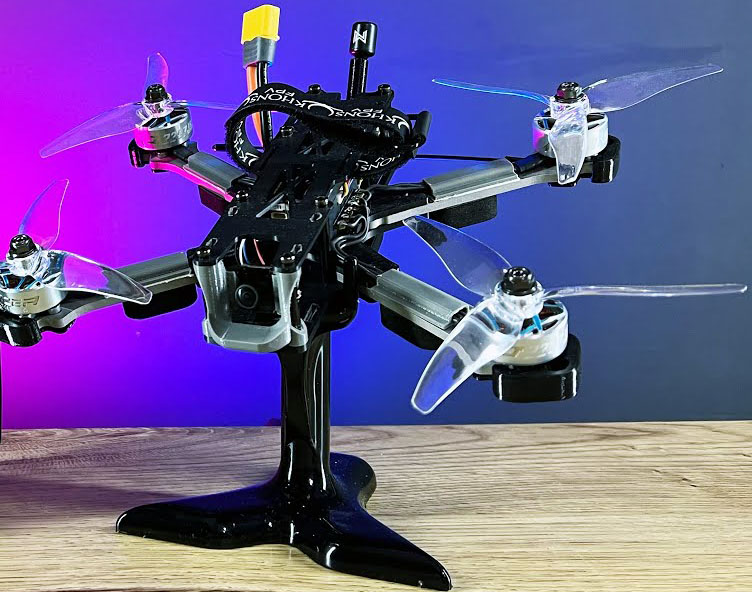
Top 5 Custom Drone PCBA Manufacturers in the USA
The U.S. drone market is served by a mix of defense-oriented, industrial, and commercial PCBA manufacturers. Only a subset are structured to support true custom drone PCBA, not just generic assembly.
Below are examples of well-known U.S.-based manufacturers commonly referenced in UAV and advanced electronics projects:
- Bestronics Inc – Known for high-reliability and defense-grade PCBA projects
- DCA Manufacturing – Focused on complex industrial and aerospace assemblies
- Emerald Technologies – Supports advanced electronics with engineering services
- Impact Electronic Solutions – Provides custom PCBA for industrial and aerospace markets
- Veris Manufacturing – Offers contract manufacturing with quality-driven processes
In practice, U.S. customers often complement domestic partners with experienced offshore manufacturers to balance cost, capacity, and turnaround.
Overall, the best results come from manufacturers that understand drone-specific constraints rather than general-purpose PCBA alone.
What PCB Stackups Are Commonly Used in Custom Drone PCBA for UAV Applications?
PCB stackup selection directly affects signal quality, power integrity, and mechanical strength in UAV systems.
From a technical standpoint, common stackups for custom drone PCBA include:
- 4–6 layer boards for basic flight controllers
- 6–8 layer boards for FPV drones with RF and HD video
- 8+ layer boards for advanced UAVs with redundancy and telemetry
In real applications, stackups typically allocate:
- Dedicated power planes for motors and regulators
- Separate ground planes for sensors and RF modules
- Controlled impedance layers for high-speed data links
Therefore, stackup design is closely tied to drone mission profiles and electrical architecture.
Why Are Multi-Layer PCBs Used in Advanced Drone PCBA Designs?
Multi-layer PCBs are essential in advanced drone designs because they allow higher integration without increasing board size or weight.
From an engineering perspective, multi-layer structures enable:
- Shorter signal paths and lower EMI
- Better separation between power and signal layers
- Improved mechanical stiffness under vibration
In practice, advanced drones rely on multi-layer PCBs to:
- Support HD cameras and FPV transmission
- Handle dense BGA packages and fine-pitch components
- Maintain stable performance during aggressive maneuvers
Consequently, multi-layer PCB technology is a foundational requirement rather than an upgrade.
What Design Rules Matter Most in Custom Drone PCBA Manufacturing?
Custom drone PCBA manufacturing follows stricter design rules than standard electronics due to operational stress and safety requirements.
Key rules engineers prioritize include:
- Controlled impedance for RF and high-speed signals
- Wide copper pours for motor and battery currents
- Thermal relief design to prevent localized overheating
- Mechanical reinforcement around connectors and mounting holes
In real manufacturing, ignoring these rules often leads to intermittent failures that only appear during flight testing, making early compliance critical.
How Does Power and Voltage Protection Affect Drone PCBA Reliability?
Power integrity is one of the most failure-prone areas in drone electronics.
From a reliability standpoint, drone PCBAs must handle:
- High inrush currents during motor startup
- Voltage spikes from ESC switching
- Battery transients and reverse polarity risks
In real builds, effective protection includes:
- TVS diodes and transient suppression
- Multi-stage voltage regulation
- Isolated power domains for control and propulsion
As a result, robust power and voltage protection directly translates into safer and more predictable drone operation.
Why Are Custom Drone PCBAs More Expensive Than Standard Boards?
Custom drone PCBAs cost more because they are engineered for performance, not mass replication.
Cost drivers typically include:
- Higher layer counts and HDI structures
- Tighter tolerances and inspection requirements
- Specialized materials for RF and thermal stability
In real projects, these investments reduce field failures and redesign cycles, which offsets upfront cost over the product lifecycle.
What Factors Influence the Cost of Custom Drone PCBA Projects?
Several variables determine the final cost of a custom drone PCBA project.
Major factors include:
- Board complexity and layer count
- Component availability and sourcing volatility
- Assembly precision (BGA, fine-pitch, microvia)
- Testing and validation depth
From a planning standpoint, transparent cost breakdowns help teams align budgets with technical risk rather than chasing the lowest quote.
How Does Custom Drone PCBA Support Mini and FPV Drone Designs?
Mini and FPV drones push PCBA design to its physical limits.
From an engineering view, these designs require:
- Ultra-compact layouts with high component density
- Lightweight materials to maximize flight time
- Clean RF paths for video and control links
In practice, custom drone PCBA enables:
- Smaller flight controllers with full functionality
- Stable FPV transmission under high-speed flight
- Reliable performance despite tight space constraints
Thus, customization is essential for competitive mini and FPV drone platforms.
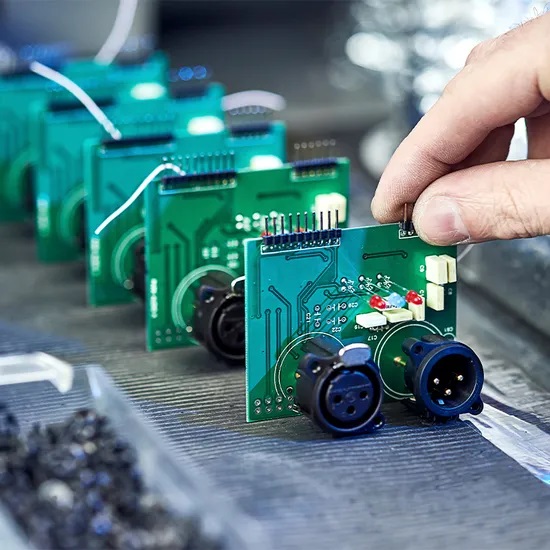
Why Choose EBest Circuit (Best Technology) for Custom Drone PCBA Projects for U.S. Customers?
EBest Circuit (Best Technology) supports custom drone PCBA projects with an engineering-first approach tailored to U.S. customer expectations.
Our strengths include:
- 20 years of PCBA manufacturing experience
- Dedicated multi-engineer project support
- Capability across custom drone PCB, mini drone PCB, and FPV drone PCB
- In-house PCB fabrication and PCBA assembly for tighter control
- Proven experience supporting U.S., German, Israeli, and Australian customers
By focusing on manufacturability, reliability, and communication, we help U.S. drone teams move from prototype to production. For project discussions or technical consultation, please contact us via sales@bestpcbs.com.
FAQs About Custom Drone PCBA
What Makes Custom Drone PCBA Different From Standard PCBA?
Custom drone PCBA is designed to handle vibration, power transients, RF signals, and flight-critical reliability requirements that standard PCBAs do not face.
Can Custom Drone PCBA Be Scaled From Prototype to Production?
Yes. With proper DFM planning and process control, custom drone PCBA can transition smoothly from prototyping to volume production.
What Is the 3W Rule for PCB and Does It Apply to Drone Designs?
The 3W rule helps reduce crosstalk by spacing traces appropriately and is especially important for RF and sensor signals in drone PCBAs.
What Is an 8 Layer PCB and When Is It Used in Drone PCBA?
An 8-layer PCB is commonly used in advanced drones that require multiple power planes, RF routing, and redundancy within a compact footprint.