 language
 english



Best PCB Assembly Provider for Mid-Sized Medical OEMs | ISO 13485 Certified & Free DFM Check
Finding the best PCB assembly provider for mid-sized medical OEMs requires more than precision component placement. Medical device manufacturers need ISO 13485-certified quality management, reliable SMT/THT assembly, component traceability, and consistent production quality. Best Technology provides medical PCB assembly services, including component sourcing, precision assembly, inspection, functional testing, and a free DFM check to help medical OEMs reduce manufacturing risks.
Are recurring soldering defects, inconsistent PCBA quality, or unreliable assembly suppliers delaying your medical device production? These problems can lead to repeated rework, disrupted validation schedules, and unexpected production delays. Choosing a qualified PCB assembly provider can help you avoid these issues. The following sections explain what medical OEMs should look for in a supplier and how Best Technology can support reliable PCB assembly from prototypes to repeat production.
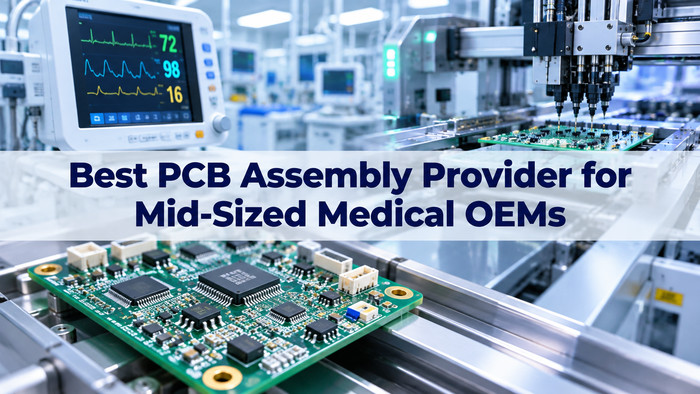
What Should Mid-Sized Medical OEMs Look for in a PCB Assembly Provider?
The best PCB assembly provider for mid-sized medical OEMs should offer ISO 13485 quality management, precision assembly capabilities, reliable quality control, and flexible production support. Beyond meeting current order requirements, the supplier should maintain consistent manufacturing quality as production volumes and product revisions change.
When evaluating a medical PCB assembly provider, focus on these six factors:
- Medical Industry Certifications: Verify the validity, certified entity, manufacturing location, and scope of the supplier’s ISO 13485 certification. The supplier should also provide relevant quality management documentation for supplier qualification.
- Proven Assembly Capabilities: Confirm SMT, THT, double-sided assembly, and fine-pitch component placement capabilities. The supplier should be able to assess manufacturing feasibility based on PCB dimensions, component packages, and assembly density.
- Quality Verification: Request inspection reports, sample test records, and nonconformance procedures. Confirm that the supplier can manufacture assemblies according to the agreed IPC acceptance criteria and functional requirements.
- Production Flexibility: Select a provider that supports prototypes, pilot runs, and repeat orders while maintaining controlled manufacturing requirements throughout product revisions.
- Component and Revision Control: Verify that components are purchased against the approved BOM and that substitutions, PCB revisions, and assembly document changes require appropriate authorization.
- Communication and Delivery Support: Evaluate how the supplier handles technical questions, production changes, manufacturing issues, and delivery coordination. Clear responsibilities are essential when problems must be resolved before production continues.
Selecting a PCB assembly provider based solely on quotation and delivery promises can expose medical OEMs to unnecessary manufacturing risks. A supplier with documented quality evidence, controlled production processes, and dependable technical support is better suited for long-term medical electronics manufacturing.
What Certifications Should a Medical PCB Assembly Provider Have?
ISO 13485:2016 is one of the most important certifications for medical PCB assembly providers, particularly when OEMs require controlled manufacturing processes, quality documentation, and production traceability.
The relevant certifications and assembly standards include:
- ISO 13485:2016: Establishes quality management requirements relevant to medical device supply chains, including document control, supplier management, traceability, nonconforming products, and corrective actions.
- ISO 9001:2015: Supports consistent manufacturing processes, quality management, and continual improvement.
- IPC-A-610: Provides acceptance criteria for electronic assemblies, covering solder joint quality, component installation, and workmanship.
- IPC J-STD-001: Defines requirements for soldered electrical and electronic assemblies. The applicable revision and product class should be specified before manufacturing.
Best Technology holds ISO 13485:2016 and ISO 9001:2015 quality management certifications, supporting PCB assembly services for medical electronics. Customers can request current certificates and verify the applicable manufacturing scope during supplier qualification.
For medical devices entering the United States market, the FDA’s Quality Management System Regulation (QMSR) became effective on February 2, 2026, incorporating ISO 13485:2016 by reference. However, a PCB assembly supplier’s ISO 13485 certification does not constitute FDA approval of the finished medical device.
What PCB Assembly Capabilities Should a Medical OEM Provider Offer?
Medical OEMs need PCB assembly providers with precision SMT placement, THT soldering, fine-pitch component assembly, double-sided SMT production, and controlled soldering processes. For medical monitoring equipment, diagnostic electronics, and portable medical devices, suppliers must also accommodate complex PCB constructions and application-specific inspection requirements.
The essential PCB assembly capabilities include:
- Precision SMT Assembly: Support miniature components such as 0201 and 01005, where required, and IC packages including QFN, QFP, and BGA. Accurate solder paste printing, component positioning, and controlled reflow profiles help reduce misalignment, tombstoning, solder bridging, and insufficient joints.
- Fine-Pitch and High-Density Assembly: Handle closely spaced leads, dense component layouts, and fine-pitch solder pads. BGA and QFN assembly requires appropriate pad geometry, solder paste deposition, component clearance, and inspection methods for hidden joints.
- Mixed SMT and THT Assembly: Assemble surface-mount components alongside through-hole connectors, headers, terminals, and other leaded devices. The supplier must select suitable soldering methods based on component heat tolerance and assembly requirements.
- Double-Sided PCB Assembly: Support component placement on both sides of the PCB, with appropriate assembly sequences and reflow conditions. Component weight, secondary reflow exposure, and board support must be considered to prevent soldering defects.
- Complex PCB Assembly: Accommodate multilayer PCB, HDI PCB, flexible PCB, and rigid-flex PCB constructions. Thin or flexible substrates may require dedicated fixtures, board support, and controlled handling to prevent deformation or solder joint damage.
- Controlled Soldering Processes: Establish suitable soldering profiles based on PCB thickness, copper distribution, solder alloy, and component thermal limitations. Temperature-sensitive components require particular attention to peak temperature and exposure duration.
- Inspection and Functional Testing: Provide SPI, AOI, X-Ray, and suitable electrical or functional testing capabilities. Inspection should identify assembly defects, while functional testing verifies the specified electrical performance of the completed PCBA.
For medical PCBAs containing precision sensors, analog signal-processing circuits, and high-density ICs, the supplier must do more than place components accurately. Reliable assembly depends on soldering consistency, controlled handling, appropriate inspection, and the ability to meet the product’s actual test requirements.
How Should a Medical PCB Assembly Provider Ensure Quality and Traceability?
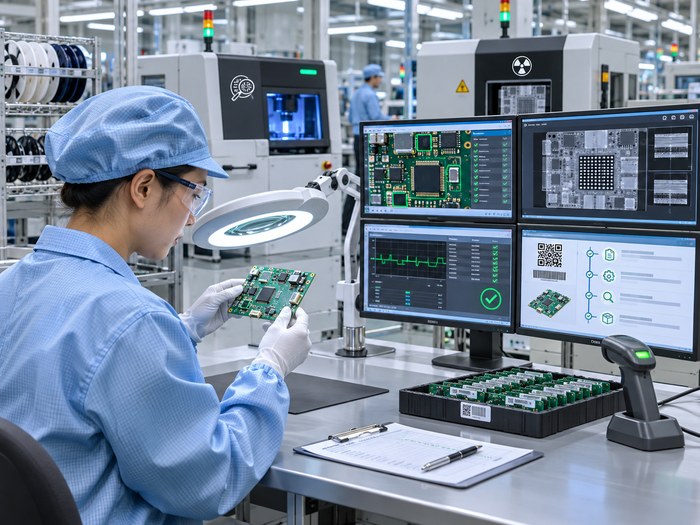
A medical PCB assembly provider should maintain quality control from incoming material verification through soldering, inspection, functional testing, and final release. Each production batch must follow approved manufacturing documents, BOM revisions, and acceptance criteria.
The critical quality controls include:
- Incoming Material Inspection: Verify PCB identification, component part numbers, package types, polarity, quantities, and specified lot or date-code information before assembly.
- Solder Paste Inspection: Use SPI to detect excessive or insufficient solder paste, printing misalignment, and irregular deposits before component placement.
- Post-Reflow Inspection: Apply AOI to detect visible placement and soldering defects. Use X-Ray inspection for selected hidden solder joints beneath BGA, QFN, and other bottom-terminated packages.
- Functional Verification: Test specified power supplies, communication interfaces, sensor inputs, and control functions against the medical OEM’s approved test procedures and acceptance limits.
- Production Traceability: Link PCB and component lots, manufacturing revisions, production operations, inspection results, and applicable assembly identifiers to the corresponding production records.
- Nonconforming Product Control: Segregate failed assemblies, document their disposition, and verify authorized rework or corrective actions before product release.
Production traceability is particularly important when medical OEMs investigate component failures or manufacturing defects. If a specific component lot is later identified as defective, traceability records can help determine which PCB assemblies may be affected.
Best Technology supports MES-based manufacturing traceability, including component lot information, production history, and inspection records. Individual PCB assembly identification, test-data requirements, and documentation retention can be defined according to the customer’s manufacturing specifications.
How Does a Reliable Medical PCB Assembly Provider Handle Component Sourcing?
A reliable medical PCB assembly provider should procure components against an approved BOM, verify component identity, and obtain customer authorization before making substitutions. Unauthorized component changes can affect signal accuracy, electrical performance, firmware compatibility, and medical device reliability.
Effective component sourcing requires:
- Approved Component Procurement: Purchase specified manufacturer part numbers through approved supply channels, with appropriate component authenticity and identification checks.
- BOM Verification: Match component values, package types, footprints, and reference designators with the released manufacturing documents.
- Controlled Substitutions: Identify obsolete or unavailable components and request written approval before introducing alternatives.
- Material Traceability: Maintain agreed manufacturer, lot, and date-code records to support production history and future quality investigations.
For example, replacing an analog front-end IC in a medical monitoring PCBA may affect input noise, measurement accuracy, or power consumption, even when the alternative component has the same package dimensions.
Component compatibility must be verified against the actual circuit requirements, not simply the component footprint.
Best Technology provides turnkey and customer-consigned PCB assembly services. Medical OEMs can retain control of critical components while assigning other approved component purchasing and assembly operations to Best Technology.
Why Choose Best Technology as Your PCB Assembly Provider for Medical OEMs?
Best Technology helps mid-sized medical OEMs reduce assembly defects, improve production consistency, and simplify PCB assembly management. With ISO 13485 quality management, precision SMT/THT capabilities, and manufacturing support, we help customers address common production problems before they affect delivery.
Choosing Best Technology offers practical advantages:
- Reduce Defects and Rework: Our free DFM check identifies potential footprint mismatches, soldering problems, component clearance issues, and other manufacturing risks before production.
- Improve Assembly Quality: ISO 13485 quality management, controlled assembly processes, and documented inspections help maintain consistent quality across manufacturing batches.
- Reduce Supplier Coordination: PCB fabrication, component sourcing, SMT/THT assembly, and specified testing can be managed through one supplier, reducing communication gaps between separate manufacturing stages.
- Maintain Control Over Product Changes: Approved BOMs, assembly revisions, and production requirements remain connected throughout repeat orders, reducing the risk of unauthorized modifications.
- Support Flexible Production: We accommodate prototypes, pilot runs, and recurring production requirements without requiring customers to change assembly suppliers between development stages.
- Protect Confidential Designs: NDA arrangements are available to protect proprietary PCB layouts, BOMs, assembly drawings, and manufacturing documents.
With over 20 years of PCB and PCBA manufacturing experience, Best Technology provides medical OEMs with dependable assembly support, controlled manufacturing, and direct communication throughout their projects.
What Medical PCB Assembly Services Does Best Technology Provide?
Best Technology provides custom medical PCB assembly services covering PCB fabrication, component procurement, SMT/THT assembly, firmware programming, inspection, and functional testing. Customers can choose full-turnkey, partial-turnkey, or consigned assembly according to their manufacturing requirements.
Our medical PCB assembly process includes:
- Manufacturing File Review: Review Gerber or ODB++ files, BOM, pick-and-place data, assembly drawings, component footprints, and acceptance requirements before production.
- PCB and Component Preparation: Manufacture the specified PCB, prepare approved components, and verify material identification and handling requirements.
- SMT Assembly: Complete solder paste printing, automated component placement, reflow soldering, and the required process inspections.
- THT and Mixed Assembly: Install through-hole connectors, headers, and other leaded components using appropriate soldering processes.
- Programming and Functional Testing: Perform specified firmware programming, electrical verification, and functional testing using customer-approved procedures and acceptance criteria.
- Final Inspection and Delivery: Verify assembly acceptance, product identification, required records, and packaging specifications before shipment.
Our services support patient monitoring PCBAs, diagnostic equipment, portable medical electronics, and wearable medical devices.
Additional services, including conformal coating, PCBA cleaning, custom labeling, and ESD-safe packaging, are available according to project requirements.

How Does Best Technology’s Free DFM Check Help Prevent PCB Assembly Defects?
Best Technology’s free DFM check helps identify potential PCB assembly problems before fabrication or SMT production begins. This reduces the risk of avoidable soldering defects, component placement failures, repeated prototype revisions, and production interruptions.
Our PCB assembly DFM review focuses on five critical areas:
- Component Footprint Compatibility: Check whether BOM part numbers, PCB land patterns, package dimensions, and placement coordinates match. Incorrect footprints can cause component misalignment, open solder joints, or assembly failures.
- Solder Pad and Stencil Design: Evaluate pad geometry, solder mask clearances, and stencil apertures. Incorrect solder paste distribution, particularly beneath QFN thermal pads, can cause solder bridging, insufficient joints, or package lifting.
- Component Placement Clearance: Check spacing around fine-pitch ICs, connectors, mounting holes, and PCB edges. Insufficient clearance may interfere with automated placement, soldering, or subsequent assembly operations.
- PCB Panelization and Handling: Review tooling edges, fiducial positions, depanelization requirements, and board support. Thin or densely populated PCBAs may require additional fixtures to reduce mechanical stress during manufacturing.
- Inspection and Test Accessibility: Identify inaccessible test points, restricted probe access, and hidden solder joints that require specialized inspection or test arrangements.
For example, a medical monitoring PCBA using a fine-pitch QFN sensor-interface IC may have excessive solder paste coverage beneath its thermal pad. Without appropriate stencil control, the package may experience soldering defects that require rework.
A free DFM check can identify this issue before assembly, allowing the required stencil or pad recommendations to be reviewed before manufacturing.
Best Technology provides DFM recommendations for customer approval and manufactures PCB assemblies according to the confirmed design and production specifications.
How Does Best Technology Support Medical PCB Assembly From Prototype to Production?
Best Technology supports prototype, pilot, and repeat medical PCB assembly production, helping OEMs maintain approved component specifications, manufacturing documents, and assembly acceptance requirements throughout different production stages.
Our production support includes:
- Prototype PCB Assembly: Produce engineering samples for component-fit verification, solderability evaluation, initial functional testing, and identification of manufacturing problems before larger orders.
- Pilot PCB Assembly: Build controlled trial batches using the intended production materials, assembly processes, and inspection requirements. First-article results and manufacturing observations can support the customer’s production-readiness assessment.
- Repeat PCB Assembly Production: Manufacture approved assemblies using released BOM revisions, production instructions, inspection criteria, and required traceability records. Any changes to components or manufacturing specifications follow the agreed approval process.
For medical OEMs, moving from prototype to repeat production requires more than increasing the order quantity. Component identity, soldering requirements, manufacturing revisions, and test acceptance criteria must remain controlled.
Best Technology supports these production stages through coordinated manufacturing documentation and controlled PCB assembly processes, helping customers reduce repeated setup problems and maintain consistency between production batches.
FAQ About Medical PCB Assembly Providers
Q1: Can Best Technology sign an NDA before reviewing confidential medical PCBA files?
A1: Yes. NDA arrangements are available before customers submit proprietary Gerber files, BOMs, assembly drawings, or other confidential manufacturing information. Confidentiality terms can be agreed upon before project evaluation.
Q2: Can medical OEMs request first-article inspection reports?
A2: Yes. First-article inspection can be included in the agreed manufacturing requirements. Customers should define the characteristics to be inspected, applicable acceptance criteria, report format, and approval requirements before production.
Q3: Can Best Technology program firmware onto medical PCB assemblies?
A3: Yes. Firmware programming can be included when customers provide the approved firmware file, programming interface, compatible tools or instructions, and verification requirements. Firmware identification can also be recorded according to the project specifications.
Q4: Can existing functional-test fixtures be used for medical PCB assembly orders?
A4: Yes, subject to compatibility evaluation. Customers can provide existing test fixtures and procedures. The electrical interface, software, operating conditions, acceptance limits, and fixture responsibilities should be confirmed before manufacturing.
Q5: Can medical PCBAs be supplied with Certificates of Conformity?
A5: Certificates of Conformity can be included in the agreed documentation package. Customers should specify the applicable product requirements, inspection criteria, and certificate details before production.
Q6: How are defective PCB assemblies handled before shipment?
A6: Assemblies that fail the specified inspection or testing requirements are identified and segregated. Their disposition is documented, and any authorized repair or rework is followed by the required verification before release.
Q7: Can Best Technology provide individual serial numbers and customized packaging?
A7: Yes. Individual identification labels, serial numbers, ESD-safe packaging, and customized packing quantities can be arranged. Serial-number relationships with inspection or test records should be defined before manufacturing.
Q8: Can medical PCB assemblies be shipped as individual boards or complete panels?
A8: Yes, depending on the approved PCB construction and assembly requirements. Customers can request depanelized boards or panelized assemblies. The selected delivery format must account for component clearance, board stress, connector placement, and packaging protection.
Get Reliable Medical PCB Assembly Support From Best Technology
Are recurring PCB assembly defects, unstable production quality, or delayed deliveries putting your medical device project at risk? Best Technology can help you identify manufacturing problems before production, reduce avoidable rework, control component changes, and maintain consistent assembly quality through ISO 13485-certified quality management, precision SMT/THT assembly, production traceability, and free DFM check.
Looking for the best PCB assembly provider for mid-sized medical OEMs? Send your Gerber files, BOM, assembly drawings, required quantity, component date-code requirements, target delivery date, and delivery location to sales@bestpcb.vn. Request your free DFM check and custom medical PCB assembly quotation today. Let Best Technology help you prevent assembly defects, reduce production delays, and move your medical PCBA project into reliable, repeatable manufacturing.