 language
 english


SMD vs THT: Surface Mount vs Through Hole PCB Assembly Guide
SMD vs THT compares two common ways to assemble electronic parts on a PCB. SMD parts sit on the surface of the board. THT parts use metal leads that pass through drilled holes.
Engineers usually choose SMD for compact products, high-speed assembly, and dense PCB layouts. They choose THT for connectors, large parts, power parts, and components that face pulling force or vibration.
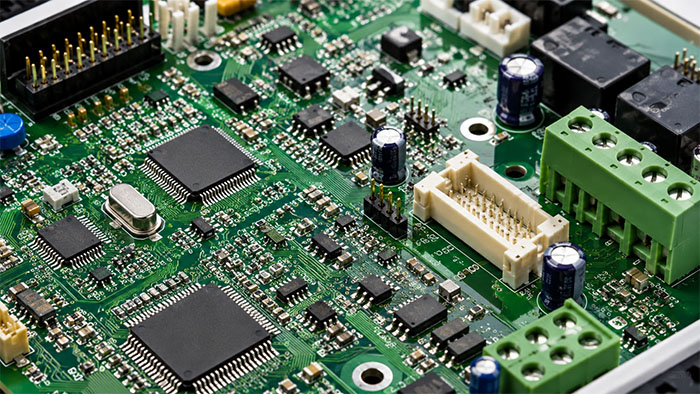
Many real PCBAs use both methods. A control board may use SMD ICs, resistors, and capacitors. The same board may also use THT terminal blocks, relays, transformers, or large capacitors. This mixed approach gives the product small size and strong mechanical support at the same time.
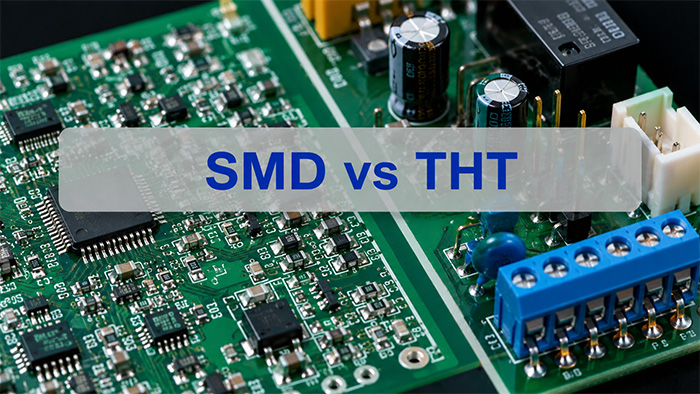
SMD vs THT Comparison Table
| Item | SMD | THT |
|---|---|---|
| Full term | Surface Mount Device | Through Hole Technology |
| Mounting style | Parts sit on PCB pads | Leads pass through PCB holes |
| Main process | SMT assembly and reflow soldering | Wave, selective, or hand soldering |
| PCB space | Saves more space | Uses more area |
| Production speed | Fast in automated lines | Slower due to insertion work |
| Mechanical strength | Good for small parts | Strong for stressed parts |
| Common parts | ICs, chip resistors, MLCCs, LEDs | Connectors, relays, terminal blocks, transformers |
| Best use | Compact and high-volume products | Rugged, power, and serviceable products |
| Repair work | Needs skill for tiny parts | Easier for manual repair |
The short answer is simple. Use SMD when size, speed, and automation matter most. Use THT when strength, easy handling, or larger parts matter more.
SMD vs SMT vs THT: What Do These Terms Mean?
Many buyers mix up SMD, SMT, and THT. The terms connect, but they do not mean the same thing.
- SMD means Surface Mount Device. It describes the part. An SMD component has pads, short terminals, balls, or metal ends that connect to PCB pads.
- SMT means Surface Mount Technology. It describes the process. SMT lines place SMD parts onto solder paste and then heat the board in a reflow oven.
- THT means Through Hole Technology. It describes a different assembly method. THT parts have leads that go through holes in the PCB.
This difference matters during quotation. A BOM may include SMD parts, but the assembly process uses SMT. A board may also include several THT parts. In that case, the PCBA factory needs extra steps after SMT, such as insertion, selective soldering, wave soldering, or hand soldering.
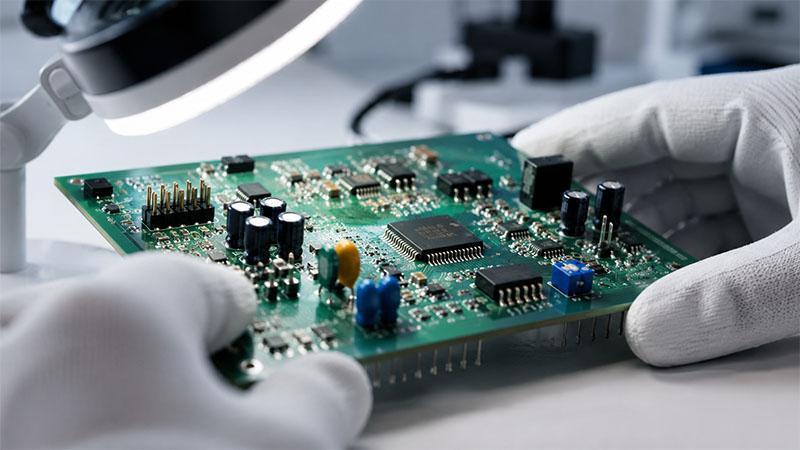
Surface Mount vs Through Hole: What Is the Main Difference?
Surface mount and through hole differ in the way each part connects to the PCB.
- In surface mount design, the component sits on copper pads. The PCB does not need a through hole for each terminal. This gives engineers more routing space and supports smaller layouts.
- In through hole design, the component lead passes through a drilled hole. The solder joint connects the lead to the pad and the plated barrel. This gives the part a strong anchor on the board.
- The layout also changes. SMD pads usually stay on the top or bottom layer. THT holes pass through the board and take up space on several layers. On dense boards, those holes may block routes or force a larger PCB size.
For this reason, surface mount suits compact electronics. Through hole suits parts that need stronger physical support.
How SMD Assembly Works in PCB Manufacturing?
SMD assembly starts with solder paste printing. A stencil deposits paste onto the PCB pads. Paste volume, stencil thickness, and pad size all affect solder quality.
Next, the pick-and-place machine places parts onto the pasted pads. It handles chip resistors, capacitors, diodes, ICs, LEDs, and many fine-pitch packages. This step gives SMD assembly its speed.
After placement, the board enters a reflow oven. Heat melts the solder paste and forms solder joints between the part terminals and PCB pads. A good reflow profile helps protect parts and improve joint quality.
Inspection follows the soldering step. AOI checks part position, polarity, missing parts, solder bridges, and visible solder defects. For BGA, QFN, or other hidden joints, the factory may use X-ray inspection.
SMD assembly works well when the project needs high density, stable repeatability, and fast production.
How THT Assembly Works in PCB Manufacturing
THT assembly starts with lead insertion. Operators or insertion machines place component leads into PCB holes. Some parts need lead forming before insertion.
After insertion, the board moves to soldering. Wave soldering works well when the PCB has many through-hole joints. Selective soldering works better when the board already has many SMD parts and only a few THT areas need solder. Hand soldering helps with prototypes, small batches, and special-shaped parts.
Then the team inspects the solder joints. They check hole fill, wetting, lead length, solder bridges, and solder fillet shape. Good inspection helps keep the assembly stable during use.
THT assembly takes more handling than SMT assembly. Still, it remains important for connectors, relays, transformers, switches, terminal blocks, and large power parts.
SMD Components vs THT Components: Which Parts Use Each Method?
SMD parts work best when the design needs small size and fast placement. THT parts work best when the design needs strength, high current, or easier manual work.
| Component Type | Common Choice | Reason |
|---|---|---|
| Small resistors | SMD | Small size and fast placement |
| Small capacitors | SMD | Good for dense circuits |
| ICs | SMD | Most modern ICs use SMD packages |
| LEDs | SMD or THT | Depends on product structure |
| Connectors | Often THT | Stronger support during plugging |
| Terminal blocks | Often THT | Better mechanical retention |
| Relays | Often THT | Larger body and higher load |
| Transformers | Often THT | Heavy body and pin structure |
| Switches | SMD or THT | Depends on force and size |
A good BOM review checks more than the part value. It also checks package type, footprint, lead time, assembly method, and mechanical load.
SMD vs THT Resistor: Which One Should You Choose?
Most modern PCB designs use SMD resistors. They save space, support automation, and fit common SMT production lines. Designers often use 0402, 0603, 0805, 1206, and larger chip resistor packages.
SMD resistors work well in signal circuits, pull-up circuits, pull-down circuits, feedback loops, LED current paths, and many control circuits.
THT resistors still help in some cases. Choose THT when the resistor needs a higher power rating, more body clearance, easier manual soldering, or easier replacement. Engineers may also choose THT for education boards, test fixtures, repair-friendly products, and some power circuits.
For commercial PCB assembly, SMD resistors usually give the best balance of cost, size, and speed. For high-power or hands-on work, THT may make the design easier to build and service.
SMD vs THT Capacitor: Which One Fits Better?
SMD capacitors work very well in compact electronics. MLCCs sit close to IC pins and help with decoupling, filtering, and high-frequency performance. Their small size also helps engineers keep traces short.
THT capacitors still play a strong role in power circuits. Large electrolytic capacitors often use through-hole leads because their bodies are taller and heavier. THT leads also help the part handle vibration and movement.
Use SMD capacitors for compact signal circuits, dense layouts, and automated assembly. Use THT capacitors for larger capacitance, higher voltage, more body weight, or stronger board retention.
A PCBA does not need to choose only one style. Many boards use SMD ceramic capacitors near ICs and THT electrolytic capacitors near power input or output sections.
SMD vs THT Cost: Which One Saves More?
SMD often saves cost in medium and high-volume production. Pick-and-place machines place parts quickly. Reflow ovens solder many joints in one pass. This process reduces labor time and improves output.
THT can add cost when the board needs manual insertion, hand soldering, lead cutting, or special fixtures. The labor cost grows as the number of THT parts increases.
Still, cost does not only mean assembly price. A THT connector may reduce field failure risk. A large THT capacitor may fit the electrical design better. A strong terminal block may improve product life.
The best cost choice comes from the full product picture. SMD usually reduces assembly cost at scale. THT adds value when the part needs strength, size, or service access.
SMD vs THT Reliability: Which One Performs Better?
Both SMD and THT can deliver reliable results when the design and process fit the product.
SMD performs well in compact and high-density products. Short connections can help signal quality. Automated SMT assembly also gives steady placement and soldering results.
THT performs well when the part faces force. Connectors, switches, terminal blocks, and heavy components often need stronger anchoring. The lead passes through the PCB and gives extra support.
Reliability also depends on the working environment. Vibration, heat, current, humidity, product size, and service conditions all matter. Good design rules matter as much as the package style.
For many projects, the best reliability comes from a mixed design. Use SMD where density and speed matter. Use THT where mechanical strength matters.
SMD vs THT Production Volume: Which Works Better?
SMD works best for high-volume production. Automated SMT lines place thousands of parts with high speed and repeatable accuracy. This makes SMD a strong choice for products that need stable batch output.
THT works well for low-volume builds, special parts, and rugged designs. It also helps prototypes when engineers want larger parts and easier manual repair.
For medium-volume projects, the best option depends on the BOM. If the board has mostly SMD parts and a few THT connectors, mixed assembly makes sense. If the board uses many large parts, THT may remain a major part of the process.
Production volume should guide the process plan. A clear DFM review helps choose panel size, soldering method, inspection steps, and test flow before the build starts.
When Should You Choose SMD?
Choose SMD when the product needs small size, modern packages, and fast production.
SMD suits wearable electronics, control boards, communication modules, LED boards, sensor products, medical devices, automotive modules, and many industrial PCBAs.
It also helps when the design needs short traces, fine-pitch ICs, or double-sided component placement. The PCB can carry more functions in a smaller area.
SMD also supports a cleaner production flow at scale. Once the SMT line setup finishes, the assembly process moves quickly and consistently.
For most modern electronic products, SMD should serve as the main assembly method unless the part needs special strength, power handling, or manual service.
When Should You Choose THT?
Choose THT when the product needs stronger physical support or easier manual handling.
THT fits connectors, terminal blocks, transformers, switches, relays, large capacitors, and some power components. These parts often face force, weight, heat, or repeated use.
THT also helps when a product needs easy repair. Technicians can identify and replace larger through-hole parts more easily than tiny SMD parts.
Some customers also choose THT for early prototypes, education kits, and test equipment. Larger components make the board easier to build and modify by hand.
THT may take more production time, but it gives clear value when the design needs strength and serviceability.
Can SMD and THT Work Together in One PCBA?
Yes. Many PCBAs use both SMD and THT. This mixed approach often gives the best result.
A power control board may use SMD ICs, resistors, capacitors, and diodes in the control circuit. It may also use THT relays, terminal blocks, transformers, and power capacitors in the power section.
This approach makes sense because each component has a different job. A tiny resistor does not need the same support as a connector. A communication IC does not face the same force as a terminal block.
Mixed assembly needs a clear process plan. The factory must consider SMT placement, reflow soldering, THT insertion, selective soldering, hand soldering, inspection, and testing.
Good layout also matters. The PCB should leave enough clearance for soldering tools, fixtures, high components, and inspection access.
How Should You Prepare Files for SMD and THT Assembly?
Clear files help the factory build the PCBA correctly. A complete package usually includes Gerber files, BOM, pick-and-place file, assembly drawing, and special notes.
The BOM should show part number, value, package, quantity, and approved alternatives if available. The assembly drawing should show polarity, connector direction, special mounting height, and any hand-soldered parts.
For THT parts, the PCB file should match the correct hole size and pad size. For SMD parts, the land pattern should match the component package and soldering process.
If the board uses mixed assembly, mark any special soldering requirements early. This helps the factory choose reflow, wave soldering, selective soldering, or hand soldering with fewer delays.
Why Work with Best Technology for SMD and THT PCB Assembly?
Best Technology supports PCB fabrication, PCB assembly, component sourcing, DFM review, and testing for customers who need practical manufacturing support.
For SMD projects, Best Technology can support SMT assembly, reflow soldering, AOI inspection, and production planning. For THT projects, Best Technology can support through-hole insertion, soldering process review, and inspection. For mixed PCBAs, our team can help review the process flow before production.
This support matters because SMD vs THT selection affects cost, lead time, quality, and product use. A design may look simple on the screen, but small process details can affect the final build.
Customers can send Gerber files, BOM, assembly drawings, and testing needs for review. Our team can check manufacturability and provide practical feedback before production starts.
For any new PCB and PCBA projects inquiries, pls feel free to contact Best Technology at sales@bestpcb.vn.
To put it simply, SMD vs THT is not a question with one fixed answer. Each method has a clear role.
SMD helps when a product needs small size, dense routing, automated assembly, and high production speed. THT helps when a product needs strong mechanical support, larger components, and easier manual service.
Many professional PCBAs use both. This mixed method allows engineers to use SMD for compact circuits and THT for connectors, relays, transformers, and power parts.
The best choice comes from the product, not from a general rule. Review the component type, current, heat, space, force, production volume, and test needs. Then choose the package and assembly method that gives the product the best balance.