 language
 english


What are the contract manufacturer vs OEM differences?
Understanding the contract manufacturer vs OEM differences is important for product developers, purchasing teams, engineers, and brand owners who want to bring a product to market with the right manufacturing model. At first glance, the terms may look similar because both are connected with production, supply chain work, quality control, and product delivery. In real business situations, however, they describe different roles, different responsibilities, and different levels of control over design, branding, production, and after-sales ownership.
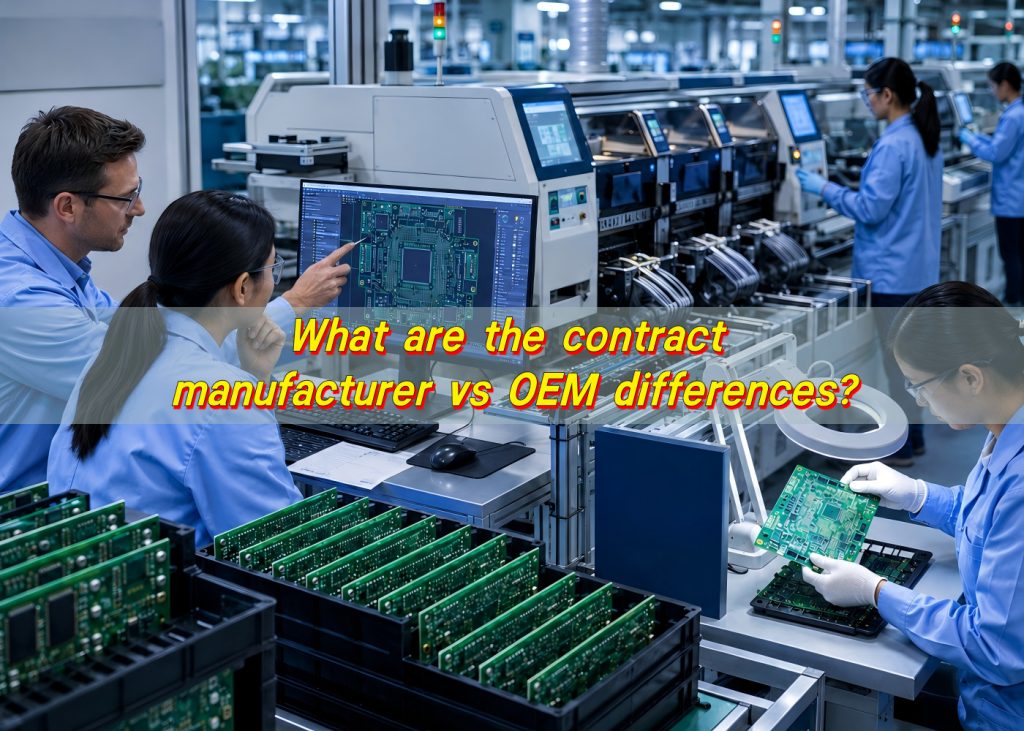
For electronics, PCB assemblies, membrane switch components, and custom electromechanical parts, the difference becomes even more practical. A company may design a product but ask another factory to manufacture it. Another company may buy a finished or semi-finished product from an OEM and sell it under its own market channel. In some cases, the same supplier may provide contract manufacturing, OEM production, ODM design support, component sourcing, testing, and packaging. This is why buyers often feel confused when comparing suppliers.
Best Technology works with customers who need reliable manufacturing support for electronics-related products, including custom PCB, PCBA, tactile switch components, and related assemblies. In many projects, customers already have drawings, specifications, Gerber files, BOMs, mechanical requirements, or functional targets. In other projects, they only have an initial product idea and need practical guidance to turn that idea into a stable product.
What is contract manufacturing?
Contract manufacturing is a business arrangement where one company hires another company to manufacture products, parts, subassemblies, or complete units based on agreed specifications. The hiring company usually owns the product concept, market strategy, customer relationship, and often the product design. The contract manufacturer provides the production capability, technical process, equipment, labor, quality control, sourcing support, and delivery execution.
For example, a company may design a handheld electronic controller with a PCB, plastic housing, battery contacts, and cable assembly. The company may have a strong sales team and a clear product concept, but it may not have SMT lines, test fixtures, lamination equipment, stamping tools, or assembly workers. In that case, it can work with a contract manufacturer such as Best Technology to produce the required PCB assembly and related components according to the customer’s design file and performance requirements.
A contract manufacturer may support different stages of the product journey. Some only manufacture according to fixed drawings. Some provide engineering feedback before production. More capable partners offer DFM review, material recommendations, sample building, tooling support, functional testing, packaging suggestions, and mass production planning. This makes the model flexible for both startups and established companies.
Typical contract manufacturing services may include:
- Product feasibility review and manufacturing advice
- Material sourcing and supplier coordination
- PCB fabrication, PCBA, or mechanical assembly
- Prototype, pilot run, and mass production
- Inspection, testing, traceability, and quality documentation
- Packaging, labeling, and shipment support
The main value of contract manufacturing is focus. The product owner can focus on product definition, market demand, distribution, branding, and customer support. The manufacturing partner focuses on making the product correctly, repeatedly, and efficiently.
Is contract manufacturing the same as OEM?
Contract manufacturing is not exactly the same as OEM, although the two terms are sometimes used together in daily business conversations. The overlap causes confusion because both models can involve one company making products for another company. The real difference is found in product ownership, design control, branding, and the role played by the manufacturing supplier.
An OEM, or Original Equipment Manufacturer, traditionally refers to a company that makes products, parts, or equipment that may be sold by another company under that company’s brand or integrated into a larger system. In many modern industries, OEM can also mean the brand owner that designs and sells the final product. Because the term is used differently across regions and industries, it is important to confirm the meaning during supplier discussions.
The easiest way to separate the two is to ask: who owns the design and who controls the brand? If the buyer provides the complete design and asks the supplier to build it, that is usually contract manufacturing. If the supplier offers an existing product design that the buyer can brand or slightly modify, that is often closer to OEM or ODM, depending on how much design work the supplier provides.
| Point of Comparison | Contract Manufacturing | OEM |
|---|---|---|
| Main role | Produces according to the customer’s contract, drawings, or specifications | Produces original equipment, parts, or products for use by another company or brand |
| Design ownership | Usually owned or controlled by the customer | May be owned by the OEM, the buyer, or shared depending on the arrangement |
| Branding | Usually the customer’s brand | Often the buyer’s brand, but the OEM may also supply branded or unbranded parts |
| Customization level | Often high, especially for engineered products | Can be standard, semi-custom, or fully custom |
| Best fit | Buyers with defined specifications or product files | Buyers needing original parts, finished goods, or manufacturing from an established source |
| Common industries | Electronics, PCBA, medical devices, industrial products | Automotive, electronics, appliances, machinery, consumer devices |
For buyers, this distinction matters because it affects quotation accuracy, intellectual property protection, quality responsibility, and long-term cooperation. If you contact Best Technology with a complete product file, the discussion may start as contract manufacturing.
Contract manufacturing vs OEM differences
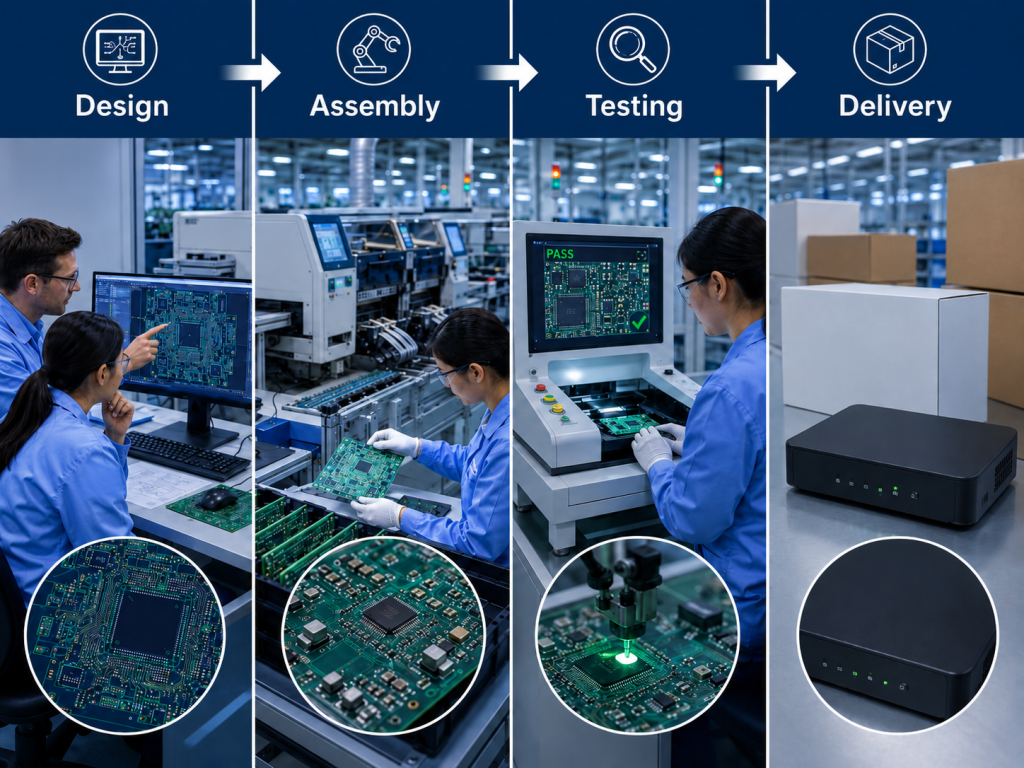
The most practical way to understand contract manufacturer vs OEM differences is to look at the full product chain. A product does not simply appear after a purchase order is placed. It begins with an idea, then moves through design, material selection, prototyping, validation, production, inspection, packaging, delivery, and market support. Contract manufacturers and OEMs may participate in different parts of this chain.
A contract manufacturer usually works under the customer’s direction. The customer may provide drawings, Gerber files, BOMs, assembly instructions, mechanical designs, performance requirements, or samples. The contract manufacturer then reviews whether the product can be manufactured efficiently and consistently.
An OEM may have a stronger role in product origin. The OEM may already manufacture the product or component before the customer enters the conversation. The buyer may request changes in logo, material, color, connector type, cable length, dome force, plating, packaging, or testing level. In some cases, the OEM’s product becomes part of the buyer’s final product. In other cases, the OEM produces a full product that the buyer sells through its own channel.
| Category | Contract Manufacturer | OEM |
|---|---|---|
| Product starting point | Customer’s design, files, or technical request | Supplier’s original product, component, platform, or equipment |
| Buyer control | Usually high control over design and specifications | Control depends on customization depth |
| Supplier responsibility | Manufacturing execution, process quality, sourcing support, assembly, testing | Product supply, original equipment production, sometimes design and validation |
| Engineering input | Often focused on manufacturability, process optimization, cost improvement, and test planning | Often focused on existing product capability, customization, and compatibility |
| IP ownership | Usually stays with the customer when customer provides the design | Must be clearly defined, especially when the supplier owns the base design |
| Cost structure | Based on production process, materials, labor, tooling, testing, and volume | Based on product platform, customization, tooling, volume, and commercial terms |
| Flexibility | Strong for custom projects | Strong when the OEM has a suitable existing solution |
| Ideal buyer | Brand owner with defined requirements | Buyer needing a proven source, original parts, or a ready product foundation |
Best Technology often supports both types of conversations. For customers with finished drawings, the team can review manufacturability, cost, tooling needs, and production steps. For customers still shaping the product, the team can discuss options such as PCB material, flexible circuit design, adhesive construction, tactile response, and assembly method. This helps buyers reduce trial-and-error and move toward a more production-ready solution.
The contract manufacturing vs OEM differences can also affect how you prepare an RFQ. For contract manufacturing, buyers should provide as many technical files as possible. These may include drawings, specifications, BOMs, CAD files, Gerbers, tolerances, test requirements, annual forecast, packaging instructions, and compliance needs. For OEM projects, buyers should describe the application, performance expectations, target price, branding request, expected quantity, and required customization.
What is OEM vs ODM vs CM?
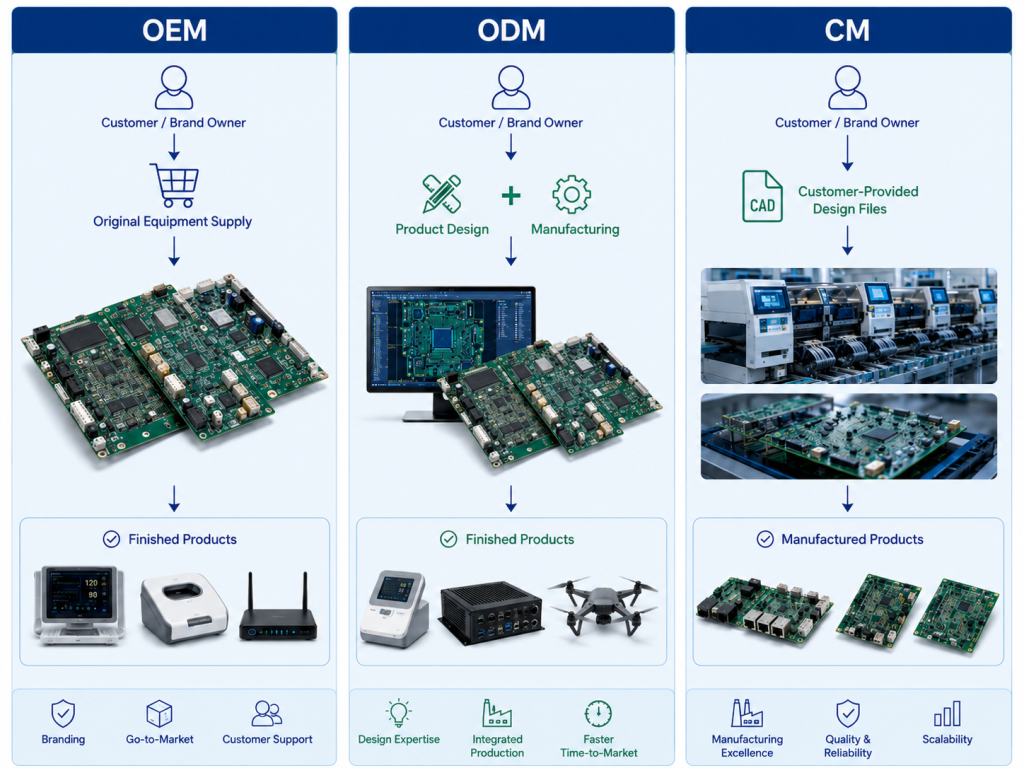
OEM, ODM, and CM are three common manufacturing models. They are related, but they serve different customer needs. OEM stands for Original Equipment Manufacturer. ODM stands for Original Design Manufacturer. CM stands for Contract Manufacturer. These terms are often discussed together because buyers need to decide how much design responsibility they want to keep and how much support they expect from the supplier.
OEM usually means the supplier manufactures original equipment, parts, or products that are used, branded, or sold by another company. ODM means the supplier provides both design and manufacturing. The buyer may choose from an existing design, request modifications, and sell the product under its own brand. CM means the supplier manufactures according to the customer’s specifications or contract, while the customer usually keeps stronger control over product definition.
In a practical product development conversation, the difference can be described this way: OEM is about original equipment supply, ODM is about design plus manufacturing, and CM is about manufacturing service based on customer requirements. The boundaries may overlap, especially when a capable supplier provides engineering support before production. Still, the three models are useful for understanding responsibility.
| Model | Full Name | Who Usually Owns the Design? | Who Manufactures? | Best For |
|---|---|---|---|---|
| OEM | Original Equipment Manufacturer | Supplier, buyer, or agreed party depending on the project | OEM supplier | Buyers needing original equipment, parts, or products from a specialized source |
| ODM | Original Design Manufacturer | Usually the supplier owns or controls the base design | ODM supplier | Buyers needing ready design support with branding or modifications |
| CM | Contract Manufacturer | Usually the customer owns or controls the design | Contract manufacturer | Buyers with drawings, files, or detailed specifications |
ODM is especially useful when the buyer has a market idea but does not want to develop the full product from zero. For example, a customer may want a tactile control module for an industrial handheld device, but does not have the internal design team to develop the switch structure, circuit interface, and dome arrangement. An ODM-style supplier could propose an existing design framework and modify it for the customer’s product.
OEM sits between these interpretations depending on the industry. In automotive, OEM often refers to the final vehicle brand. In component supply, OEM can refer to the original maker of a component that other companies integrate into their products. In electronics sourcing, some buyers use OEM to mean private-label production. Because of this variation, it is wise to define the term during supplier communication instead of assuming both sides mean the same thing.
Here is a simple way to choose among them:
- Choose CM when you already have technical files and need a manufacturing partner.
- Choose ODM when you need both design support and production.
- Choose OEM when you need original parts, existing product platforms, or supplier-developed equipment.
- Choose a hybrid partner when your project needs engineering advice, sample validation, manufacturing, and long-term supply under one roof.
What is a drawback of contract manufacturing?
Contract manufacturing offers strong advantages, but it should be managed with clear communication and careful supplier selection. The most common drawback is reduced direct control over production compared with owning your own factory. Since the product owner relies on an external manufacturer, the final result depends on the supplier’s process discipline, engineering capability, quality culture, and responsiveness.
This drawback can be controlled through good preparation. A buyer should provide complete specifications, confirm inspection standards, protect intellectual property through agreements, approve samples before mass production, and choose a manufacturer with relevant experience. In many cases, the issue is not the contract manufacturing model itself. The real issue is weak documentation, unclear expectations, or selecting a supplier that does not understand the product’s technical requirements.
For electronics products, small details matter. A drawing may define the shape of a metal dome, but the real user experience also depends on force curve, actuation feel, plating, contact area, adhesive flatness, spacer thickness, surface cleanliness, and assembly pressure.
There are several areas buyers should manage with attention:
- Communication: Technical requirements should be written clearly, not only discussed verbally.
- Design control: The customer should confirm who owns files, tooling, test programs, and special process knowledge.
- Quality standards: Inspection methods, acceptable tolerances, test quantities, and sample approval rules should be defined.
- Supply chain: Critical materials should be confirmed, especially for long-life or regulated products.
- Forecast planning: Volume changes should be discussed early so the manufacturer can prepare capacity and materials.
Best Technology supports customers by reviewing technical files and production requirements before moving into formal manufacturing. For custom PCB-related assemblies, the team can discuss material selection, tooling, tactile requirements, circuit interface, testing, and packaging needs. This helps the buyer build a clearer specification and reduces unnecessary revision loops.
Overall, the drawback of contract manufacturing is not a reason to avoid it. It is a reason to manage it professionally. When specifications, communication, and quality expectations are well organized, contract manufacturing can be a smart, flexible, and cost-effective production strategy.
What is the difference between a contract manufacturer and a manufacturer?
A manufacturer is any company that makes products, components, parts, or assemblies. A contract manufacturer is a specific type of manufacturer that produces goods for another company under a contract. All contract manufacturers are manufacturers, but not all manufacturers are contract manufacturers.
A contract manufacturer, by contrast, usually works behind the customer’s brand or product program. It may not sell the finished product to the public. Instead, it makes products according to the customer’s drawings, samples, engineering files, or purchase agreement. The customer controls the market-facing identity, while the contract manufacturer supports production.
| Comparison Point | Manufacturer | Contract Manufacturer |
|---|---|---|
| Business model | Makes products for its own brand, catalog, or customers | Makes products for another company under contract |
| Product ownership | Often owns the product design and brand | Usually customer owns or controls the product design |
| Customer relationship | May sell standard products to many buyers | Often works on custom or private production projects |
| Engineering role | May design for its own product line | May review customer files and improve manufacturability |
| Branding | Manufacturer’s own brand or neutral supply | Customer’s brand or private-label arrangement |
| Production flexibility | Depends on its product range | Often flexible for custom specifications |
This difference matters when you are sourcing custom components. If you need a standard item, a general manufacturer may be enough. If you need a product built to your drawing, electrical requirement, tactile requirement, material stack-up, or brand packaging, a contract manufacturer is usually a better fit.
For example, if a buyer needs a standard metal dome with a common diameter and force, a manufacturer with stock parts may support the request. If the buyer needs a custom metal dome array with defined circuit layout, adhesive backing, connector tail, embossed structure, life cycle testing, and final packaging, a contract manufacturer is more suitable. The project requires more coordination and more project-specific control.
Best Technology can support customers who need custom production rather than only standard parts. This is useful for buyers in medical devices, industrial control, communication equipment, automotive electronics, smart terminals, and other products where input feel, stable contact, and assembly reliability matter. In these applications, the product may look simple from the outside, but the internal structure needs careful manufacturing control.

What is the difference between OEM and manufacturing?
OEM and manufacturing are related, but they are not the same concept. Manufacturing is the act of making products or components. OEM is a business role connected with original equipment, product origin, or supply relationship. Manufacturing describes the production activity. OEM describes who makes the original equipment or how the product is positioned in the supply chain.
A company can perform manufacturing without being called an OEM. For example, a factory may produce parts according to another company’s drawings and never own the product design. That is manufacturing, and more specifically it may be contract manufacturing. Another company may design and manufacture an original component that other companies use inside their products. That company may be considered an OEM supplier.
The distinction becomes easier when you separate activity from role. Manufacturing answers the question: “Who makes it?” OEM answers the question: “Who is the original equipment source or product origin in this supply chain?” In some cases, the same company is both the manufacturer and the OEM. In other cases, manufacturing is outsourced to a contract manufacturer, while the brand owner or design owner remains the main market-facing company.
| Term | Meaning | Main Focus | Example |
|---|---|---|---|
| Manufacturing | The process of making products, parts, or assemblies | Production activity | SMT assembly, metal dome stamping, adhesive lamination, PCB fabrication |
| OEM | Original Equipment Manufacturer | Product origin or original equipment supply role | Supplier produces a component or product used by another brand |
| Contract Manufacturing | Manufacturing under agreement for another company | Service model | Customer provides files; factory produces according to contract |
| Brand Owner | Company that sells or markets the product | Market identity and customer relationship | A device company selling finished products under its own name |
In daily sourcing, buyers may say they are looking for an OEM manufacturer when they actually mean they want a factory that can produce products under their own brand. Others may say they need contract manufacturing when they also expect the supplier to help with design. These terms are common, but they are not always used precisely. A good supplier will clarify the request rather than rely only on labels.
Best Technology can help customers define the correct path before production starts. If the customer already has complete technical files, the work can move toward contract manufacturing review and quotation. If the customer needs a suitable metal dome structure or PCB assembly approach, the team can provide engineering input and manufacturing suggestions. If the customer is developing a product for long-term supply, early discussion can help improve cost, reliability, and manufacturability.
In summary, the contract manufacturer vs OEM differences mainly come down to design ownership, production responsibility, branding control, customization depth, and the level of engineering support required.