 language
 english


Circuit Card Assembly | Reliable CCA Manufacturing From Prototype To Production
Circuit Card Assembly (CCA) is the comprehensive process of populating a bare printed circuit board (PCB) with electronic components to create a functional electronic assembly, serving as the critical “brain” of countless modern devices. This article provides a complete guide to CCA manufacturing, from core definitions and processes to selecting the right partner for your project needs.
The journey from a schematic to a finished, reliable circuit card assembly is fraught with potential pitfalls that can derail budgets and timelines. Many engineers and product managers face significant hurdles.
- Finding a manufacturer that can seamlessly scale from a few prototype circuit card assemblies to full production.
- Managing the intricate circuit card assembly manufacturing process without in-house expertise.
- Sourcing reliable domestic circuit card assembly for low volume or high-mix projects.
- Ensuring rigorous circuit card assembly testing to meet quality and compliance standards.
- Controlling costs and avoiding hidden fees in turnkey circuit card assembly services.
A skilled CCA provider delivers tailored solutions that address each stage of development.
- Scalable Solutions: Partners that offer low volume circuit card assembly services all the way to high volume circuit card assembly services provide flexibility and a clear growth path.
- Expert Process Management: Experienced manufacturers demystify the circuit card assembly manufacturing process, handling everything from design review to final inspection.
- Domestic & Offshore Options: Providers with a global footprint, like operations in the USA and Vietnam, can offer optimized USA-based circuit card assembly services for prototypes and circuit card assembly in China for cost-effective production.
- Comprehensive Quality Assurance: A commitment to robust circuit card assembly testing protocols, including AOI, X-ray, and functional testing, ensures reliability.
- Transparent Turnkey Models: True turnkey circuit card assembly services manage the entire supply chain—components, assembly, testing—with clear, upfront circuit card assembly pricing.
As a professional PCB and assembly factory with strong engineering support and manufacturing facilities in Asia, Best Technology excels in managing the entire product lifecycle. From initial circuit card assembly design review and prototype circuit card assembly services to medium volume circuit card assembly services and full-scale production, we ensure quality, compliance (including lead-free circuit card assembly USA standards), and on-time delivery. Pls feel free to contact us at any time at sales@bestpcb.vn to discuss your project.
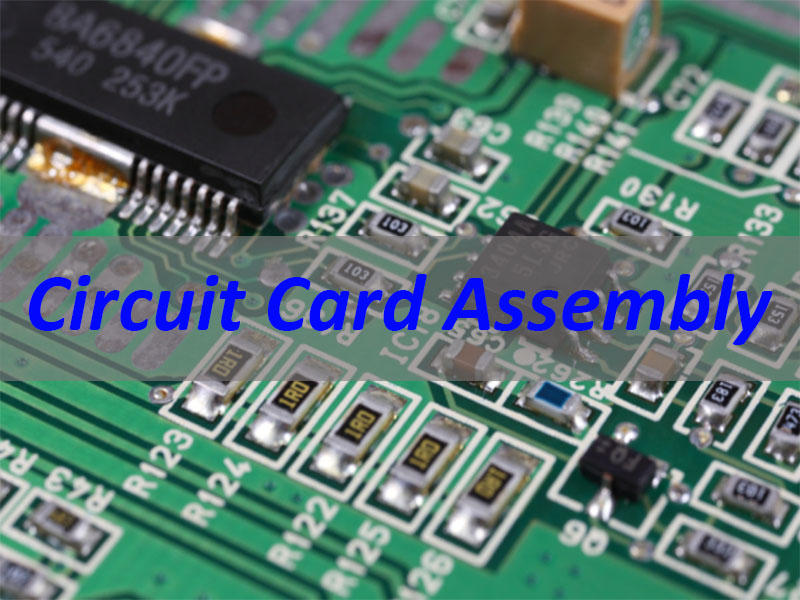
What Is A Circuit Card Assembly Definition?
A Circuit Card Assembly (CCA) is the final, populated stage of a printed circuit board. It starts as a bare PCB—a non-conductive substrate with laminated copper traces—and becomes a CCA once electronic components (like resistors, capacitors, ICs) are soldered onto it, creating a functional electronic module. Think of the PCB as the skeleton and road map, while the CCA is the complete, living organism capable of performing its intended electronic function. Understanding this circuit card assembly definition is fundamental for anyone involved in electronics design, procurement, or manufacturing.
- Core Component: It is the fundamental building block of almost all modern electronics, from smartphones to medical devices.
- Integration Point: A CCA integrates passive components, active semiconductors, and connectors into a single operational unit.
- Level of Assembly: The term often specifies the first level of assembly where components are mounted directly onto a PCB, which may then be installed into a larger system.
- Interchangeable Terms: CCA is largely synonymous with PCA (Printed Circuit Assembly) and PCBA (Printed Circuit Board Assembly).
In essence, a circuit card assembly is the tangible result of the electronics manufacturing process, where a design is physically realized and ready to power innovation.
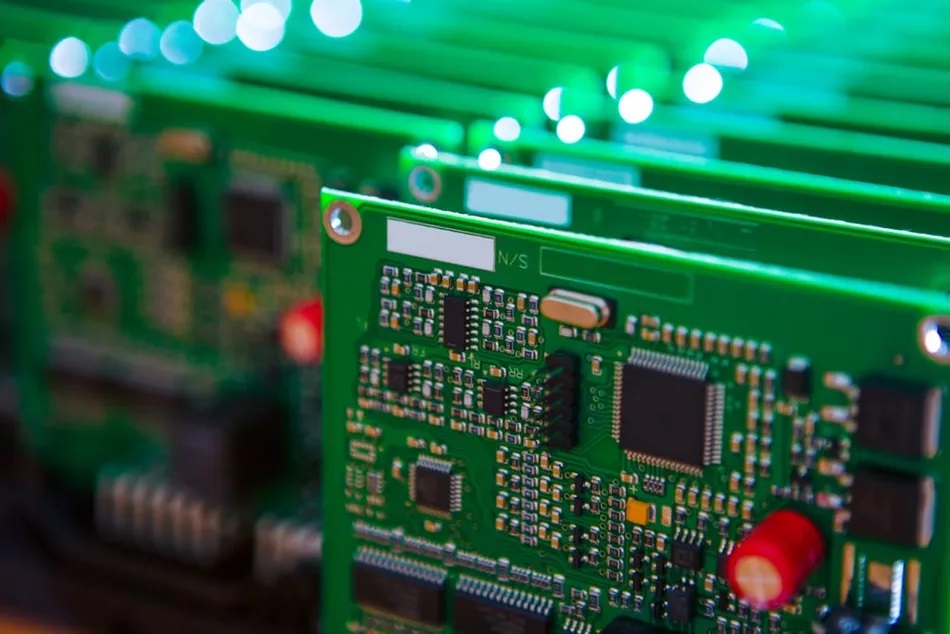
How Does The Circuit Card Assembly Manufacturing Process Work?
The circuit card assembly manufacturing process is a multi-step, precision-driven sequence that transforms a bare board and a bag of components into a tested, functional unit. This process requires meticulous planning, advanced equipment, and stringent quality control to ensure reliability, especially for class iii circuit card assemblies in aerospace or medical fields. A well-executed process is key to achieving high yields and robust performance.
- Design & Pre-Production Review: The process begins before manufacturing. The manufacturer reviews Gerber files, BOM, and assembly drawings to identify potential issues like component footprint errors or soldering challenges.
- Sourcing & Procurement (Turnkey Service): For turnkey circuit card assembly services, the manufacturer procures all components per the BOM, managing vendor relationships and mitigating supply chain risks.
- Solder Paste Application: Solder paste (a mix of tiny solder spheres and flux) is precisely applied to the PCB pads through a laser-cut stencil, defining where components will be attached.
- Automated Component Placement: High-speed automated circuit card assembly machines (pick-and-place) accurately position surface-mount device (SMD) components onto the pasted pads. This is critical for automated high volume circuit card assembly.
- Reflow Soldering: The populated board passes through a reflow oven with a controlled temperature profile. The paste melts, soldering components in place, then cools to form permanent electrical and mechanical connections.
- Through-Hole & Mixed Technology: Any through-hole components are inserted, often manually or via auto-insertion, and soldered using wave soldering or selective soldering techniques.
- Cleaning & Conformal Coating: Flux residue is cleaned off. A protective conformal coating may be applied for environmental protection (moisture, dust, chemicals).
- Testing & Inspection (QA/QC): This critical phase includes circuit card assembly inspection (Automated Optical Inspection – AOI), X-ray inspection for hidden solder joints (like BGAs), and functional testing to verify performance.
From start to finish, the circuit card assembly manufacturing processs PCB assembly is a symphony of technology and expertise, where each step is crucial for delivering a defect-free final product ready for integration.
What Is The Difference Between Circuit Card Assembly Vs PCB?
The distinction between a circuit card assembly vs PCB is important in electronics manufacturing. Although these two terms are sometimes used interchangeably, they describe different production stages. A PCB is the bare board, while a circuit card assembly is the completed board with components mounted and soldered.
| Feature | PCB (Printed Circuit Board) | CCA (Circuit Card Assembly) |
|---|---|---|
| State | Bare board | Assembled board |
| Description | Board with copper traces | PCB with components |
| Function | Provides electrical paths | Performs circuit functions |
| Main Process | PCB fabrication | Component assembly |
| Visual Cue | Looks empty | Looks populated |
| Procurement | Order PCB fabrication | Order CCA or PCBA service |
In simple terms, a PCB is the base platform, while a circuit card assembly is the working electronic module. The PCB provides the structure and copper routing, but it does not perform the final function until components are assembled onto it.
This is why buyers should clearly tell suppliers whether they need a bare PCB or a circuit card assembly manufacturer. Clear wording helps avoid quotation mistakes, wrong deliverables, and unnecessary production delays.
Why Is Circuit Card Assembly Testing Important?
Circuit card assembly testing is a non-negotiable phase of manufacturing that acts as the final gatekeeper for quality, reliability, and functionality. Skipping or inadequately performing testing is a significant risk that can lead to field failures, costly recalls, and brand damage. For applications in circuit card assembly for medical devices or circuit card assembly for aerospace, rigorous testing is often mandated by regulations.
- Catches Manufacturing Defects: Identifies issues like solder bridges, open connections, missing or misaligned components, and tombstoning that are invisible after assembly.
- Verifies Electrical Function: Confirms the assembled board operates correctly according to its design specifications, checking for proper voltage, current, signal integrity, and logic.
- Ensures Long-Term Reliability: Stress testing (e.g., thermal cycling, burn-in) can uncover latent defects or weak components that might fail early in the product’s life.
- Reduces Total Cost: Finding and fixing a defect at the assembly stage is exponentially less expensive than after the product is boxed, shipped, or in a customer’s hands.
- Provides Compliance Evidence: Generates necessary data and documentation to prove compliance with industry standards (e.g., IPC, ISO) and regulatory requirements.
Ultimately, comprehensive circuit card assembly testing is an investment in product integrity. It transforms a CCA from a collection of parts into a trusted component, ensuring it performs reliably in its end-use environment, whether in circuit card assembly for automotive electronics or consumer gadgets.
How To Read A Circuit Card Assembly Drawing?
A circuit card assembly drawing is the essential roadmap that guides the manufacturing and inspection of the CCA. It communicates critical information beyond what’s in the schematic or Gerber files. Knowing how to interpret it is vital for engineers, designers, and procurement specialists to ensure the manufacturer builds the assembly exactly as intended.
- Title Block: Start here. It contains the part number, revision, description, and the name of the designer/company. Always verify you have the correct revision.
- Board Outline & Critical Dimensions: A diagram shows the precise physical shape and size of the PCB, including cutouts, slot locations, and any keep-out areas. Tolerances are typically specified.
- Component Designators & Placement: Components are shown in their approximate locations with reference designators (e.g., R1, C5, U3). This map is used for placement and, later, for troubleshooting.
- Assembly Notes & Specifications: This is arguably the most critical text section. It lists all requirements, including:
- Acceptability standard (e.g., IPC-A-610 Class 2).
- Soldering specifications (e.g., lead-free per RoHS).
- Component orientation requirements.
- Instructions for specific parts (e.g., “apply heatsink compound”).
- Bill of Materials (BOM) Callout: The drawing will reference an associated BOM (often on a separate sheet) that lists every component by designator, part number, description, and quantity.
- Special Feature Callouts: Details for mechanical assembly, such as screw sizes and torque specs for standoffs, or instructions for applying circuit card assembly heat sinks.
- Revision History: A table documenting what changed in each revision, which is crucial for tracking and avoiding manufacturing errors with an outdated design.
A well-drafted circuit card assembly drawing leaves no room for ambiguity, ensuring clear communication between the design team and the circuit card assembly manufacturer, leading to a smoother, error-free production process.
Top 10 Circuit Card Assembly Manufacturers?
Selecting the right circuit card assembly manufacturer is a strategic decision that can affect product quality, cost control, delivery speed, and long-term product reliability. The “top” manufacturer depends on your project volume, technology requirements, industry standards, and preferred supply chain model. Below is a refined list of notable CCA service providers.
Best Technology
Best Technology is a professional PCB and circuit card assembly manufacturer offering personalized engineering support, PCB fabrication, component sourcing, assembly, and testing. It is especially suitable for prototype to medium volume circuit card assembly services, complex PCBs, HDI boards, RF boards, rigid-flex boards, and quick-turn projects. With manufacturing resources in Asia and service support for overseas customers, it is a strong choice for companies seeking cost-effective CCA manufacturing with responsive technical communication.
Jabil Inc.
Jabil is a global manufacturing services company offering large-scale circuit card assembly and manufacturing across industries such as consumer electronics, healthcare, automotive, aerospace, and industrial systems. It is well suited for complex global programs and high-volume production.
Flex Ltd.
Flex provides end-to-end design, engineering, supply chain, and manufacturing services. It has strong experience in circuit card assembly for automotive, healthcare, industrial IoT, and connected devices.
Sanmina Corporation
Sanmina focuses on high-complexity, low-to-mid volume manufacturing for communications, cloud infrastructure, industrial, medical, and defense markets. It is known for advanced circuit card assembly capabilities and strong system-level manufacturing support.
Benchmark Electronics
Benchmark Electronics specializes in circuit card assembly for medical devices, test and measurement equipment, aerospace, defense, and advanced computing. It is a good fit for projects that require engineering collaboration and regulated manufacturing experience.
Plexus Corp.
Plexus serves complex and highly regulated industries with a design-build-serve model. It is often selected for circuit card assembly for aerospace, defense, healthcare, and industrial applications.
Celestica
Celestica provides electronics manufacturing, hardware platform solutions, and supply chain services. It has strengths in communications, enterprise equipment, capital equipment, and industrial electronics.
Kimball Electronics
Kimball Electronics is recognized for circuit card assembly services in medical, automotive, and industrial sectors. It places strong emphasis on quality systems, durability, and compliance-driven manufacturing.
Vexos
Vexos offers electronics manufacturing services including PCB assembly, circuit card assembly, supply chain management, and box-build integration. It serves industries such as medical, industrial, automotive, and communication equipment.
SMTC Corporation
SMTC provides electronics manufacturing services for circuit card assembly, system integration, testing, and supply chain solutions. It supports customers in industrial, medical, semiconductor, telecom, and defense-related markets.
The best choice depends on your project’s production volume, technical complexity, certification needs, communication expectations, and total landed cost. For startups, engineering teams, and companies needing flexible support from prototype to medium volume, Best Technology can be a practical option because it combines PCB manufacturing, CCA assembly, sourcing, and testing under one coordinated service model.
When Should You Use Turnkey Circuit Card Assembly Services?
Turnkey circuit card assembly services refer to a model where the manufacturer manages the entire production process, from sourcing all components (PCB and parts) to final assembly, testing, and shipment. This contrasts with a “consignment” model, where the client provides all the parts. Opting for turnkey is a strategic decision that can significantly streamline operations.
- Limited Internal Resources: When your company lacks a dedicated procurement team or supply chain expertise to manage dozens of component vendors, lead times, and quality.
- Risk Mitigation: To avoid the risk and responsibility of sourcing counterfeit, obsolete, or poor-quality components. The turnkey partner assumes this liability.
- Cost & Scale Efficiency: Manufacturers have bulk buying power and can often secure better circuit card assembly pricing on components than a company buying for a single project.
- Focus on Core Competency: To allow your engineering and product teams to focus on design, software, and marketing, not on logistics and supplier management.
- Managing Complex BOMs: For assemblies with hundreds of line items, a turnkey provider’s experience and systems drastically reduce the administrative burden and risk of error.
- Prototyping & NPI Phases: Even for prototype circuit card assembly services, using turnkey can speed up the process, as the manufacturer handles all material acquisition simultaneously.
- Ensuring Supply Chain Continuity: A good turnkey partner monitors component lifecycles and can suggest alternates or do lifetime buys to prevent production halts.
In summary, turnkey circuit card assembly services are ideal when you want a single point of contact and responsibility, converting the complex logistics of CCA production into a simplified, predictable workflow. This model is particularly valuable for companies looking to scale efficiently or those without extensive manufacturing operations.
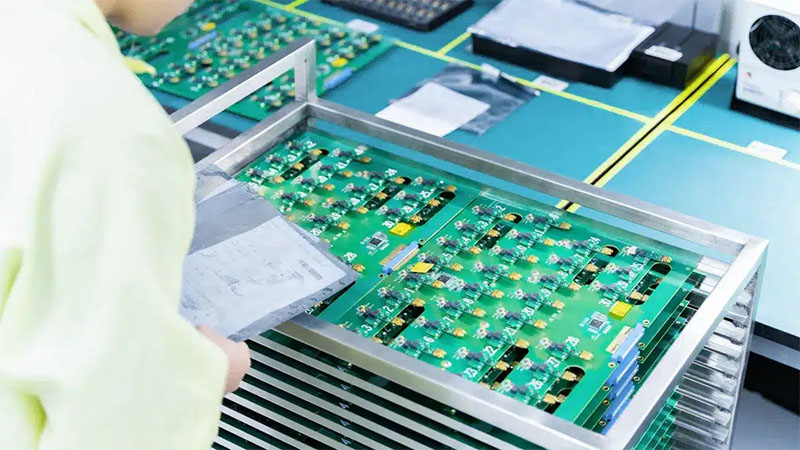
In conclusion, Circuit Card Assembly (CCA) is the vital process of transforming a bare PCB into a functional electronic module, forming the operational heart of virtually all modern electronics. We have explored its definition, process, importance, and key considerations for partnering with a manufacturer.
Success in bringing an electronic product to market hinges on selecting a CCA partner that is reliable, expert, and scalable. Best Technology embodies these principles, offering robust engineering support and reliable CCA manufacturing from prototype to production. We navigate the complexities of design, sourcing, automated circuit card assembly, and rigorous testing so you can focus on innovation. Pls feel free to contact our team at sales@bestpcb.vn for a comprehensive circuit card assembly quote and see how we can bring reliability and expertise to your supply chain.
FAQs About Circuit Card Assembly
Q: What is the typical lead time for a circuit card assembly?
A: Lead time varies dramatically. A simple prototype circuit card assembly might take 5-10 days, while a complex, high volume circuit card assembly with long-lead components could take 8-12 weeks. Turnkey projects often have longer lead times due to component sourcing.
Q: How much does circuit card assembly cost?
A: Circuit card assembly pricing depends on board complexity, component count and cost, volume, testing requirements, and labor location. For a circuit card assembly quote, be prepared to share your Gerber files, BOM, and expected volumes.
Q: What files do I need to provide to get a circuit card assembly quote?
A: You will typically need:
1) Gerber/ODB++ files for the PCB,
2) A complete Bill of Materials (BOM) with manufacturer part numbers,
3) Circuit card assembly drawing,
4) Preferred test specifications/requirements.
Q: What does “Class” mean in IPC standards for CCA?
A: IPC-A-610 defines three general classes of electronic assemblies:
Class 1 (General Electronic Products),
Class 2 (Dedicated Service Electronic Products),
and Class 3 (High-Performance Electronic Products).
Class iii circuit card assemblies have the strictest workmanship and reliability standards for critical applications.
Q: What is the difference between SMT and through-hole in CCA?
A: Surface Mount Technology (SMT) places components directly onto the board’s surface, allowing for smaller, faster, and more automated assembly. Through-hole technology involves inserting component leads through holes in the board and soldering on the opposite side. Most modern CCAs use SMT, with through-hole for larger or more robust connectors.
Q: Can you handle both prototype and production volumes?
A: Yes, a full-service manufacturer like Best Technology offers seamless scaling from domestic circuit card assembly for prototypes and low-volume runs all the way to medium and high volume circuit card assembly services, providing a consistent partner throughout your product lifecycle.