 language
 english


What Is Flex Board Electronics And Where Is It Used?
Flex board electronics refers to the use of flexible printed circuit boards (FPCBs) in electronic devices, enabling them to bend, twist, and conform to three-dimensional spaces. This article explores the definition, applications, and key considerations of flexible electronics, providing insights for design engineers and sourcing professionals to make informed decisions.
Many electronic manufacturers face significant hurdles when integrating flexible circuitry into their products. What are the most common pain points that stall innovation and increase costs?
- High Failure Rates in Dynamic Bends: Flex circuits in wearable or moving parts often fail due to fatigue from repeated bending, leading to unreliable products and warranty claims.
- Thermal Management Issues: In high-power or compact applications, poor heat dissipation in flex boards can cause overheating, reducing component lifespan and system reliability.
- Complex and Costly Multi-Layer Designs: Transitioning from simple 1-2 layer boards to complex multilayer rigid-flex designs introduces steep cost increases and daunting manufacturing challenges.
- Inefficient Layout Causing Signal Integrity Problems: Incorrect trace routing, impedance mismatches, and poor grounding on electronic flex boards lead to signal noise, crosstalk, and performance degradation.
- Difficulty Finding a Trusted, Full-Service Partner: Sourcing from multiple vendors for design, fabrication, and assembly creates logistical headaches, quality inconsistencies, and communication breakdowns.
Here is how a capable partner provides solutions:
- Superior Dynamic Flex Endurance: Utilizing advanced materials like polyimide and adhering to IPC standards for bend radius ensures circuits withstand millions of flex cycles without failure.
- Integration of High Thermal Conductivity Materials: Implementing thermally conductive adhesives, stiffeners, and strategic stack-up designs effectively dissipates heat, making flex board electronics high thermal conducting a reality for stable operation.
- Design for Manufacturing (DFM) Expertise: Expert engineers optimize layer count, panel utilization, and material selection from the start, controlling the cost of complex multilayer rigid-flex circuit boards.
- Expert Signal Integrity and Layout Design: Providing electronic flex board design services that include impedance control, proper grounding schemes, and optimized trace routing to ensure clean signal transmission.
- Comprehensive One-Stop Service: Offering integrated services from ODM/OEM design and prototyping to mass production and SMT assembly streamlines the supply chain, ensuring quality control and faster time-to-market.
Best Technology is a leading flex electronic manufacturing company and printed circuit board expert with 20 years of specialization in designing and producing advanced flexible circuits. We operate a 3,000-square-meter factory equipped for everything from quick-turn PCB assembly prototyping to high-volume production, with a daily peak capacity of 100,000 pieces. Our one-stop solutions cover FPC design, material procurement, manufacturing, and full turnkey PCB assembly, supported by certifications like ISO 9001 and ISO 13485. We are committed to making quality, innovative circuit boards through unparalleled customer service. For your projects in Vietnam and globally, pls feel free to contact our experts at sales@bestpcb.vn.
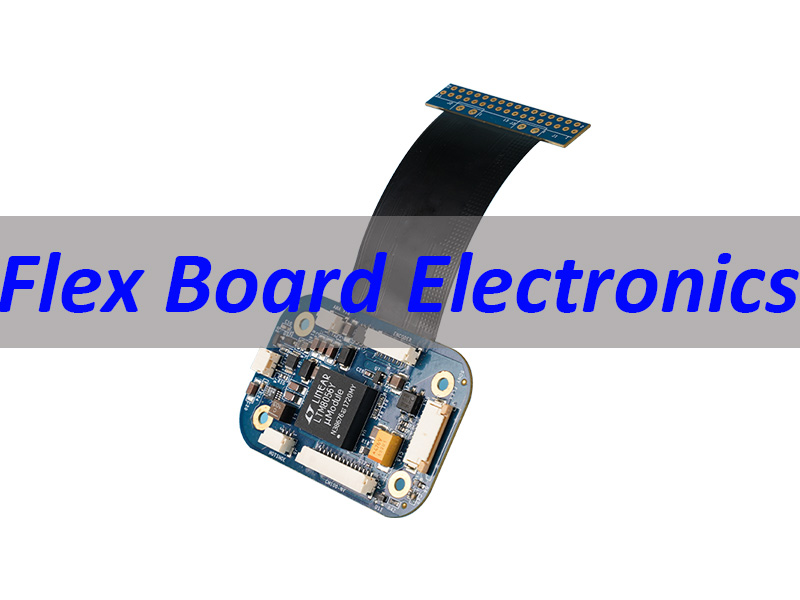
What Is Flex Board Electronics?
Flex board electronics, or flexible electronics, utilizes flexible printed circuit boards (FPCBs) as the core interconnect platform. Unlike rigid PCBs, these circuits are built on flexible substrate materials like polyimide (PI) or polyester (PET), allowing them to bend, fold, and twist. This inherent adaptability enables the creation of lighter, more compact, and more durable electronic devices that can fit into unconventional spaces and withstand dynamic mechanical stress.
Key Components and Characteristics:
- Substrate: The base dielectric layer, typically polyimide, known for its excellent thermal stability (>500°C), mechanical toughness, and chemical resistance.
- Conductive Traces: Thin copper foil (e.g., 1/3 OZ, 1/2 OZ) laminated onto the substrate, forming the electrical pathways.
- Coverlay: A protective insulating layer that covers the traces, replacing the solder mask used on rigid boards.
- Stiffeners: Localized rigid supports made of PI, FR4, or metal added to specific areas for component mounting and connector reinforcement.
- Plated Through Holes (PTHs): Vias that electrically connect different layers in multilayer flex or rigid-flex constructions.
Primary Applications: The core advantage of flex board electronics is enabling miniaturization and reliability in space-constrained or moving applications, which directly answers the “Where Is It Used?” part of our title.
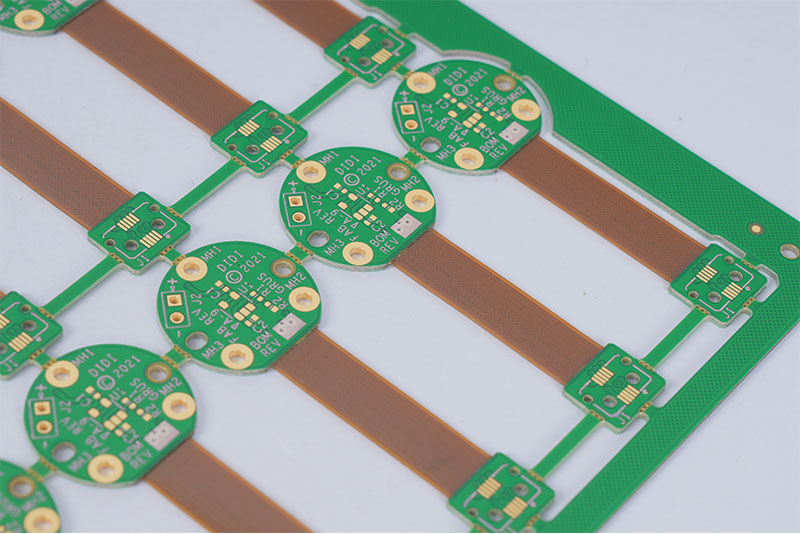
The List Of Flex Electronic Manufacturing Company Printed Circuit Board Leader
Identifying a true leader in flex PCB manufacturing involves evaluating several critical capabilities beyond basic production. A leading partner acts as an extension of your engineering team.
Criteria for a Leading Flex PCB Manufacturer:
| Criteria | Leader Benchmark | Best Technology’s Capacity |
|---|---|---|
| Technical Expertise | Deep HDI, rigid-flex, impedance control knowledge. | 100+ complex projects/year. ODM design services. |
| Process & Quality | Stringent control, international certifications. | ISO 9001, ISO 13485, RoHS certified. Full IPQC. |
| Manufacturing Scale | Handles rapid prototypes & high-volume. | 1-week proofing. 3,000 m² factory. 28,900 m² monthly capacity. |
| Material Mastery | Top supplier ties, special materials expertise. | 12 stable raw material suppliers. Polyimide/PET specialists. |
| One-Stop Service | Integrated design, fab, and assembly. | Full-service: design, prototyping, turnkey PCB assembly. |
The List Of Flex Electronic Manufacturing Company Printed Circuit Board Leader
| Company Name | Flex / Rigid-Flex Capability | Differentiation (What They Are Known For) |
|---|---|---|
| Best Technology | Rigid-flex PCB, multilayer flex PCB, flex assembly | Engineering-driven customization, fast-turn prototypes, low-to-high volume flexibility |
| Zhen Ding Technology | High-volume FPC, multilayer flex circuits | World’s largest FPC capacity, dominant in smartphones and wearable devices |
| Nippon Mektron | Ultra-thin FPC, precision rigid-flex PCB | Automotive-grade reliability and ultra-fine pitch flex circuits |
| Flexium Interconnect | High-density flex PCB, multilayer FPC | Advanced camera module and foldable device interconnect solutions |
| Career Technology | Flex PCB, rigid-flex PCB for compact devices | Strong in wearable electronics and space-constrained PCB layouts |
| Sumitomo Electric | High-reliability flex PCB for harsh environments | Automotive and industrial flex circuits with long lifecycle stability |
| TTM Technologies | Complex rigid-flex PCB for mission-critical systems | Aerospace, defense, and high-reliability electronics manufacturing |
| AT&S | Advanced rigid-flex PCB with precision interconnects | High-end miniaturization for computing and premium electronics |
| Compeq Manufacturing | Multilayer flex PCB for high-speed applications | Networking and high-speed signal transmission flex solutions |
| MFS Technology | Reel-to-reel flex PCB production | Cost-efficient continuous manufacturing for large-scale flex circuits |
For customized flex board electronics projects, especially rigid-flex designs with fast turnaround and engineering support, mid-sized specialized manufacturers like Best Technology often provide more flexibility and responsiveness than large-scale suppliers.
What Are The Key Considerations In Electronic Flex Board Layout?
A successful electronic flex board design layout is foundational to performance and reliability. Poor layout is a primary cause of field failures in flexible applications.
Essential Layout Guidelines:
- Bend Radius and Dynamic Flex Areas: Route tracks perpendicular to the bend line. Use hatched polygons in dynamic areas. Adhere to minimum bend radius rules.
- Trace Routing and Geometry: Avoid sharp corners. Maintain consistent widths. For impedance control, adhere to capability (e.g., 0.05mm/0.05mm for 1/3 OZ Cu).
- Stiffener and Component Placement: Place stiffeners for SMT/connectors. Keep components/vias out of bend zones. Common stiffener options:
| Material | Thickness Options |
|---|---|
| Polyimide (PI) | 0.075mm to 0.2mm |
| FR4 | 0.1mm to 1.6mm |
| Stainless Steel | 0.1mm, 0.2mm |
- Grounding and Shielding: Use reliable ground planes. Cross-hatched patterns for shielding maintain flexibility.
- Access and Serviceability: Ensure test points and connectors are accessible. Dual access flexible circuits aid probing.
In summary, meticulous attention to mechanical stress, electrical performance, and manufacturability during the layout phase is non-negotiable for a robust flex board.
Why Are Customized Wearable Rigid-Flex PCB Electronics Circuit Board Manufacturing Solutions In Demand?
The demand for customized wearable rigid-flex PCB electronics circuit board manufacturing is driven by the unique convergence of extreme miniaturization, ergonomic form factors, and relentless reliability requirements in wearable technology.
Key Drivers of Demand:
- 3D Packaging Efficiency: Rigid-flex allows 3D stacking, saving up to 60% space/weight vs. traditional wiring.
- Enhanced Reliability: Eliminates solder joints/connectors, increasing durability against motion and environment.
- Streamlined Assembly: A single, pre-tested unit simplifies final assembly, improving yield.
- Customization for Function: Tailored rigid sections (processors) and flex sections (sensors/straps).
- High-Mix, Low-Volume Viability: Support for fast prototyping and flexible production runs.
This demand is met by manufacturers offering collaborative ODM design, biocompatible materials expertise, and proven HDI flexible circuit experience.
What Makes Flex Board Electronics High Thermal Conducting Important For Reliability?
Flex board electronics high thermal conducting properties are critical because heat is the primary enemy of electronic reliability. In compact, high-power, or sealed devices using flex circuits, poor heat dissipation accelerates failure.
Consequences of Poor Thermal Management:
- Component degradation and reduced lifespan.
- Delamination of substrate and copper layers.
- Risk of thermal runaway.
Strategies for High Thermal Conductivity:
- Thermally Conductive Materials: Use dielectric materials filled with ceramic/boron nitride.
- Metal Layers & Stiffeners: Incorporate aluminum/copper heat spreaders. Use stainless steel stiffeners as thermal sinks.
- Thermal Via Arrays: Dense PTH arrays under hot components to conduct heat.
- Material Selection: Opt for higher thermal conductivity polyimide grades.
- Early Design Integration: Collaborate with the manufacturer for thermal modeling and optimal stack-up design.
Implementing these solutions ensures stable operation for automotive, aerospace, and high-performance computing applications.
Where Are Multilayer Rigid-Flex Circuit Boards Used In Electronics?
Multilayer rigid-flex circuit boards are employed in advanced electronic systems where high circuit density, extreme reliability, and sophisticated 3D packaging are paramount. They are the backbone of many modern, high-reliability (Hi-Rel) applications.
Primary Application Sectors:
| Sector | Applications | Key Benefit of Rigid-Flex |
|---|---|---|
| Aerospace & Defense | Avionics, guidance systems, satellites. | Lightweight, withstands extreme environments, reduces connections. |
| Medical Devices | Patient monitors, implantables, diagnostics. | Highly reliable, biocompatible, allows complex miniaturized shapes. |
| Automotive | ADAS sensors, infotainment, ECUs. | Durable in harsh environments, saves space, reliable for safety. |
| Consumer Electronics | Smartphones, laptops, cameras, drones. | Enables sleek, compact designs for moving parts (hinges, folds). |
| Industrial & Instrumentation | Robotics, industrial controls, test equipment. | Robust for factory environments, dense interconnects in movable parts. |
In these sectors, multilayer rigid-flex circuit boards electronic manufacture PCB supply is critical for achieving performance, size, and weight targets that rigid boards cannot meet.
Case Of Electronic Flex Board Manufacturing By Best Technology
Project: High-Density Interconnect (HDI) Flexible Circuit for a Portable Medical Monitoring Device.
Client Requirement: A customized wearable rigid-flex PCB that was ultra-thin, lightweight, and could withstand frequent flexion from patient movement, with integrated sensors and a microcontroller.
Challenges & Best Technology Solutions:
- Challenge: Extreme miniaturization with 8 layers in a tight, irregular shape.
- Solution: ODM team used HDI with micro-vias (0.10mm min.) and optimized stack-up for thickness/impedance.
- Challenge: Ensuring reliability over 100,000+ dynamic bend cycles.
- Solution: Selected high-performance polyimide and designed traces perpendicular to bend axis with calculated radius.
- Challenge: Effective thermal management for a sealed device.
- Solution: Implemented a flex board electronics high thermal conducting design using thermal coverlay and via arrays under the main IC.
- Challenge: Fast prototype for a tight regulatory deadline.
- Solution: Delivered functional samples within one week using quick-turn prototyping service.
Outcome: The device passed all reliability tests and received regulatory approval. Best Technology’s expertise in electronic flex board manufacturing provided a turnkey solution from design to assembly, enabling a successful launch.
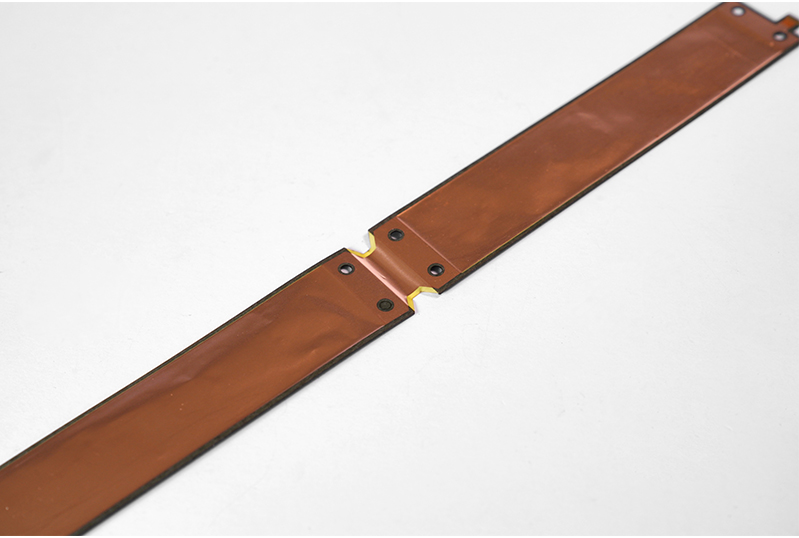
To sum up, flex board electronics is the innovative application of flexible printed circuit boards to create lighter, more robust, and space-efficient electronic devices. This article has explored its core principles, critical design considerations, and diverse applications across industries.
For your next project requiring high-quality flexible circuits, from simple electronic flex board design to complex multilayer rigid-flex circuit boards electronic manufacture, partner with a proven expert. Best Technology offers 20 years of experience, full one-stop services from design to PCB assembly, and a commitment to quality certified by international standards. We are your reliable flex electronic manufacturing company and printed circuit board leader for the Vietnamese and global markets. A warm welcome to contact us at any time to discuss your flexible electronics needs via sales@bestpcb.vn.
FAQs About Flex Board Electronics
Q1: What is the main advantage of using flex board electronics over traditional wiring?
A1: Flex circuits offer superior reliability, space/weight savings, improved airflow, and repeatable, automated assembly compared to error-prone discrete wire harnesses.
Q2: How many layers can a flexible PCB have?
A2: Standard flex circuits have 1-2 layers, but multilayer flex can exceed 10 layers. Best Technology supports up to 10 layers. Rigid-flex can have higher counts in rigid sections.
Q3: Can components be soldered directly onto a flex circuit?
A3: Yes, using SMT. A localized stiffener (FR4 or PI) is typically added under the component area for mechanical support during soldering and use.
Q4: What is the typical lead time for a flex PCB prototype?
A4: Varies by complexity. For simple 1-2 layer designs, leaders like Best Technology offer prototypes in 48-72 hours. Complex multilayer rigid-flex may take 1-2 weeks.
Q5: Are there different types of flexible circuits?
A5: Yes. Main types: Single-Sided Flex (1 layer), Double-Sided Flex (2 layers with PTHs), Multilayer Flex (3+ layers), Rigid-Flex (hybrid), and Dual Access Flex (traces accessible from both sides).