 language
 english


BLDC Motor Controller PCB for Efficient Motor Control
BLDC motor controller PCB is the control platform that manages commutation, power delivery, and feedback processing in a brushless DC motor system. This article explains what a BLDC motor controller PCB does, why its design matters, and how the right manufacturing partner helps ensure stable, efficient, and reliable motion control.
EBest Circuit (Best Technology) is a professional PCB and PCBA manufacturer with solid experience in motor control, power electronics, and high-reliability assembly. We support customers from prototype to volume production, and can provide a practical advise of PCB design optimization, manufacturability improvement, and cost-effective production planning. Based on your Gerber files and BOM list, we can offer a detailed review covering lead time, payment terms, tooling or setup charges, and other project-related items, if applicable. Our engineering team can also carry out a free DFM/DFA/DFT Review and share additional information that may help improve performance, assembly yield, and long-term reliability. If you would like to share your project details, please email us at sales@bestpcb.vn, and our team will provide professional feedback and a suitable quotation.
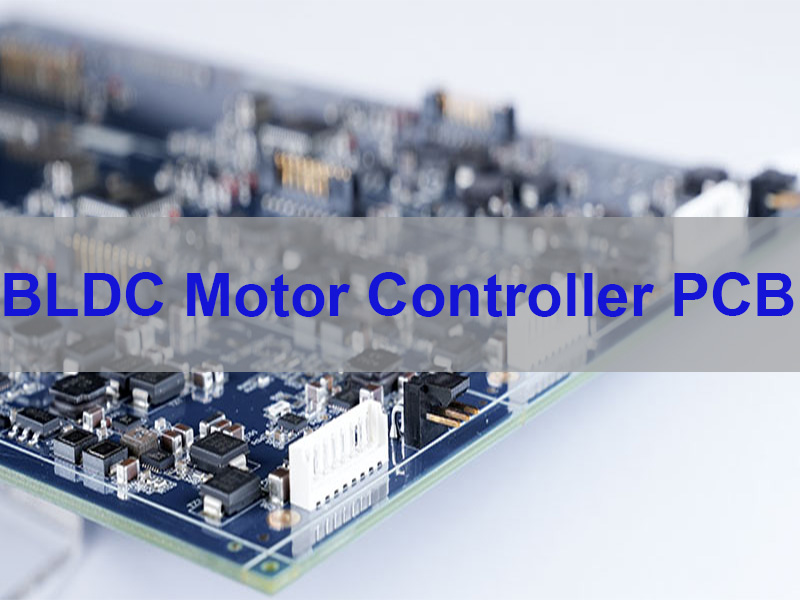
What Is a BLDC Motor Controller PCB?
A BLDC motor controller PCB is a printed circuit board built to control a brushless DC motor through electronic commutation. Since BLDC motors do not use mechanical brushes, the controller must continuously switch current across the motor phases in the right sequence.
This PCB serves as the electronic command center of the motor system. It receives input commands, processes sensor or sensorless feedback, calculates control actions, and sends switching signals to the power stage. In advanced systems, it also handles fault protection, communication, diagnostics, and speed regulation.
In practical terms, the board combines digital control and power electronics on one platform. That makes it one of the most important design elements in any high-performance motion product.
Why Is a BLDC Motor Controller PCB So Important?
The motor may create motion, but the controller decides how that motion behaves. Without a capable controller PCB, even a high-quality BLDC motor can suffer from unstable startup, poor torque response, overheating, or electromagnetic noise.
A strong controller PCB helps achieve:
- Smooth and accurate commutation
- Stable speed and torque control
- Better efficiency across changing loads
- Lower acoustic noise and vibration
- Faster response to feedback signals
- Higher system reliability in demanding environments
This is especially important in products where motion quality is visible to the user or critical to system safety. In robotics, medical systems, automotive modules, and aerospace equipment, the controller board often determines whether the final product feels refined and dependable.
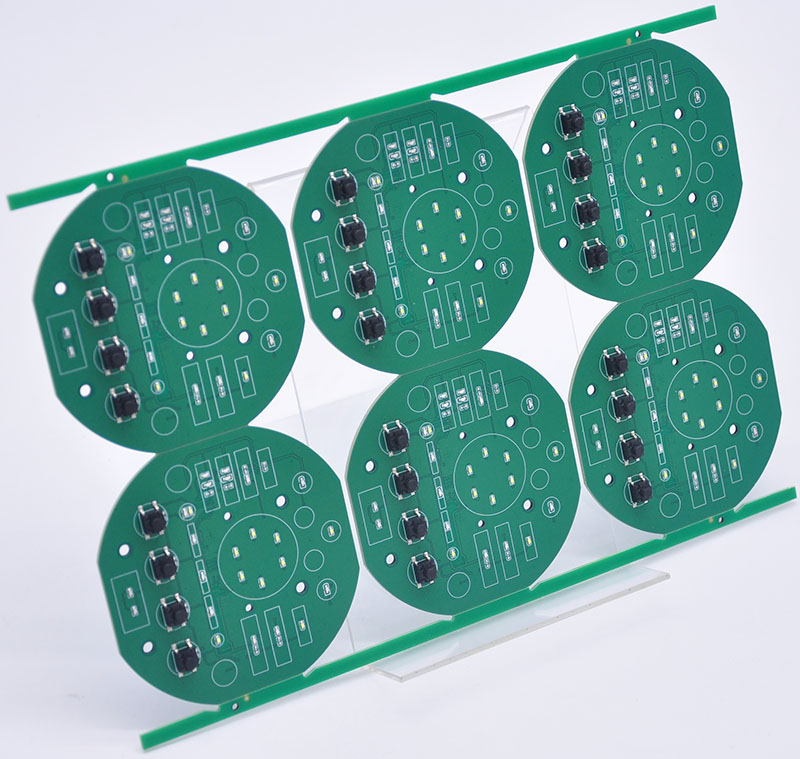
How Does a BLDC Motor Controller PCB Work?
A BLDC controller PCB performs three main jobs: commutation, modulation, and closed-loop control.
First, it handles electronic commutation. The board switches current through the motor windings in a specific sequence so the rotor keeps turning. This replaces the mechanical brush system found in traditional DC motors.
Second, it uses pulse-width modulation (PWM) to regulate how much power reaches the motor. By adjusting duty cycle, the controller can fine-tune motor speed, torque, and efficiency.
Third, it manages control logic. The PCB reads feedback from Hall sensors, encoders, or current-sensing circuits, then adjusts switching behavior in real time. This closed-loop action helps the motor remain stable even when load, temperature, or speed demand changes.
What Are the Main Components on a BLDC Motor Controller PCB?
A reliable BLDC motor controller board integrates several functional blocks, each with a distinct role in motion control.
Microcontroller Unit or DSP
The MCU or DSP is the computational core of the board. It runs the control algorithm, interprets feedback data, handles startup logic, and manages protection features. In more advanced systems, it may also support field-oriented control, communication protocols, and diagnostics.
Gate Driver ICs
Gate drivers act as the bridge between logic and power. They amplify the low-voltage signals from the controller and provide the drive strength needed to switch MOSFETs or IGBTs efficiently and safely.
Power MOSFETs or IGBTs
These are the switching devices that deliver current to the motor phases. MOSFETs are common in low- to medium-voltage BLDC systems, while IGBTs may be used in higher-voltage or higher-power designs.
Current and Position Feedback Circuits
These circuits collect real operating data from Hall sensors, encoders, shunt resistors, or current sensors. Accurate feedback is essential for stable motor response and protection against overload or stall events.
Power Management Section
The board also needs clean and stable internal voltage rails. Regulators, filters, and protection devices help power the MCU, drivers, sensing circuits, and communication interfaces without introducing instability.
What Is the Difference Between a BLDC Driver and a BLDC Motor Controller PCB?
This is a common question, and it matters for both engineering and procurement decisions.
A BLDC driver usually refers to the power-driving portion of the system. Its job is mainly to switch the motor phases based on external commands.
A BLDC motor controller PCB, by contrast, includes both the drive stage and the control intelligence. It manages feedback, executes motion algorithms, monitors faults, and often supports communication with a larger system.
In simple terms:
- A driver focuses on switching
- A controller focuses on switching plus decision-making
If an application needs precise speed control, torque regulation, position accuracy, or advanced safety functions, a controller PCB is usually the better fit.
What Design Challenges Matter Most in a BLDC Motor Controller PCB?
Designing a controller PCB for BLDC motors is not only about schematic function. Layout and manufacturability have a major impact on final performance.
Thermal Management
Power devices, gate drivers, and current-sensing elements generate heat during switching and load changes. If the board cannot move heat away efficiently, component stress rises and long-term reliability drops.
Designers often use:
- Thick copper traces
- Large copper pours
- Thermal vias under power devices
- Heat sinks or baseplates
- Aluminum or copper-backed MCPCB structures in high-heat designs
Thermal design should be addressed early. It is much harder to fix after the PCB stack-up and component placement are locked.
Electromagnetic Compatibility
Fast switching edges can create serious electromagnetic interference. This can disturb sensor signals, weaken control stability, and create compliance problems during validation.
To reduce EMC risk, designers often improve:
- Current loop size
- Grounding architecture
- Separation of power and signal areas
- Gate drive routing
- Input and output filtering
- Shielding strategy where needed
A BLDC motor controller PCB must not only work on the bench. It must remain stable in the real electromagnetic environment of the full product.
Signal Integrity and Noise Isolation
The board includes both noisy high-current switching paths and sensitive low-voltage control signals. If these sections are not separated properly, signal corruption can affect feedback accuracy and control quality.
Good layout practice includes short critical traces, controlled return paths, proper analog grounding, and careful separation between power switching nodes and sensing inputs.
Mechanical Reliability
In automotive, industrial, and aerospace products, the controller board may face vibration, temperature cycling, moisture, and surge events. Material choice, solder joint quality, conformal coating, and connector robustness all affect field durability.
What PCB Materials and Structures Are Used for BLDC Motor Controller PCB Design?
Material selection depends on the power level, environment, and thermal demand of the application.
For many standard designs, FR4 is sufficient when paired with proper copper thickness, thermal vias, and heat sinking. It offers good manufacturability and cost balance.
For higher thermal loads, designers may consider:
- Heavy copper PCB
- Metal core PCB
- Insulated metal substrate structures
- Hybrid stack-ups for power and control separation
The right structure depends on how much heat the board must dissipate, how compact the product must be, and how sensitive the control circuitry is to noise.
Which Applications Commonly Use BLDC Motor Controller PCB?
BLDC control boards are used wherever efficient, quiet, and responsive motion is required. Common applications include:
- Electric vehicles and e-bikes
- Cooling fans and pumps
- Industrial robots and servo systems
- Medical pumps and portable devices
- Drones and UAV platforms
- Smart home appliances
- Power tools
- Aerospace actuation modules
Each of these applications places different demands on the controller PCB. A drone controller may prioritize lightweight design and rapid response, while an industrial controller may focus more on thermal endurance, EMC stability, and long service life.
What Should You Look for in BLDC Motor Controller PCB Manufacturing?
A strong design can still fail if manufacturing quality is weak. Since BLDC controller boards combine fine-pitch logic, power devices, feedback circuits, and high-current paths, fabrication and assembly need tight process control.
A qualified manufacturer should understand:
- Fine-pitch SMT assembly
- Power device soldering quality
- PCB stack-up and copper balancing
- Thermal interface handling
- AOI, SPI, X-ray, and electrical testing
- DFM support for controller layouts
- Traceability for regulated industries
For projects serving specialized sectors, certifications are also a useful indicator of process maturity. Depending on the end market, manufacturers may need quality systems such as ISO 9001, IATF 16949, ISO 13485, or AS9100.
Why Does Assembly Quality Matter for BLDC Motor Controller PCB?
Assembly quality affects much more than appearance. In a motor control board, solder joint consistency, component alignment, and process stability can directly influence switching behavior, thermal performance, and field reliability.
For example, poor soldering on MOSFETs or gate drivers can increase resistance, create localized heating, or lead to intermittent faults. Weak placement control around feedback circuits can also affect sensing accuracy.
That is why controller boards often benefit from:
- Stable SMT process windows
- X-ray inspection for hidden joints
- Functional test under load conditions
- Burn-in or stress screening when required
- Traceable production records for each lot
For customers building serious motion products, manufacturing discipline is not optional. It is part of the electrical performance.
How Can a Good BLDC Motor Controller PCB Improve Product Performance?
A well-executed controller board can raise the quality of the whole product in several measurable ways.
It can improve startup smoothness, reduce commutation ripple, minimize temperature rise, and support more stable control under variable load. It can also reduce system noise, extend service life, and lower the risk of field returns.
This matters not only to engineers, but also to product teams. Better control quality often translates into quieter products, more efficient power usage, better user experience, and stronger brand trust in the market.
How to Choose the Right BLDC Motor Controller PCB Partner?
Choosing a manufacturing partner for BLDC controller boards should go beyond price alone. The better question is whether the supplier understands both the PCB process and the motion-control application behind it.
A capable partner should be able to support:
- PCB fabrication matched to current, voltage, and thermal requirements
- SMT assembly for both power and control components
- DFM feedback before production
- Testing strategy for functionality and reliability
- Traceability and documentation for regulated sectors
- Prototype-to-volume transition without process drift
When the board is central to motor performance, engineering support from the manufacturer becomes a real advantage.
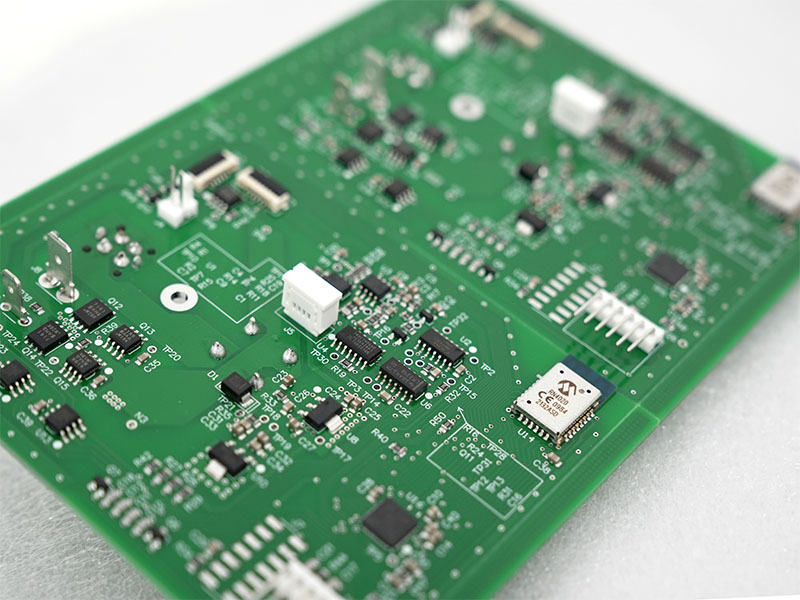
To sum up, the BLDC motor controller PCB is far more than a supporting circuit board. It is the intelligent core that shapes how a brushless motor performs in real life. From commutation and PWM control to thermal management, EMC design, and feedback processing, every section of the board contributes to motion quality and long-term reliability.
As BLDC motors continue to expand across automotive, industrial, medical, and aerospace systems, the quality of the controller PCB becomes even more important. A well-designed and professionally manufactured board helps deliver smooth control, strong efficiency, and dependable performance across the full life of the product. For professional support on your BLDC motor controller PCB project, please contact our team at sales@bestpcb.vn for a review and quotation.
FAQ About BLDC Motor Controller PCB
Why does a BLDC motor controller PCB need a 3-phase bridge circuit?
A BLDC motor needs electronic commutation to rotate. A 3-phase bridge, usually built with 6 MOSFETs, switches current through the motor windings in sequence to create a rotating magnetic field.
How is heat managed on a BLDC motor controller PCB?
Thermal control usually relies on heavy copper traces, thermal vias, large copper areas, and heat sinks. In higher-power designs, engineers may also use aluminum-backed or metal core PCB structures.
How do you choose the right MOSFETs for a BLDC motor controller PCB?
The main factors are voltage rating, current capacity, and RDS(on). A good MOSFET should handle peak load safely and keep switching and conduction losses under control.