 language
 english


Medium Volume Circuit Card Assembly Services | Fast Lead Time
Medium volume circuit card assembly services bridge the gap between prototype builds and mass production, giving OEMs a practical way to launch reliable electronics with better cost control, stable quality, and faster delivery. This article explains what circuit card assembly means, how medium-volume production works, why lead time matters, what testing and quality controls are essential, and how to choose the right manufacturing partner for dependable output.
Common Customer Pain Points:
- Prototype suppliers cannot support stable repeat runs.
- High-volume factories may not prioritize medium-volume orders.
- Component shortages disrupt assembly schedules.
- Quality becomes inconsistent across batches.
- Delivery dates slip when testing and sourcing are fragmented.
A capable manufacturer solves these issues by building a process around speed, control, and repeatability.
Practical Manufacturer Solutions:
- Create dedicated lines for medium-volume circuit card assembly services.
- Combine PCB fabrication, sourcing, assembly, and testing in one workflow.
- Use approved alternates and BOM review to reduce material risk.
- Apply standard process control for every repeat batch.
- Build fast lead time plans around DFM, scheduling, and traceability.
Best Technology is a professional PCB and PCBA manufacturer with solid experience in circuit card assembly manufacturing, prototype support, low-volume builds, and stable medium-volume delivery. We help customers shorten development cycles through DFM review, component sourcing support, assembly optimization, and reliable testing for industrial, medical, automotive, and communication products. For project support or a quotation, pls feel free to contact us via sales@bestpcb.vn.
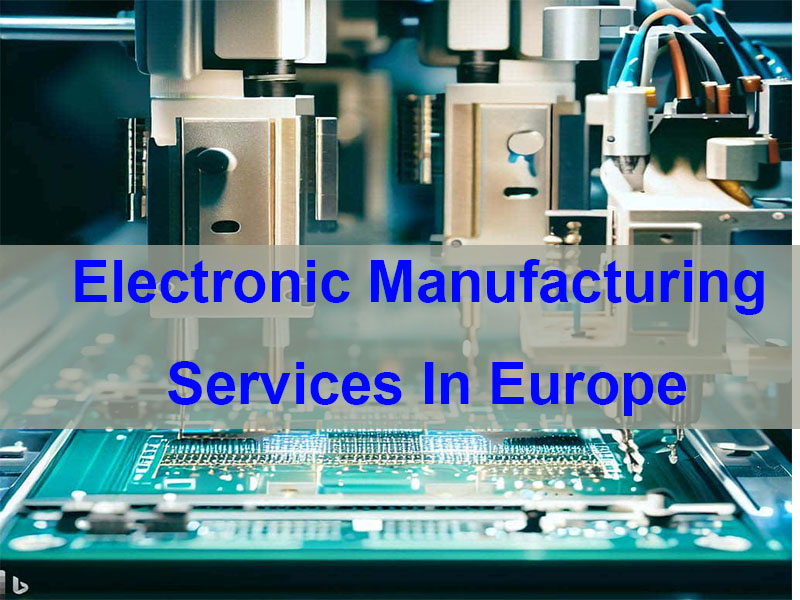
What Are Medium Volume Circuit Card Assembly Services And When Are They Needed?
Medium-volume production usually begins when a product has moved beyond engineering validation and needs repeatable manufacturing without the commitment of full mass production. In this stage, speed matters, but consistency matters even more.
A simple way to view production tiers is this: prototypes prove the design, low volume supports early launch, medium volume stabilizes the supply chain, and high volume drives scale. For many OEMs, medium volume circuit card assembly services are the most strategic phase because this is where cost, process capability, and delivery performance start to shape the product’s commercial success.
Where Medium Volume Fits Best
| Production Stage | Typical Goal | Common Quantity Pattern | Main Priority |
|---|---|---|---|
| Prototype circuit card assembly services | Verify design | Very small runs | Fast iteration |
| Low volume circuit card assembly services | Pilot launch | Small repeat batches | Flexibility |
| Medium volume circuit card assembly services | Stable market supply | Regular repeat builds | Balance of speed and cost |
| High volume circuit card assembly services | Mass market output | Large ongoing demand | Scale efficiency |
Key Signs You Need Medium-Volume Support
- Your prototype has passed core functional testing.
- Your sales forecast is now recurring, not experimental.
- You need repeat batches with predictable quality.
- Your purchasing team needs better unit cost control.
- Your customers expect shorter replenishment windows.
- Your internal team needs a supplier that can scale with you.
Why This Stage Matters
- It sets the standard for future mass production.
- It exposes weaknesses in sourcing and process flow.
- It defines whether lead time can remain stable under demand changes.
- It shows whether your supplier can build circuit card assemblies consistently.
- It reduces the risk of redesign after commercial release.
In short, medium-volume production is the proving ground for operational reliability. If this stage is handled well, scaling later becomes much easier.
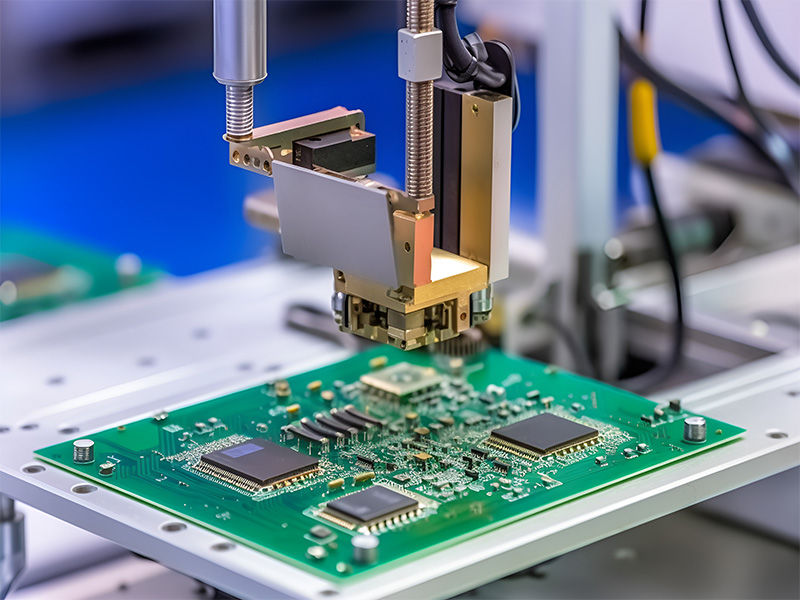
What Is A Circuit Card Assembly And How Does It Work In Electronics Manufacturing?
A circuit card assembly definition is straightforward: it is a printed circuit board populated with electronic components, soldered, inspected, and tested so it can perform a functional role inside an electronic product. In practical terms, what is a circuit card assembly? It is the stage where a bare PCB becomes a working electronic unit.
Many buyers search for CCA circuit card assembly or circuit card assembly CCA because the term is widely used in defense, industrial, aerospace, and legacy electronics sectors. The meaning is the same in most manufacturing contexts: a loaded board ready for electrical use.
What Makes Up a Circuit Card Assembly?
- Bare PCB
- SMT and through-hole components
- Solder joints
- Mechanical hardware if needed
- Coating or protection if specified
- Electrical and functional test records
Basic Working Flow
| Step | What Happens | Why It Matters |
|---|---|---|
| PCB fabrication | Bare board is made | Sets the physical platform |
| Material preparation | Components are staged | Prevents line stoppage |
| SMT placement | Parts are mounted | Drives speed and accuracy |
| Reflow / soldering | Electrical joints are formed | Creates mechanical and electrical connection |
| Inspection | AOI, X-ray, visual checks | Finds defects early |
| Testing | ICT, FCT, flying probe | Verifies performance |
Why Buyers Care About This Definition
- It affects sourcing decisions.
- It affects test planning.
- It affects cost structure.
- It affects documentation and quality requirements.
- It affects supplier selection.
So, a circuit card assembly is not just a populated PCB. It is a controlled manufacturing outcome that combines materials, process discipline, and verification.
What Is The Difference Between Circuit Card Assembly Vs PCB In Electronic Products?
Many customers use these terms interchangeably, but circuit card assembly vs PCB describes two different stages of the product. A PCB is the bare board. A circuit card assembly is the finished board after components are mounted and tested.
That distinction sounds simple, but it affects quoting, procurement, engineering ownership, and production planning.
PCB Vs Circuit Card Assembly
| Item | PCB | Circuit Card Assembly |
|---|---|---|
| Definition | Bare printed board | Board plus components |
| Main Function | Mechanical and electrical platform | Functional electronic module |
| Includes Components | No | Yes |
| Includes Soldering | No | Yes |
| Includes Testing | Basic board test only | Assembly and functional test |
| Typical Buyer Focus | Stack-up, finish, vias, impedance | BOM, assembly, testing, delivery |
Practical Differences That Matter
- PCB cost does not equal full assembly cost.
- PCB lead time does not equal CCA lead time.
- Assembly yield depends on PCB quality and BOM quality together.
- Test coverage becomes much more important at the assembly stage.
- Documentation expands from Gerber and stack-up to BOM, pick-and-place, and test specs.
Why This Matters For Medium-Volume Orders
- Medium-volume runs need stable PCB supply and stable assembly output.
- Small PCB defects can multiply into larger assembly losses.
- Repeatable CCA production requires tighter process control than bare board supply alone.
- Scheduling must align PCB fabrication with material readiness.
- Faster lead time depends on both sides working together.
The takeaway is clear: PCB is the foundation, while circuit card assembly is the functional result. For medium-volume builds, both must be managed as one connected system.
How Does The Circuit Card Assembly Manufacturing Process Work Step By Step?
The circuit card assembly manufacturing process is not just a sequence of machine steps. It is a chain of decisions that affects lead time, yield, reliability, and total cost. When medium-volume orders are involved, process discipline becomes even more important because the same workflow must perform well across repeat batches.
Typical Circuit Card Assembly Process
- Data review
- BOM verification
- DFM / DFA check
- Material sourcing
- Incoming inspection
- SMT printing and placement
- Reflow soldering
- Through-hole insertion if needed
- Wave or selective soldering
- Cleaning if required
- Inspection and repair
- Electrical testing
- Final inspection and packing
Step-By-Step Manufacturing Summary
| Process Stage | Main Focus | Impact On Lead Time |
|---|---|---|
| Engineering review | Confirm files and risks | Prevents delays later |
| Sourcing | Secure components | Largest schedule driver |
| SMT setup | Stencil, feeder, program | Determines line readiness |
| Assembly execution | Placement and soldering | Core production step |
| Inspection | Detect process issues | Reduces escapes |
| Testing | Verify electrical function | Protects field reliability |
| Packaging | Traceable shipment prep | Supports delivery control |
What Speeds Up The Process
- Clean and complete manufacturing data
- BOM with approved alternates
- Early DFM review
- Good component availability
- Panel design suited for assembly
- Clear test requirements from the start
What Slows It Down
- Missing part approvals
- Incomplete circuit card assembly drawing
- Late engineering changes
- Poor stencil or pad design
- Long-lead components
- Weak communication between PCB and PCBA teams
For medium volume circuit card assembly services, the best results come from a process that is standardized enough for repeatability and flexible enough for product updates.
Why Is Circuit Card Assembly Testing Critical For Reliable Electronics?
Circuit card assembly testing is one of the strongest defenses against field failure. As production volume rises from pilot to regular repeat builds, a weak test strategy becomes expensive very quickly. Good testing protects quality, shipment confidence, and brand reputation.
In medium-volume manufacturing, testing should not be treated as a final checkpoint only. It should be integrated into the whole assembly plan.
Common Test Methods
| Test Method | Purpose | Best Use |
|---|---|---|
| AOI | Detect visible assembly defects | Standard SMT lines |
| X-Ray | Inspect hidden solder joints | BGA, QFN, void analysis |
| Flying Probe | Electrical verification without fixture | Prototype and medium volume |
| ICT | High-coverage electrical test | Stable repeat products |
| Functional Test | Simulate actual product operation | Mission-critical assemblies |
| Burn-In / Aging | Stress screening | High-reliability applications |
Why Testing Matters More In Medium-Volume Production
- Repeat batches can repeat the same hidden fault.
- Customer returns cost more once the product is in the market.
- Volume is high enough for defect trends to matter.
- Medium-volume orders often support active customer shipments.
- Testing data helps improve future process control.
A Practical Testing Logic
- Use AOI for fast process visibility.
- Add X-ray where hidden joints exist.
- Use flying probe for flexible medium-volume electrical checks.
- Move to ICT if the design and volume justify fixture cost.
- Use functional test for true product verification.
- Add reliability screening for Class III or harsh-environment products.
Testing is not just about catching bad boards. It is about building predictable output. That is exactly what customers expect from reliable circuit card assembly service providers.
How Do Circuit Card Assembly Manufacturers Ensure Class III Circuit Card Assemblies Quality?
Circuit card assembly manufacturers serving critical markets must go beyond standard commercial workmanship. When the requirement involves Class III circuit card assemblies, the expectation is very different: tighter process control, stronger documentation, and lower tolerance for defects.
Class III commonly applies to products where performance reliability is essential, such as medical electronics, aerospace systems, industrial controls, and mission-critical communication equipment.
Core Quality Controls For Class III Builds
- Controlled soldering process windows
- Verified operator training
- Tight incoming material inspection
- Process traceability by batch or serial level
- Enhanced inspection criteria
- Documented test results
- Controlled handling and packaging
Quality Control Framework
| Quality Area | Typical Control |
|---|---|
| Materials | Approved vendor and lot traceability |
| Process | Validated profiles and work instructions |
| Inspection | AOI, X-ray, visual standards |
| Testing | Electrical and functional verification |
| Records | Build history and defect tracking |
| Compliance | IPC-based workmanship alignment |
What Good Manufacturers Usually Do
- Review design risks before production begins.
- Match process settings to board complexity.
- Control solder paste, profile, and placement accuracy.
- Record test and inspection results clearly.
- React quickly to defect patterns with corrective action.
Why This Matters For Fast Lead Time
Some buyers assume stronger quality systems will always slow production. In reality, disciplined control often shortens delivery because fewer problems reach the rework stage. Good process control supports both speed and consistency.
For medium-volume programs, quality is not built by final inspection alone. It is built by a stable production system from the first lot to the last.
How Do Low Volume Circuit Card Assembly Services Compare With Medium Volume Circuit Card Assembly Services?
The difference between low volume circuit card assembly services and medium volume circuit card assembly services is not just quantity. The real difference lies in process stability, planning depth, pricing logic, and how the supplier allocates resources.
Low-volume builds are often flexible and engineering-driven. Medium-volume builds need the same flexibility, but they also demand stronger scheduling and cost control.
Low Volume Vs Medium Volume
| Area | Low Volume Circuit Card Assembly Services | Medium Volume Circuit Card Assembly Services |
|---|---|---|
| Main Goal | Pilot build or niche demand | Stable repeat supply |
| Process Focus | Flexibility | Repeatability |
| Tooling Justification | Limited | More feasible |
| Unit Cost | Higher | Lower with better efficiency |
| Scheduling | Reactive | Planned and recurring |
| Test Strategy | Flexible | More standardized |
When Low Volume Makes Sense
- Product validation stage
- Engineering updates still frequent
- Market demand is still uncertain
- Many product variants exist
- Time-to-first-build matters most
When Medium Volume Makes Sense
- Product design is mostly stable
- Demand has become repeatable
- Forecasting is more reliable
- Cost reduction is now important
- Delivery commitments must be maintained
Why Customers Often Transition Gradually
- Prototype to low volume proves manufacturability.
- Low volume to medium volume proves stability.
- Medium volume builds the basis for future scaling.
- Each stage supports different commercial goals.
- Supplier capability becomes more visible with every step.
That is why a manufacturer that supports domestic circuit card assembly for low volume, prototypes, and medium-volume repeat orders can give customers a smoother growth path.
Why Choose Turnkey Circuit Card Assembly Services For Modern Electronics Production?
Turnkey circuit card assembly services combine PCB fabrication, component sourcing, assembly, testing, and logistics in one managed flow. For modern electronics programs, this model is often the fastest route to lower coordination burden and better delivery performance.
When lead time is critical, fragmented supply chains can create avoidable delays. One vendor handles the PCB. Another handles components. A third handles assembly. Problems then move in circles. Turnkey service reduces that friction.
Main Benefits Of Turnkey Service
- Fewer supplier handoffs
- Faster issue resolution
- Better BOM control
- Unified schedule management
- Easier quality accountability
- Simpler communication for buyers
Turnkey Vs Split Supply
| Model | Main Strength | Main Risk |
|---|---|---|
| Turnkey circuit card assembly services | Faster coordination and accountability | Requires a capable supplier |
| Consigned or split sourcing | More direct part control by customer | Higher coordination burden |
Why Turnkey Works Well For Medium Volume
- Medium-volume orders need reliable recurring material flow.
- Sourcing delays can impact the entire schedule.
- One integrated team can react faster to shortages.
- Testing and packing can be aligned from the start.
- The buyer spends less time managing multiple vendors.
What To Check Before Choosing Turnkey
- Supplier sourcing experience
- Alternate component management
- Approved vendor system
- Traceability capability
- Test resources
- Communication speed
For buyers comparing medium volume circuit card assembly USA, turnkey circuit card assembly USA, or usa-based circuit card assembly services, the same core question still applies: can the supplier control the whole process well enough to deliver consistently?
How To Choose The Right Partner For Medium Volume Circuit Card Assembly Services
Choosing the right manufacturing partner is often the deciding factor between stable growth and repeated delivery problems. A good supplier for medium volume circuit card assembly services should not only assemble boards. They should also understand your product stage, material risks, quality goals, and future scale path.
This is especially important for buyers comparing prototype circuit card assembly services, low volume circuit card assembly services, and high volume circuit card assembly services while planning future demand.
Supplier Selection Checklist
- Proven experience in circuit card assembly manufacturing
- Strong engineering review before production
- Clear DFM and BOM feedback
- Stable sourcing capability
- Suitable testing resources
- Repeatable quality system
- Transparent lead time communication
What A Strong Partner Should Offer
| Capability | Why It Matters |
|---|---|
| DFM support | Reduces build risk early |
| BOM optimization | Improves cost and availability |
| PCB + PCBA integration | Shortens coordination cycle |
| Traceability | Supports quality control |
| Medium-volume scheduling | Keeps repeat orders stable |
| Fast response engineering | Helps solve launch issues quickly |
Questions Worth Asking A Supplier
- Can you support transition from prototype to medium volume?
- What test methods do you recommend for this product?
- How do you handle component shortages?
- How do you control repeat-batch consistency?
- What is your normal lead time for similar builds?
- Can you support Class III requirements if needed?
Best Technology supports one-stop PCB and PCBA manufacturing with a focus on responsiveness, engineering support, and delivery control. We help customers move from concept to stable production through DFM review, sourcing coordination, assembly execution, and traceable testing. For OEMs that need a dependable supplier for medium volume circuit card assembly services, we aim to combine fast lead time with consistent manufacturing discipline.
The best partner is not simply the one with the lowest quote. It is the one that can protect your schedule, your quality, and your growth path at the same time.
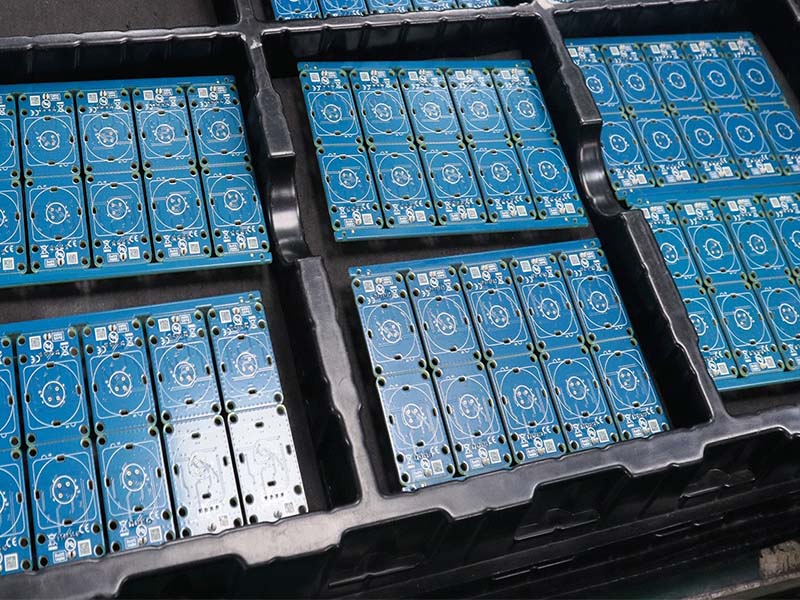
In conclusion, medium volume circuit card assembly services give electronics companies a reliable way to move from early production into repeatable supply with better control over lead time, cost, and product quality. This article covered the meaning of circuit card assembly, the difference between CCA and PCB, the manufacturing process, testing strategy, Class III quality control, low-volume versus medium-volume comparison, and the value of turnkey support.
Best Technology stands out by combining PCB fabrication, component sourcing, assembly, and testing into one coordinated service model, helping customers reduce delays and improve build consistency. For quotations, technical support, or project discussion, pls feel free to contact us via sales@bestpcb.vn.
FAQs About Medium Volume Circuit Card Assembly Services
What Is Medium Volume Circuit Card Assembly Services?
Medium volume circuit card assembly services refer to PCB assembly production typically ranging from hundreds to tens of thousands of units per batch. This production level bridges the gap between prototype builds and high-volume manufacturing, offering a balance between cost efficiency, stable production, and manageable lead times.
What Is The Typical Lead Time For Medium Volume Circuit Card Assembly?
The lead time for medium volume circuit card assembly services usually ranges from 2 to 4 weeks, depending on component availability, PCB fabrication time, testing requirements, and assembly complexity. Turnkey suppliers with integrated sourcing and assembly can often reduce delivery time significantly.
What Is The Difference Between Low Volume And Medium Volume Circuit Card Assembly?
Low volume circuit card assembly services focus on small production runs and product validation, while medium volume production supports stable and repeatable manufacturing after product launch. Medium volume assembly typically offers better unit pricing and more optimized manufacturing processes.
What Testing Methods Are Used For Circuit Card Assembly?
Common circuit card assembly testing methods include:
- Automated Optical Inspection (AOI)
- X-Ray Inspection for BGA components
- Flying Probe Testing
- In-Circuit Test (ICT)
- Functional Testing
These testing procedures ensure reliable electrical performance and assembly quality before shipment.
What Industries Use Medium Volume Circuit Card Assembly Services?
Medium volume circuit card assembly services are widely used in industries such as:
- Industrial control systems
- Medical electronics
- Telecommunications equipment
- Automotive electronics
- Aerospace and defense systems
These sectors require reliable production with consistent quality and moderate manufacturing volumes.
Can Medium Volume Circuit Card Assembly Services Support Lead-Free Manufacturing?
Yes. Most professional circuit card assembly manufacturers support lead-free circuit card assembly that complies with RoHS environmental standards. Lead-free soldering processes are widely used in modern electronics manufacturing for environmental compliance and product reliability.