 language
 english


60 40 vs 63 37 Solder: Key Differences in PCB Assembly
In electronics manufacturing, solder is the invisible backbone that holds circuits together. The choice of alloy influences wetting behavior, process stability, and long-term reliability of solder joints. Among traditional tin-lead alloys, 60/40 solder and 63/37 solder remain two of the most widely discussed materials.
Both alloys are composed of tin (Sn) and lead (Pb). However, a small change in composition produces noticeable differences in melting behavior, soldering control, and preferred applications. Engineers often compare 60 40 vs 63 37 solder when deciding which alloy suits prototyping, PCB assembly, or repair work.
This article explains the differences clearly. It also covers melting temperatures, typical uses, and practical soldering guidance.
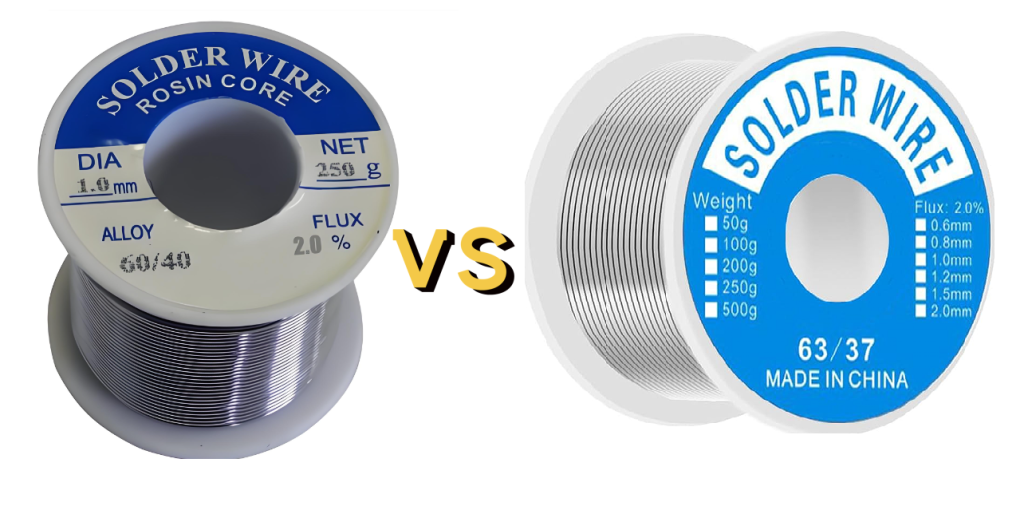
What Is 60/40 Solder?
60/40 solder is a traditional tin-lead alloy containing 60% tin and 40% lead. It has been used for decades in electronics manufacturing, especially before the widespread adoption of lead-free solder.
Unlike eutectic alloys, 60/40 solder melts over a temperature range rather than at a single point.
Typical properties of 60/40 solder
| Property | Value |
|---|---|
| Composition | 60% Tin, 40% Lead |
| Solidus temperature | ~183°C |
| Liquidus temperature | ~188°C |
| Melting behavior | Plastic range (pasty stage) |
| Common forms | Wire solder, bar solder, paste |
When heating 60/40 solder, it first softens, then becomes fully liquid. This intermediate plastic state can last several seconds depending on heating conditions.
Because of this behavior, 60/40 solder is often considered forgiving for manual soldering, particularly when beginners are learning soldering techniques.
What Are the Benefits of 60/40 Solder?
Despite the rise of lead-free materials, 60/40 solder still offers several practical advantages.
1. Smooth Wetting Behavior
Tin-lead alloys exhibit excellent wetting on copper pads, component leads, and plated surfaces. This helps solder spread evenly across the joint.
2. Easy Manual Soldering
The plastic phase of 60/40 solder allows minor adjustments during hand soldering. Components can be repositioned slightly before the joint solidifies.
3. Lower Working Temperature
Compared with most lead-free alloys, 60/40 solder melts at a lower temperature. This reduces thermal stress on sensitive components.
4. Good Electrical Conductivity
Tin-lead solder creates stable electrical connections with consistent conductivity.
5. Wide Availability
Although environmental regulations limit its use in many products, 60/40 solder is still available for maintenance, aerospace, military, and laboratory applications.
What Does 63/37 Mean in Solder?
The term 63/37 solder refers to a tin-lead eutectic alloy composed of:
- 63% Tin
- 37% Lead
The key feature of this alloy is that it melts and solidifies at a single temperature rather than a range.
This temperature is called the eutectic point.
63/37 Solder Melting Point
| Property | Value |
|---|---|
| Composition | 63% Sn / 37% Pb |
| Melting point | 183°C (361°F) |
| Phase transition | Instant solid ↔ liquid |
| Plastic range | None |
This means 63/37 solder changes directly from solid to liquid, without entering a pasty phase.
For precision electronics work, this behavior provides excellent process control.
Difference Between 60/40 vs 63/37 Solder
Although the alloys appear very similar, their performance differs in important ways.
| Feature | 60/40 Solder | 63/37 Solder |
|---|---|---|
| Composition | 60% Sn / 40% Pb | 63% Sn / 37% Pb |
| Melting behavior | Melting range | Single melting point |
| Plastic stage | Yes | No |
| Solidification | Gradual | Instant |
| Soldering control | Moderate | Highly precise |
| Preferred for | General repair | Precision electronics |
The most important difference is the plastic region.
With 60/40 solder, the joint remains semi-solid for a short period. Movement during this time can create cold solder joints.
With 63/37 solder, solidification occurs instantly. This reduces the risk of joint disturbance.
For this reason, many engineers consider 63/37 solder the optimal alloy for electronics assembly.
Is 60/40 Solder Still Available?
Yes. Although environmental standards such as RoHS restrict lead in many consumer electronics, 60/40 solder remains available in several industries.
Typical sectors still using tin-lead solder include:
- Aerospace electronics
- Military equipment
- Medical repair and maintenance
- Laboratory prototypes
- Legacy system servicing
These applications often prioritize reliability and process familiarity over environmental restrictions.
However, for mass-produced commercial electronics, lead-free solder alloys such as SAC305 are now the industry standard.
Which Is Better, 60/40 or 63/37 Solder?
The answer depends on the application.
63/37 Solder Advantages
- Instant solidification
- Reduced cold joint risk
- More consistent solder joints
- Preferred for precision PCB assembly
60/40 Solder Advantages
- Slightly easier for beginners
- Allows repositioning during soldering
- Often cheaper and widely available
For professional electronics assembly, many engineers prefer 63/37 solder due to its eutectic behavior.
For general repair or hobby projects, 60/40 solder still performs very well.
What Temperature Is Best for 60/40 Solder?
Although the alloy begins melting at 183°C, practical soldering requires a higher tip temperature.
Typical soldering iron settings:
| Application | Temperature |
|---|---|
| Hand soldering | 350–370°C |
| Through-hole soldering | 350–380°C |
| Heavy copper joints | 380–400°C |
These temperatures ensure the solder flows properly and wets the joint quickly.
Using temperatures that are too low can lead to poor wetting and weak solder joints.
What Temperature to Solder 63/37?
Because 63/37 solder melts at exactly 183°C, it behaves very predictably during soldering.
Typical working temperatures:
| Application | Temperature |
|---|---|
| Hand soldering | 330–360°C |
| Fine electronics work | 320–350°C |
| Rework or repair | 350–370°C |
Lower temperatures are often sufficient compared with 60/40 solder because the eutectic alloy flows very quickly once it reaches its melting point.
This makes it especially suitable for high-precision PCB repair or fine-pitch components.
What Is 63/37 Solder Used For?
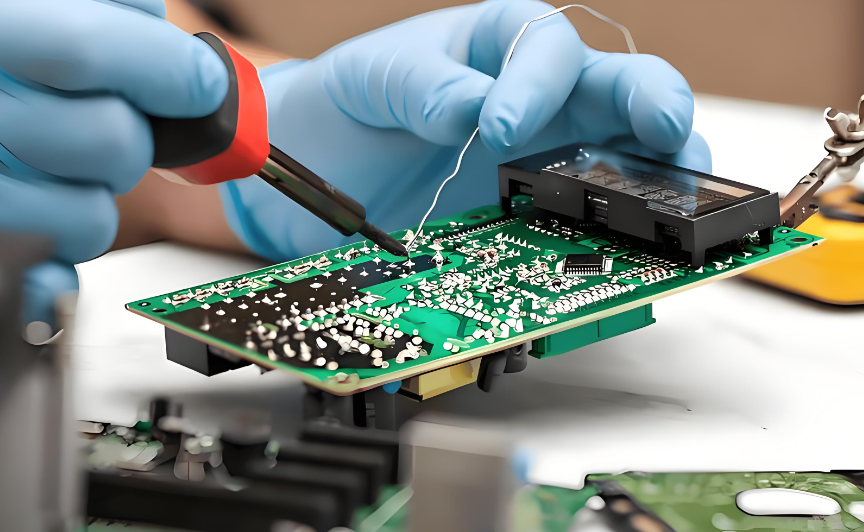
Because of its eutectic behavior, 63/37 solder is widely used in situations requiring precise solder joints.
Common applications include:
- PCB assembly for sensitive electronics
- Surface-mount device (SMD) repair
- BGA and fine-pitch component rework
- Laboratory prototyping
- High-reliability electronics
Engineers appreciate the consistent solidification behavior, which reduces solder defects.
What Is 60/40 Solder Used For?
60/40 solder remains popular in many traditional electronics tasks.
Typical uses include:
- Cable soldering
- Through-hole PCB assembly
- Electronic repair
- Hobby electronics projects
- Audio equipment assembly
- Vintage electronics restoration
The plastic stage can actually help beginners form good solder joints while learning proper soldering technique.
Final Thoughts
When comparing 60 40 vs 63 37 solder, the difference lies mainly in their melting characteristics.
- 60/40 solder melts over a small temperature range and includes a plastic stage.
- 63/37 solder is a eutectic alloy that transitions instantly between solid and liquid.
Because of this behavior, 63/37 solder offers greater precision and stability, making it the preferred option for professional electronics assembly. Meanwhile, 60/40 solder remains practical for general repair, manual soldering, and legacy electronics systems.
In modern PCB manufacturing, many factories now rely on lead-free alloys. However, understanding traditional tin-lead solder still helps engineers select the right material for prototyping, maintenance, and specialized electronics applications.
If you are designing or manufacturing circuit boards and need reliable PCB fabrication or PCBA assembly, working with an experienced electronics manufacturer like Best Technology can significantly improve product reliability and production efficiency.
For professional PCB and PCBA support, feel free to contact: sales@bestpcb.vn