 language
 english


Best HDI PCB Manufacturers For RF And Microwave Circuit Boards
Best hdi pcb manufacturers for rf and microwave circuit boards play a decisive role in modern wireless systems. RF and microwave electronics demand extremely stable signal transmission, precise impedance control, and excellent thermal performance. Traditional PCB technologies often struggle when frequencies reach GHz levels.
HDI PCBs are widely used in 5G infrastructure, satellite communication, radar systems, aerospace electronics, and advanced IoT devices. Expertise in high-frequency materials, impedance modeling, and precision fabrication directly affects RF system reliability and signal integrity. The following guide explains how HDI circuit boards support RF and microwave circuits and how to choose the right supplier.
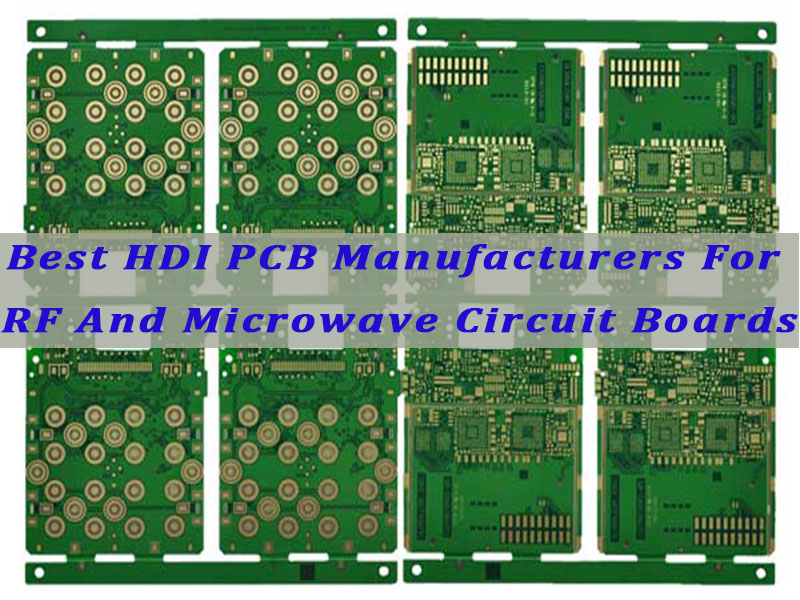
What Are HDI Circuit Boards And Why Are They Important For RF And Microwave Designs?
HDI circuit boards are High Density Interconnect printed circuit boards designed with finer traces, microvias, and compact routing structures. These features allow more electronic functionality in a smaller area while maintaining electrical performance.
In RF and microwave designs, signal behavior changes dramatically as frequency increases. Even small layout imperfections can introduce reflection, insertion loss, or signal distortion. HDI technology helps engineers minimize these issues.
Key characteristics of HDI circuit boards include:
- Microvias created by laser drilling
- Sequential lamination structures such as 1+N+1 or 2+N+2
- Fine trace width and spacing, often below 75 μm
- High layer density for complex RF routing
Compared with conventional multilayer PCBs, HDI boards provide several advantages for RF systems.
| Feature | Conventional PCB | HDI Circuit Boards |
|---|---|---|
| Via Type | Mechanical through-hole | Laser microvia |
| Routing Density | Moderate | Extremely high |
| Signal Path Length | Longer | Shorter |
| High-frequency performance | Limited | Optimized |
Shorter routing paths directly reduce signal loss. Microvias also reduce parasitic inductance. These improvements help maintain stable impedance at microwave frequencies.
For engineers working on compact RF modules, HDI circuit boards enable smaller form factors without compromising signal performance.
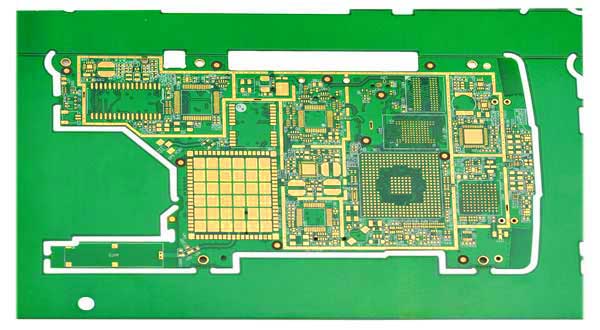
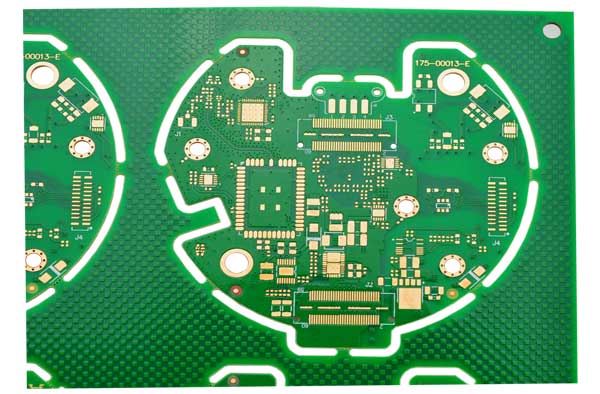
What Technologies Are Used In Advanced HDI Printed Circuit Board Manufacturing?
Manufacturing HDI printed circuit boards requires sophisticated fabrication processes. These technologies ensure that fine structures remain reliable even in demanding RF environments.
The most important manufacturing technologies include the following.
1. Laser Drilled Microvias
Laser drilling creates extremely small vias, typically 50–100 μm in diameter.
These microvias allow direct layer-to-layer connections with minimal signal discontinuity. In RF circuits, smaller vias reduce parasitic capacitance and inductance.
2. Sequential Lamination
HDI printed circuit board production often involves multiple lamination cycles.
Each lamination step adds new layers and microvias. This process allows designers to create complex stackups such as:
- 1+N+1 HDI structure
- 2+N+2 HDI structure
- stacked microvias
Sequential lamination is essential for dense RF module designs.
3. Advanced Imaging And Fine Line Etching
HDI boards require trace widths far smaller than traditional PCBs.
Advanced photolithography and high-precision etching enable trace widths of 50 μm or less. These fine lines support high routing density and controlled impedance.
4. Precision Plating Processes
Reliable microvias require strong copper filling.
Electroplating techniques such as via filling and planarization ensure electrical reliability and structural stability.
Together, these technologies make HDI printed circuit boards capable of supporting high-frequency RF designs.
How Do You Choose A Reliable HDI Printed Circuit Board Supplier For RF Applications?
Selecting a reliable HDI printed circuit board supplier is crucial for RF product success. Not every PCB manufacturer has the capability to produce high-frequency HDI boards consistently.
Engineers and procurement teams usually evaluate several key factors.
Manufacturing Capability
The supplier should have proven experience with HDI fabrication technologies such as:
- Laser microvia drilling
- Sequential lamination
- Fine-line imaging
- Controlled impedance production
Without these capabilities, high-frequency PCB performance may suffer.
RF Material Expertise
RF boards often require specialized laminates. A competent HDI printed circuit board supplier must understand materials such as:
- Rogers RO4350B
- PTFE laminates
- low-loss hydrocarbon ceramics
- high-frequency modified FR-4
Material selection significantly affects signal loss and stability.
Quality Certification
Professional suppliers usually maintain industry certifications including:
- ISO9001 quality management
- ISO13485 for medical electronics
- IATF16949 for automotive systems
- AS9100 for aerospace manufacturing
These standards indicate mature process control.
Engineering Support
Strong engineering support improves project success. Reliable suppliers typically offer:
- Design for Manufacturability (DFM) analysis
- stackup recommendations
- impedance modeling assistance
- RF layout suggestions
These services reduce development risk and shorten product development cycles.
What Design Considerations Are Critical When Building An HDI Circuit Board For Microwave Frequencies?
Designing an HDI circuit board for microwave frequencies requires careful attention to signal behavior. Even small geometry changes may affect performance.
The most critical design considerations include the following.
Controlled Impedance
RF circuits require stable impedance, usually 50 Ω or 75 Ω.
Trace width, dielectric thickness, and material properties all affect impedance. Designers must calculate impedance accurately during stackup planning.
Microvia Placement
Microvias reduce signal path length but must be placed carefully.
Poor via placement may introduce impedance discontinuities. Designers should keep signal transitions smooth and avoid unnecessary vias.
Grounding Strategy
Proper grounding is essential for RF stability.
A continuous ground plane reduces noise and electromagnetic interference. Ground vias also help maintain signal return paths.
Thermal Management
High-power RF circuits generate heat.
HDI circuit board layouts should include thermal vias and copper planes to dissipate heat efficiently.
Signal Isolation
High-frequency signals can easily couple into adjacent traces.
Designers should maintain adequate spacing and use ground shielding when necessary.
Careful design ensures the HDI board maintains signal integrity even at microwave frequencies.
What Materials Are Commonly Used In HDI Printed Circuit Boards For RF And Microwave Circuits?
Material selection has a direct impact on RF performance. HDI printed circuit boards used for microwave circuits typically rely on low-loss substrates.
Common materials include the following.
| Material | Dielectric Constant (Dk) | Loss Tangent | Typical Applications |
|---|---|---|---|
| Rogers RO4350B | 3.48 | 0.0037 | RF amplifiers, antennas |
| Rogers RT/duroid | 2.2–2.9 | extremely low | satellite systems |
| Taconic RF laminates | ~3.0 | low | radar electronics |
| Modified FR-4 | 3.6–4.2 | moderate | lower frequency RF |
Low loss tangent materials reduce signal attenuation. Stable dielectric constants maintain consistent impedance across temperature variations.
In HDI designs, these laminates are often combined with high-Tg prepregs to support sequential lamination processes.
What Manufacturing Challenges Exist When Producing HDI Circuit Boards For High-Frequency Devices?
Producing HDI circuit boards for RF devices introduces several technical challenges. Manufacturers must balance precision fabrication with reliable electrical performance.
Some common challenges include the following.
Microvia Reliability
Stacked microvias must maintain strong electrical connections.
Improper plating or poor filling can lead to reliability issues during thermal cycling.
High-Frequency Material Handling
RF laminates often behave differently from standard FR-4.
Some PTFE materials require special drilling parameters and surface treatment.
Tight Tolerance Requirements
RF boards often require extremely tight tolerance control for:
- impedance
- trace width
- dielectric thickness
Small deviations may cause signal reflection or insertion loss.
Layer Alignment
Sequential lamination increases alignment complexity.
Accurate layer registration is essential for microvia structures.
Manufacturers with extensive HDI experience can effectively manage these challenges and maintain consistent product quality.
Which Industries Depend Most On High-Performance HDI Printed Circuit Board Technology?
HDI printed circuit board technology supports many advanced industries. These sectors rely heavily on high-frequency electronics and compact system design.
Major industries include the following.
Telecommunications
5G infrastructure uses complex RF modules operating at GHz frequencies. HDI PCBs allow dense routing and stable signal transmission.
Aerospace And Defense
Radar systems, satellite communication equipment, and avionics require reliable microwave circuitry. HDI boards support these demanding applications.
Automotive Electronics
Advanced driver assistance systems (ADAS) and automotive radar operate at high frequencies. HDI technology helps reduce module size.
Industrial And IoT Devices
Wireless sensors and IoT gateways require compact RF modules. HDI PCBs support miniaturization while maintaining performance.
These industries continue to drive global demand for high-performance HDI printed circuit boards.
Why Choose Best Technology As Your HDI Printed Circuit Board Supplier For RF And Microwave PCB Projects?
Best Technology has extensive experience producing HDI printed circuit board solutions for RF and microwave applications. The company supports customers worldwide with reliable manufacturing and engineering expertise.
Key advantages include the following.
Experienced Engineering Team
Each project receives dedicated engineering assistance throughout development and production.
Advanced Manufacturing Capability
The company supports advanced PCB technologies such as:
- HDI multilayer structures
- microvia drilling
- high-frequency laminates
- controlled impedance fabrication
These capabilities support complex RF designs.
Comprehensive PCBA Services
Best Technology provides one-stop services, including:
- PCB fabrication
- component sourcing
- SMT assembly
- testing and validation
This integrated model simplifies supply chains for customers.
Reliable Quality Control
Strict quality management ensures product reliability across demanding industries such as aerospace, telecommunications, and industrial electronics.
For RF system designers seeking stable HDI manufacturing partners, Best Technology provides reliable support and global service.
In closing, Best hdi pcb manufacturers for rf and microwave circuit boards provide the expertise required to produce reliable high-frequency electronics. HDI technology enables compact layouts, improved signal integrity, and stable microwave performance.
With advanced fabrication technologies, high-frequency materials, and experienced engineering support, HDI printed circuit boards continue to power modern wireless systems. From telecommunications infrastructure to aerospace electronics, the demand for reliable HDI manufacturing continues to grow.
If you are looking for a dependable HDI printed circuit board supplier for RF and microwave projects, Best Technology offers professional engineering support and high-quality manufacturing services. For inquiries or project discussions, please contact Best Technology via sales@bestpcb.vn.
FAQs About Best HDI PCB Manufacturers For RF And Microwave Circuit Boards
What Makes HDI PCB Technology Suitable For RF And Microwave Circuit Boards?
HDI technology shortens signal paths and reduces parasitic inductance. Microvias and fine routing help maintain stable impedance at high frequencies.
How Many Layers Are Typically Used In RF HDI Printed Circuit Boards?
RF HDI boards commonly use 6–12 layers depending on circuit complexity. High-frequency modules sometimes use even more layers.
Do HDI Circuit Boards Improve Signal Integrity In High-Frequency Designs?
Yes. HDI boards reduce signal path length and improve grounding structures. These features help maintain signal integrity in GHz-level circuits.