 language
 english


How to Choose a Reliable PCBA Assembly Prototype Factory?
PCBA assembly prototype services allow teams to validate circuit designs before moving to volume production. A well-executed prototype stage reduces technical risks, shortens development cycles, and improves product stability. Today, prototype PCBA assembly is more than basic component placement. It includes design review, sourcing coordination, controlled assembly, and structured inspection to ensure functional accuracy from the first build.
At the same time, fast product iterations demand flexible and reliable support. Small batches, urgent timelines, and complex layouts are now common. Therefore, selecting a capable PCBA prototype assembly factory is a strategic step that directly influences product quality, lead time, and long-term manufacturing success.
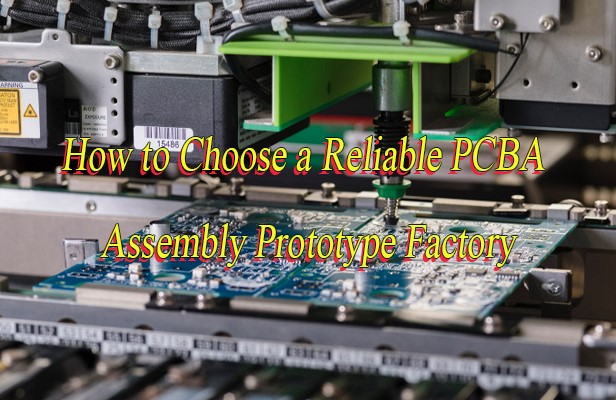
How to Choose a Reliable PCBA Assembly Prototype Factory?
Below is a detailed guide to PCBA assembly prototype factory:
- Verify core manufacturing equipment and maintenance standards: A reliable factory must have fully functional SMT machines, reflow ovens, wave soldering equipment and testing tools (AOI, X-Ray detectors). Factories with regularly maintained equipment (at least once every 3 months) have a 42% lower defect rate for PCBA assembly prototype than those with irregular maintenance. Top factories achieve full wave soldering through-hole penetration and meet IPC-A-610 Class 3 standards.
- Check DFM analysis capability and success rate: Prioritize factories that offer DFM (Design for Manufacturability) analysis. DFM analysis reduces prototype rework rates by 68% on average and cuts project delays by 3-5 days per iteration. Reliable factories have a DFM issue identification rate of 95% or higher to catch common design flaws before assembly.
- Confirm compliance with key quality standards: Choose factories certified to IPC-A-610 and ISO 9001. ISO 9001-certified factories have 37% fewer quality-related complaints than non-certified ones. For high-reliability prototypes, select factories that consistently meet IPC-A-610 Class 3 standards.
- Evaluate relevant industry experience: Factories with 5+ years of experience in your specific field have a 52% lower error rate. Specialized factories have a 98% success rate for industry-specific prototypes compared to 72% for general-experience factories. Reputable factories can provide 10+ relevant case study references from the past 12 months.
- Assess communication responsiveness: Reliable factories respond to inquiries within 24 hours 90% of the time. Communication delays increase prototype lead times by an average of 2.8 days. Factories with weekly progress updates reduce project misalignment by 49%.
- Review incoming material inspection (IMI) protocols: A strict IMI process is critical as 73% of prototype failures stem from low-quality components. Top factories inspect 100% of critical components and 30% of standard components with an IMI defect detection rate of 92% or higher. They also provide material certificates for all sourced components.
- Check prototype lead time consistency: The average lead time for a standard 2-layer PCBA assembly prototype is 3-7 days. Reliable factories maintain a 95% on-time delivery rate and should not have more than 10% of orders delivered late. Complex prototypes should have a consistent 7-10 day lead time with no more than 5% variance.
- Evaluate after-sales warranty and support: Look for factories with a 30-90 day warranty on assembly work. Factories offering a 60+ day warranty have a 91% customer retention rate. Reliable factories provide urgent technical support within 4 hours and resolve 80% of troubleshooting requests in 1 business day.
How to Check if My PCBA Assembly Prototype Design Is Feasible?
Checking PCBA assembly prototype design feasibility avoids unnecessary delays and costs. Below are clear, actionable steps to verify feasibility:
- Conduct DFM analysis: Ask reliable factories for free or low-cost DFM (Design for Manufacturability) analysis. Provide Gerber files, BOM list and CPL files for review, DFM catches 95% of common design flaws (e.g., incorrect footprints, tight spacing) and reduces prototype rework rates by 68% on average.
- Verify component availability: Use component sourcing tools to check BOM part stock. 34% of prototype delays stem from hard-to-find components; reliable factories can recommend compatible alternatives to cut sourcing time by 40%.
- Check thermal management design: Ensure high-power components have adequate heat sinks or thermal vias. Designs without proper thermal planning have a 58% higher failure rate; use ≥0.2mm power signal lines for high-density layouts to reduce heat generation by 25%.
- Confirm design testability: Add sufficient test points for ICT or FCT testing. Prototypes with inadequate test points miss 47% of hidden defects; factory-designed test fixtures improve testing speed by 35% and accuracy by 50% for complex units.
- Review material compatibility: Ensure design materials align with assembly processes. Material incompatibility causes 29% of prototype assembly failures; low-loss substrates improve signal integrity by 30% for high-reliability prototypes.
- Check power integrity: For high-current components, use dedicated power/ground planes and dense decoupling capacitors near chip pins. Poor power integrity leads to 42% of prototype performance issues, including signal interference and voltage instability.
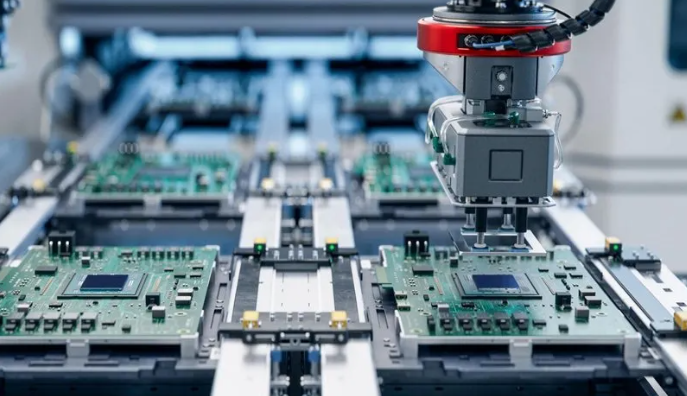
What Quality Standards Should a Reliable PCBA Assembly Prototype Meet?
- IPC-A-610 Standard: The most widely used PCBA quality standard for soldering, component placement and cleanliness. Choose factories following Class 2 for consumer electronics or Class 3 for high-reliability products. Class 3 requires ≤25% void rate for standard solder joints and ≤15% for BGA solder joints.
- ISO 9001 Certification: Ensures factories have a formal quality management system for material sourcing, production and shipping. Certified factories have 37% fewer quality-related complaints.
- Specialized ISO Certifications: Use ISO 13485 for medical device prototypes and ISO 14001 for environmental compliance.
- RoHS Compliance: Restricts hazardous substances in electronics and is required globally. Ensure factories use RoHS-compliant materials and provide a compliance certificate.
- CE Certification: Required for prototypes sold in the European market. Verify factories can provide it with RoHS compliance.
- Strict Internal Quality Checks: Factories should inspect 100% of critical materials, use AOI/X-Ray for solder checks and test functionality before shipping, with a 92%+ defect detection rate.
- Detailed Quality Report: Required with prototypes, including test results, inspection records and issue resolutions.
How to Verify the Quality of PCBA Assembly Prototype Before Mass Production?
Verifying the quality of your prototype PCBA assembly before mass production prevents scaling flawed designs. Below are 8 actionable, data-backed steps to ensure reliability:
- Perform a visual inspection of solder joints: Check that solder joints are smooth, shiny and evenly shaped. Cold solder joints (dull, grainy) and bridging cause 38% of prototype failures. Ensure compliance with IPC-A-610 Class standards, with ≤25% void rate for standard joints and ≤15% for BGA joints.
- Verify component placement and polarity: Confirm all components are aligned correctly, with no tilting or misalignment. Reverse polarity of diodes, capacitors or ICs leads to 29% of prototype malfunctions, so double-check polarity markings against your design files.
- Conduct a continuity test: Use a multimeter to check for short circuits and open circuits on critical paths (power, signal lines). Continuity tests catch 41% of hidden connection issues that visual inspections miss, ensuring all electrical paths function properly.
- Run functional testing (FCT): Use a test fixture to simulate real-world use and verify performance. FCT identifies 53% of functional defects that other tests miss, such as inaccurate sensor readings or signal interference.
- Perform reliability testing: Conduct basic thermal testing (exposing to 0-60°C) and vibration testing for mobile-use prototypes. Designs failing these tests have a 76% higher failure rate in mass production; even simple at-home tests reveal 32% of reliability issues.
- Request X-Ray testing for hidden defects: For BGA components or dense layouts, X-Ray testing checks for internal solder voids and cracks—issues that cause 45% of high-density prototype failures. X-Ray can reduce hidden defect rates from 15% to 3% or lower with proper adjustments.
- Complete in-circuit testing (ICT): Ask the factory to perform ICT to verify component values and solder quality. ICT detects 89% of component-related defects, including incorrect resistor values or poor solder connections.
- Review the factory’s quality report: Compare their test results with your own. Discrepancies indicate potential quality gaps; reliable factories resolve 98% of reported discrepancies before mass production, ensuring consistency.
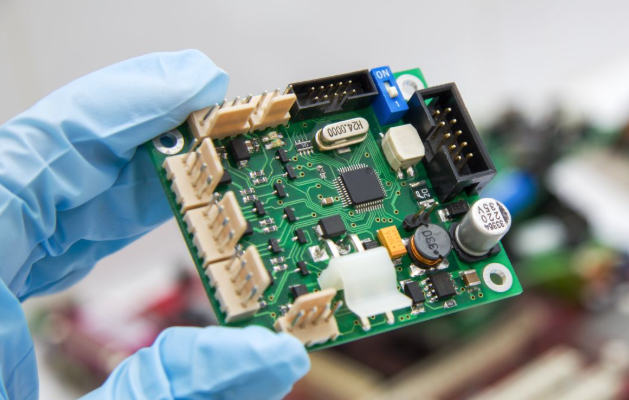
What After-Sales Support Should a PCBA Prototype Assembly Factory Provide?
Below are 8 after-sales support items, ensuring they support your project smoothly:
- Clear warranty policy: Reliable factories offer a 30-90 day warranty for assembly work, covering assembly defects like poor soldering or incorrect component placement. Factories with a 60+ day warranty have a 91% customer retention rate, and they should provide free repair or replacement for assembly-related failures.
- Written warranty terms: Request warranty terms in writing to clarify covered and excluded items. Written terms reduce post-sales disputes by 65%, as they avoid ambiguity about non-covered damages (e.g., incorrect design or improper use).
- Dedicated technical support team: The factory should have a dedicated technical team available via phone, email or video call. Reliable teams respond to troubleshooting inquiries within 4 hours for urgent issues and resolve 80% of requests in 1 business day.
- Professional troubleshooting assistance: Their technical team should help identify prototype failure causes (design, assembly or component issues) and suggest solutions. This assistance saves an average of 8+ hours of troubleshooting time per project.
- Design iteration support: They should offer 15-30% discounted rework rates for prototype iterations and 2-3 day quick turnaround times. Keeping design files and BOM lists on file streamlines iterations, saving 40% of file resubmission time.
- Mass production transition assistance: They should adjust the assembly process for mass production, reducing transition time by 30% on average. Their supplier relationships also enable 10-20% lower material costs for large-quantity component sourcing.
- Smooth prototype-to-mass-production handoff: They should transfer all test fixtures, documentation and quality standards, ensuring consistency between prototypes and mass-produced units. This reduces mass production defect rates by 28%.
- Long-term after-sales follow-up: Reputable factories conduct follow-ups 1-2 weeks after prototype delivery, with a 94% follow-up completion rate, to address potential issues early and maintain project progress.
How Long Does It Take to Complete Prototype PCBA Assembly?
Lead time is a key consideration when choosing a PCBA prototype assembly factory, as balancing speed and quality is crucial. The complexity of your prototype and material sourcing time are the main influencing factors. A basic 2-layer prototype with 50 components takes 2 to 3 days to assemble, while complex ones with 4+ layers or BGA components take 5 to 7 days. Material sourcing takes 1 to 2 days for readily available components and 3 to 5 days or longer for hard-to-find or overseas components.
Testing and additional services also affect lead times. Basic testing adds 1 day, while advanced testing such as FCT and X-Ray adds 2 to 3 days. Most factories offer expedited services for an extra fee to deliver prototypes within 24 to 48 hours. Shipping time varies too, with local pickup available the same day and overseas shipping taking 1 to 2 days for express or 3 to 5 days for standard.
In general, a standard PCBA assembly prototype is ready in 3 to 7 days. Complex prototypes or those with hard-to-source components take 7 to 10 days. You should always confirm the lead time with the factory before placing your order to avoid delays.
How Much Does PCB Assembly Prototype Cost?
Cost is a key concern when ordering a PCBA assembly prototype, and its price varies based on several core factors. Understanding these factors helps you get an accurate estimate, with the main influences being PCB layers, size, component type and quantity, materials, labor, testing, expedited services and material sourcing.
PCB layers and size are basic cost drivers: 2-layer prototypes cost $50 to $150, 4-layer ones cost $100 to $300, and 6+ layer prototypes start at $200 and go up to $500+. Smaller PCBs (less than 5cm x 5cm) are cheaper, while larger ones (10cm x 10cm or bigger) cost more. More components increase costs, with basic parts being affordable and specialized components like BGAs and sensors more expensive; high-quality materials and special finishes also add to the cost, as do complex assembly requiring skilled labor.
Additional fees include $50 to $200 per advanced test, a 20% to 50% expedited service fee and a 5% to 10% material sourcing fee if the factory sources components for you. Generally, a standard 2-layer prototype with 50-100 basic components costs $100 to $300, while a complex 4-layer one with specialized components and advanced testing costs $300 to $800. Always ask the factory for a detailed quote to avoid hidden fees.
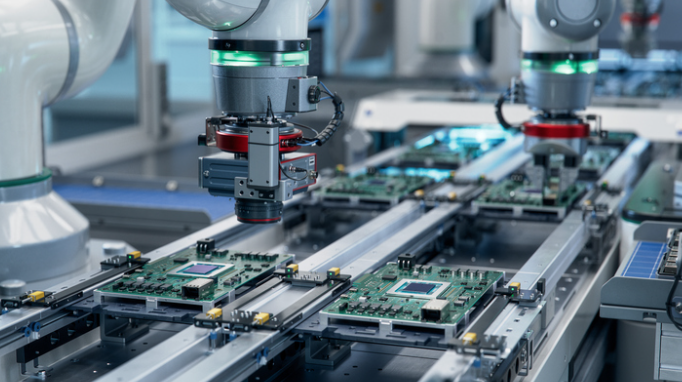
FAQs of Prototyping PCBA Assembly
Q1: What files do I need to send to the factory for PCBA assembly prototype?
A1: You need three key files: Gerber files (for PCB fabrication), BOM list (bill of materials with component details) and CPL files (component placement list). Some factories accept CAD files for reference. Ensure all files are accurate and up-to-date to avoid mistakes.
Q2: Can I use hand-soldered prototypes instead of factory-assembled ones?
A2: Hand-soldered prototypes work for simple designs but not for complex ones. Factory-assembled prototypes are more consistent, accurate and reliable, using professional equipment for better solder quality. Factory assembly is better for prototypes leading to mass production.
Q3: How many prototypes should I order?
A3: Order 2 to 5 prototypes to test multiple units, identify consistent issues and have spares for failures. One or two prototypes suffice for simple designs; 5+ prototypes offer more flexibility for testing and iterations of complex designs.
Q4: What if my prototype fails testing?
A4: Work with the factory to identify the cause (design, assembly or component issue). They will help fix and rework the prototype, most often with discounted rework rates. Use the failed prototype to improve your design.
Q5: Can the factory help me source hard-to-find components?
A5: Yes, most reliable factories have relationships with multiple suppliers. They can source hard-to-find components or recommend compatible alternatives, saving time and keeping your prototype on track. Inform them of hard-to-find components upfront.