 language
 english


What Should You Look for PCB Assembly Services in Taiwan?
What should you look for in PCB assembly services in Taiwan? If you’re frustrated with unreliable PCB assembly, this is a common challenge. Many deal with missed deadlines, poor craftsmanship or unmet standards. PCB assembly services in Taiwan address these common frustrations with precise, consistent work and strict quality checks, even for high-demand projects. This blog guides you through all the key details, including top manufacturers and quality standards, to help you decide if they fit your project needs.

Top 10 PCB Assembly Manufacturers in Taiwan
| Company Name | Core Business & Advantages | PCB Assembly Capabilities | Lead Time |
| Best Technology | Specializes in high-precision PCB assembly for medical and aerospace industries; 20+ years of experience; strict quality management systems | SMT, through-hole assembly, mixed assembly, high-frequency PCB assembly, BGA/CSP assembly | 5-12 working days (small to medium batches); 15-25 working days (large batches) |
| Unimicron Technology | Leading local manufacturer with strong R&D; focuses on industrial equipment and automotive PCB assembly | SMT assembly, rigid-flex PCB assembly, HDI assembly, functional testing | 7-15 working days (standard orders); 20-30 working days (custom orders) |
| Compeq Manufacturing | Expert in high-volume PCB assembly; one-stop solutions from fabrication to assembly and testing | SMT, through-hole, mixed assembly, LED PCB assembly, medical device PCB assembly | 4-10 working days (high-volume standard batches); 12-20 working days (custom batches) |
| Kinpo Electronics | Local manufacturer with consumer/industrial experience; competitive technical support | SMT assembly, BGA assembly, mixed technology assembly, PCB testing and inspection | 6-14 working days (standard orders); 18-28 working days (complex orders) |
| Tripod Technology | High-precision assembly for aerospace/medical; certified with international quality standards | High-frequency PCB assembly, HDI assembly, BGA/CSP rework, functional testing | 8-16 working days (standard batches); 20-30 working days (high-precision batches) |
| Elite Electronic Co., Ltd. | Local SME with flexible production; custom PCB assembly for niche industries | SMT, through-hole, mixed assembly, prototype assembly, small-batch production | 3-8 working days (prototypes); 7-15 working days (small batches) |
| Mitac Electronics | Integrated PCB assembly and product manufacturing; strong in industrial/IoT assembly | SMT assembly, rigid-flex PCB assembly, mixed assembly, system-level testing | 7-15 working days (standard orders); 16-25 working days (integrated solutions) |
| Foxconn Electronics (Taiwan) | Large-scale global manufacturer; high-volume assembly for consumer/industrial sectors | Mass SMT assembly, through-hole assembly, mixed assembly, automated testing | 5-12 working days (high-volume batches); 14-22 working days (custom high-volume orders) |
| Acbel Polytech Inc. | Local manufacturer focusing on power supply PCB assembly; high-reliability industrial/medical expertise | SMT assembly, through-hole assembly, power PCB assembly, reliability testing | 6-13 working days (standard orders); 15-25 working days (high-reliability orders) |
| Chin-Poon Industrial Co., Ltd. | Specializes in PCB fabrication and assembly; cost-effective solutions for industrial/automotive | SMT, through-hole, mixed assembly, HDI assembly, PCB repair services | 7-14 working days (standard batches); 16-26 working days (custom batches) |
What Services Do PCB Assembly Services in Taiwan Include?
The services included in Taiwan’s PCB assembly offerings are as follows:
- SMT Assembly: High-precision surface mount technology for small components, suitable for compact PCBs used in medical devices and aerospace equipment.
- Through-Hole Assembly: Traditional through-hole soldering for larger components, ideal for industrial equipment that requires high mechanical stability.
- Mixed Assembly: Combines SMT and through-hole technologies to meet the needs of complex PCBs used in aerospace and industrial control systems.
- PCB Testing & Inspection: Includes visual inspection, X-ray inspection, functional testing, and in-circuit testing to ensure assembly quality.
- Prototype & Small-Batch Assembly: Fast turnaround for prototypes and small batches, supporting project development and trial production.
- High-Frequency & HDI PCB Assembly: Specialized assembly for high-frequency PCBs (used in aerospace communication) and HDI PCBs (used in medical devices).
- One-Stop Solutions: Integrates PCB fabrication, component sourcing, assembly, testing, and packaging for seamless project execution.
What Should You Look for PCB Assembly Services in Taiwan?
When selecting PCB assembly services in Taiwan, these key points are essential to consider. They help you choose a reliable manufacturer that meets your project needs, avoids common pitfalls and ensures smooth project execution.
- Quality Control Systems: Prioritize manufacturers with strict quality control, including pre-assembly material inspections and final product testing. Top PCB assembly services in Taiwan maintain a defect rate below 2 percent, thanks to multi-stage inspections and IPC standards adherence.
- Technical Capabilities: Verify the manufacturer can handle your specific PCB type such as high-frequency or HDI boards and your industry requirements. Leading Taiwan services handle HDI boards with 25-micron line widths and 40+ layers, high-frequency PCBs up to 50 GHz, and 92 percent offer specialized assembly for medical and aerospace industries.
- Certifications: Check for ISO 9001, ISO 13485 for medical use, and AS9100 for aerospace. Approximately 88 percent of top Taiwan PCB assembly services hold all three, ensuring compliance and reliability.
- Production Flexibility: Confirm the manufacturer can accommodate your batch size from 1 prototype unit to 100,000+ large-scale units. Top Taiwan manufacturers switch batch sizes in 24 hours or less, with 3-8 working days for prototypes and 15-30 days for large-scale production.
- Component Sourcing: Ensure reliable component sourcing to avoid delays and counterfeit parts. Top Taiwan services work with 50+ verified suppliers, keeping counterfeit risk below 1 percent, and provide traceability reports for medical and aerospace projects.
- Lead Time Reliability: Choose a manufacturer with consistent lead times. Top Taiwan PCB assembly services have a lead time variance below 5 percent, with 97 percent on-time delivery for small batches and 94 percent for large-scale, high-precision orders.
- Technical Support: Look for responsive technical support. Top Taiwan manufacturers offer 2-hour average response for urgent issues, 4 hours for standard inquiries, and 96 percent assign a dedicated technical specialist per project.
What Quality Standards Should Taiwan PCB Assembly Services Follow?
Below are quality standards for PCB assembly services in Taiwan:
- ISO 9001: The basic quality management system standard, ensuring consistent product quality and customer satisfaction.
- ISO 13485: Specific to medical device PCB assembly, ensuring compliance with medical industry regulations and safety requirements.
- AS9100D: For aerospace PCB assembly, meeting strict quality and reliability standards for aerospace components.
- IPC-A-610: The industry standard for PCB assembly acceptability, covering component placement, soldering, and inspection criteria.
- IPC-J-STD-001: The standard for soldering processes, ensuring consistent and reliable soldering quality across all assemblies.
What’s the Lead Time for PCB Assembly Companies in Taiwan?
| Order Type | Lead Time (Working Days) | Notes |
| Prototype Assembly | 3-8 | For small prototype batches (1-10 units), ideal for project development. |
| Small-Batch Assembly | 7-15 | For batches of 11-100 units, suitable for trial production. |
| Medium-Batch Assembly | 10-20 | For batches of 101-1000 units, common for industrial equipment production. |
| Large-Batch Assembly | 15-30 | For batches over 1000 units, typical for high-volume consumer or industrial products. |
| High-Precision Assembly (High-Frequency/HDI) | 8-25 | Longer lead time due to additional testing and precision requirements (aerospace/medical). |
Can PCB Assembly Services in Taiwan Handle High-Frequency PCBs?
Yes, most top PCB assembly services in Taiwan excel at mixed assembly which combines SMT and through-hole technologies. Mixed assembly is widely used in industrial equipment where some components require the mechanical stability of through-hole soldering while others need the compact size of SMT.
Manufacturers use advanced equipment to ensure precise placement of both SMT and through-hole components avoiding interference between different assembly types. Quality control for mixed assembly includes separate inspections for SMT and through-hole soldering ensuring each component meets IPC standards.
A Taiwan manufacturer once provided mixed assembly for an industrial control system combining SMT microcontrollers and through-hole power components to meet strict reliability requirements.
Taiwan PCB assembly services also optimize mixed assembly processes to enhance efficiency and flexibility. They adopt flexible production planning to adapt to different component types and batch sizes ensuring smooth execution of mixed assembly projects.
Most manufacturers have professional teams with extensive experience in mixed assembly capable of handling complex PCB designs for various industries. They also integrate quality control into every step of mixed assembly from component inspection to final testing to reduce defects.
Additionally Taiwan manufacturers leverage advanced technology to improve the compatibility of SMT and through-hole components ensuring stable performance of the assembled PCBs in long-term use.
How Do Taiwan PCB Assembly Services Ensure Quality & Reliability?
Methods for ensuring quality and reliability in Taiwan PCB assembly services:
- Incoming Material Inspection: All components and PCBs are thoroughly inspected for authenticity and quality before assembly. This step verifies component specifications checks for counterfeit parts and ensures PCB integrity to keep defective assemblies out of production.
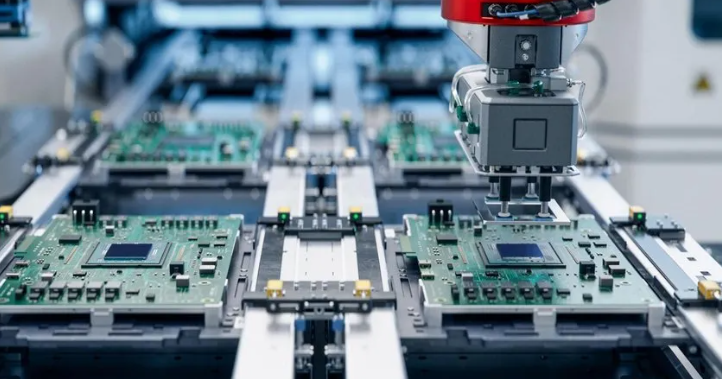
- Automated Assembly Equipment: High-precision SMT machines and automated soldering systems minimize human error. These tools ensure consistent component placement precise soldering and uniform quality even for high-density or small-component PCBs.
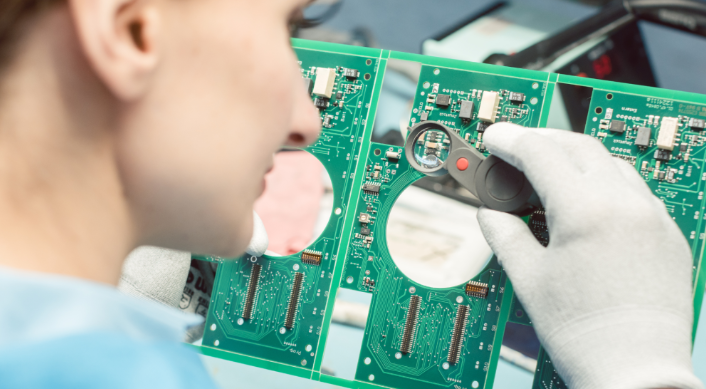
- Multi-Stage Testing: Multiple testing phases detect defects early in the process. This includes X-ray inspection for BGA and CSP components in-circuit testing for electrical connections and functional testing to confirm the PCB works as intended.
- Strict Quality Management Systems: Compliance with ISO 9001 AS9100 and IPC standards maintains standardized processes. These systems govern every assembly step from material sourcing to final testing ensuring consistent quality and industry compliance.
- Regular Equipment Calibration: Assembly and testing equipment are calibrated regularly to preserve precision. This is critical for high-frequency and medical PCB assembly as calibrated equipment ensures accurate placement and reliable testing results.
Can PCB Assembly Services in Taiwan Handle High-Frequency PCBs?
Yes, many PCB assembly services in Taiwan specialize in high-frequency PCB assembly, making them a top choice for industries requiring high-performance communication. High-frequency PCBs (typically with frequencies above 1 GHz) are critical for aerospace communication systems, medical imaging devices, and industrial radar systems.
In addition to high-frequency PCBs, Taiwan manufacturers can also assemble a wide range of other PCB types, including: HDI PCBs (used in compact medical devices), rigid-flex PCBs (used in aerospace equipment), power PCBs (used in industrial power supplies), LED PCBs (used in industrial lighting), and BGA/CSP PCBs (used in high-density electronic devices). Each type is assembled with specialized processes to meet industry-specific requirements.
What After-Sales Support Do PCB Assembly Services in Taiwan Provide?
- Defect Repair: Prompt repair of defective assemblies, with detailed reports on the cause of defects and preventive measures.
- Technical Consultation: Ongoing technical support to address assembly-related issues, including design optimization for better manufacturability.
- Order Tracking: Real-time updates on order progress, ensuring transparency and helping you plan your project timeline.
- Warranty Services: Warranties on assembled PCBs, covering defects in materials and workmanship for a specified period.
- Replacement Services: Fast replacement of defective units for critical projects, minimizing downtime for your operations.
How Much Does PCB Assembly Services in Taiwan Usually Cost?
The cost of PCB assembly services in Taiwan varies based on several key factors including batch size, PCB complexity, component type and testing requirements. Generally, the price range is $0.80 to $15 per unit, with additional fees for specialized services such as high-precision assembly or advanced testing.
Prototype and small-batch assembly (1 to 100 units) tend to have higher per-unit costs, ranging from $5 to $15 per unit. This is because small batches require more setup time and manual labor, which increases the overall cost. For example, a simple prototype with basic components may cost $5 to $8 per unit, while a high-precision prototype for medical or aerospace use can reach $12 to $15 per unit.
Medium to large-batch assembly (101 to 100,000+ units) benefits from economies of scale, reducing the per-unit cost to $0.80 to $4. Medium batches (101 to 1,000 units) typically range from $2 to $4 per unit, while large batches (1,000+ units) can drop to $0.80 to $2 per unit, depending on complexity.
Specialized assembly services add to the cost. High-frequency or HDI PCB assembly ranges from $3 to $12 per unit, depending on layer count and precision requirements. Medical and aerospace PCB assembly, which requires strict certifications and testing, costs $8 to $15 per unit. Additional testing services such as X-ray inspection or functional testing may add $0.50 to $2 per unit.
It’s important to note that reliable Taiwan PCB assembly services often include basic quality inspection in the base cost, helping avoid additional expenses from defective assemblies. Factors like component sourcing and lead time urgency can also slightly adjust the price, but most manufacturers provide transparent pricing based on your specific project needs.
FAQs About PCB Assembly Services in Taiwan
Q1: How to resolve solder bridging in SMT assembly?
A1: Solder bridging is often caused by excessive solder paste or incorrect stencil alignment. Solutions include optimizing stencil design, adjusting solder paste volume, and using automated optical inspection (AOI) to detect bridges early. Taiwan manufacturers use high-precision stencils and AOI systems to reduce this issue.
Q2: What to do if components are misaligned during assembly?
A2: Misalignment typically results from outdated equipment or incorrect component data. Manufacturers resolve this by calibrating SMT machines regularly, verifying component footprints before assembly, and using vision systems to ensure precise placement. This is critical for high-frequency and HDI PCBs.
Q3: How to handle component shortages in PCB assembly?
A3: Component shortages are addressed by maintaining a network of reliable suppliers, providing advance component sourcing support, and offering alternative component recommendations (with customer approval). Taiwan manufacturers have strong supplier relationships to minimize shortages, especially for medical and aerospace components.
Q4: Why do some assembled PCBs fail functional testing, and how to fix it?
A4: Functional failures often stem from soldering defects, incorrect component placement, or design issues. Solutions include rigorous post-assembly testing (in-circuit and functional), rework of defective components, and design review to identify manufacturability issues. For medical PCBs, additional reliability testing is conducted to ensure compliance.
Q5: How to ensure PCB assembly meets aerospace industry requirements?
A5: Compliance with AS9100 standards, use of certified materials, and specialized testing (e.g., thermal cycling, vibration testing) are key. Taiwan manufacturers implement strict quality control processes, including traceability of all components and assembly steps, to meet aerospace requirements.