 language
 english


SMD vs Through Hole LED – Pros, Cons & Applications
Light-emitting diodes have become the dominant light source in modern electronics. From small indicator lights on circuit boards to large lighting panels and digital displays, LEDs appear almost everywhere. As electronic products become more compact and efficient, engineers often face a common design choice: whether to use surface-mounted LEDs or traditional leaded LEDs.
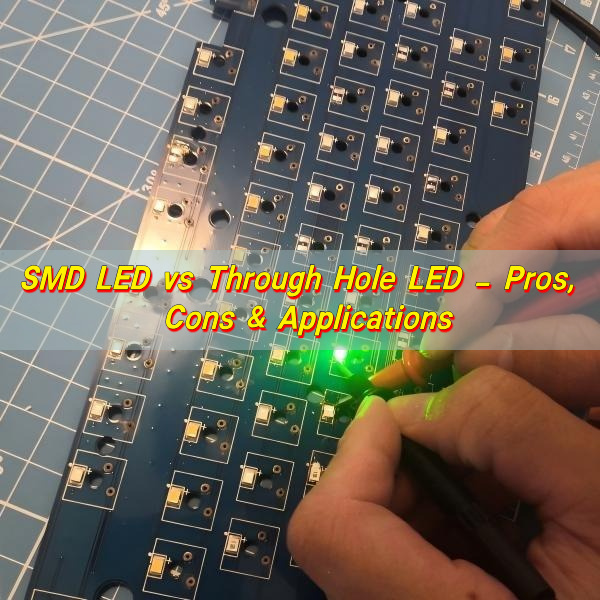
What is the difference between SMD and through hole LED?
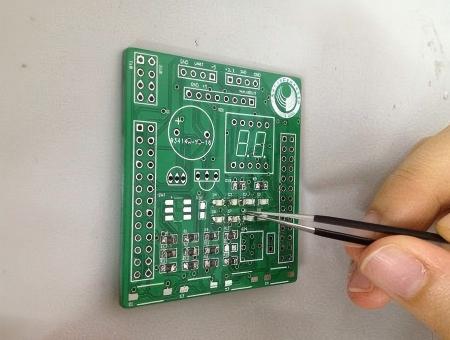
A Surface Mount Device (SMD) LED is designed to be placed directly on the surface of a printed circuit board. Instead of long leads passing through holes, SMD LEDs use small metal pads that are soldered onto copper pads on the PCB. This design supports automated placement using pick-and-place machines during SMT assembly.
A Through Hole LED uses two long metal leads that pass through drilled holes in the PCB. The leads are soldered on the opposite side of the board, creating a strong mechanical connection. This technology has been widely used since the early days of electronics manufacturing.
Both designs produce light through a semiconductor junction. The key differences come from their packaging style, mounting method, and manufacturing process.
| Feature | SMD LED | Through Hole LED |
|---|---|---|
| Mounting method | Soldered directly to PCB surface | Leads inserted through PCB holes |
| Size | Compact and low profile | Larger body and longer leads |
| Assembly process | Automated SMT assembly | Manual or wave soldering |
| Light output direction | Often wide-angle | Usually focused forward |
| Mechanical strength | Moderate | Strong mechanical hold |
| Board space usage | Very efficient | Requires more PCB area |
| Production speed | Very high with SMT lines | Slower assembly process |
The compact nature of SMD devices makes them a popular choice in modern electronics. Meanwhile, through-hole LEDs remain valuable in applications where durability and visibility matter. Many modern electronics manufacturers combine both types in different areas of a product to achieve the best balance between cost, size, and performance.
What are the advantages of SMD LEDs?
SMD LEDs have become the dominant LED type in modern electronics manufacturing. Their design supports high-speed automated assembly and compact device layouts, which makes them ideal for mass production. One of the strongest advantages of SMD LEDs is their ability to support extremely dense circuit board designs. Because they sit directly on the PCB surface, engineers can place more components in a smaller space.
Key advantages include:
- Compact size that allows high component density on PCBs
- Efficient automated assembly using SMT production lines
- Wide viewing angle that improves light distribution
- Better thermal performance with proper PCB design
- Compatibility with modern LED lighting systems
SMD LEDs also support a wide range of package types, such as 3528, 5050, and 2835 packages. Each package size provides different brightness levels and power capabilities.
In lighting applications, SMD LEDs can be arranged in arrays across aluminum PCBs or LED light boards. This configuration allows heat to spread evenly, which helps maintain stable brightness over long operating periods. Another important benefit is flexibility in PCB design. Engineers can place SMD LEDs close to other components, reducing overall board size. This is especially useful in devices like smartphones, LED panels, and compact consumer electronics.
For large-scale electronics production, the automated nature of SMT assembly also improves manufacturing efficiency. Pick-and-place machines can position thousands of SMD components per hour with excellent accuracy. Because of these advantages, SMD LEDs dominate modern electronics manufacturing and LED lighting products.

What are the advantages of through hole LEDs?
Despite the rise of surface-mount technology, through-hole LEDs still serve an important role in many electronic systems. Their structural design offers advantages that surface-mounted components sometimes cannot match.
One of the most significant benefits is mechanical strength. The leads passing through the PCB create a strong physical connection that resists vibration and movement. This makes through-hole LEDs ideal for equipment exposed to mechanical stress or repeated handling.
Important advantages include:
- Excellent mechanical stability for rugged environments
- Easy manual installation and replacement
- Clear and focused light output
- High visibility for indicator applications
- Simple circuit design for basic electronics
Another benefit is ease of use during prototyping or educational electronics projects. Engineers and students can quickly insert the LED into a breadboard or prototype PCB without specialized equipment.

Through-hole LEDs are also widely used in control panels and industrial equipment where visible indicators must stand above the PCB surface. Their raised structure allows light to remain visible even when mounted behind thick front panels or enclosures. While they may not match the density of SMD components, their reliability and visibility make them a dependable solution in many applications.
SMD vs through hole LED: Which is easier to assemble?
Assembly is one of the most important considerations when selecting electronic components. Manufacturing efficiency affects production speed, labor costs, and overall product pricing.
In modern electronics factories, SMD LEDs offer a clear advantage in assembly efficiency. Surface-mount components are placed automatically using high-speed pick-and-place machines. After placement, the PCB passes through a reflow oven where solder paste melts and forms reliable electrical connections. This automated process allows thousands of LEDs to be installed quickly and accurately.
Through-hole LEDs use a different assembly process. The leads must pass through drilled holes in the PCB before soldering.
Typical assembly methods include:
- Manual insertion followed by wave soldering
- Semi-automatic insertion machines
- Hand soldering for small production volumes
These steps take more time than automated SMT assembly.
| Assembly Factor | SMD LED | Through Hole LED |
|---|---|---|
| Placement method | Automated pick-and-place | Manual or semi-automatic |
| Soldering process | Reflow soldering | Wave or hand soldering |
| Production speed | Very high | Moderate |
| Labor involvement | Minimal | Higher |
| Manufacturing scalability | Excellent | Limited |
For high-volume consumer electronics, SMD LEDs significantly reduce assembly time and labor requirements. However, through-hole LEDs remain practical for small production runs, repairable systems, or products assembled manually.
Which is cheaper: SMD LED or through hole LED?
Cost analysis involves more than the price of a single LED component. Manufacturing cost includes material pricing, assembly efficiency, production speed, and equipment requirements. In large-scale production environments, SMD LEDs often provide lower total manufacturing costs. Several factors contribute to this advantage.
First, SMT assembly lines can place components very quickly. This reduces labor costs and improves production efficiency.
Second, SMD packaging uses less material and smaller component bodies, which lowers shipping and storage costs.
Third, automated assembly reduces the risk of human error during production.
However, the individual component price of a through-hole LED can sometimes be lower, especially for basic indicator models.
| Cost Factor | SMD LED | Through Hole LED |
|---|---|---|
| Component price | Moderate | Often low |
| Assembly cost | Low with automation | Higher labor cost |
| Production speed | Fast | Slower |
| Equipment requirement | SMT line needed | Basic soldering equipment |
For large production volumes, SMD LEDs usually deliver the lowest total manufacturing cost. For simple products or small production runs, through-hole LEDs may remain cost-effective.
What are the typical applications for SMD LEDs?
SMD LEDs appear in many modern electronic products because of their compact size and strong compatibility with automated manufacturing. Their ability to distribute light across a wide area also makes them ideal for lighting systems.
Common applications include:
- LED lighting panels and strip lights
- Smartphones and tablets
- Television backlight modules
- Automotive interior lighting
- LED displays and advertising boards
- Consumer electronics indicators
- Smart home lighting systems
In many of these applications, engineers use aluminum PCBs or metal-core PCBs to improve heat dissipation. This helps maintain LED brightness and extend operating life.
SMD LEDs are also widely used in LED arrays where hundreds of small LEDs are arranged across a circuit board to produce uniform illumination. Modern lighting products such as LED bulbs, panel lights, and backlit displays rely heavily on SMD technology. As electronics continue to shrink in size, SMD LEDs will remain the preferred choice for compact lighting solutions.
What are the typical applications for through hole LEDs?
Through-hole LEDs remain popular in many products that require visible indicators or durable construction. Their raised shape and focused light output make them easy to see from a distance.
Typical applications include:
- Power indicators on electronic equipment
- Industrial control panels
- Automotive dashboard indicators
- Electronic toys and hobby projects
- Educational electronics kits
- Signal lights in embedded systems
These LEDs often appear in red, green, yellow, or blue colors to represent different system states. For example, a green LED may indicate normal operation, while a red LED warns of an error or fault condition.
Through-hole LEDs are also frequently used in prototyping environments. Engineers can easily insert them into breadboards when testing circuits. Because of their strong leads and simple installation, they are also common in devices that require manual assembly or field repair. Even as SMT technology expands, through-hole LEDs remain a reliable option for many practical applications.
SMD vs through hole LED: Which lasts longer?
LED lifespan depends on several factors, including heat management, electrical design, and operating conditions. Both SMD and through-hole LEDs can achieve long operating lifetimes when used correctly.
In most cases, the semiconductor chip inside the LED determines the core lifespan. The packaging style mainly affects heat dissipation and mechanical reliability. SMD LEDs often benefit from better thermal paths when mounted on properly designed PCBs, especially aluminum LED boards. Good heat transfer allows the LED junction temperature to remain stable. Lower junction temperature helps maintain brightness and extend operating life.
Through-hole LEDs also offer long service life, particularly when used as low-power indicator lights. Because these LEDs usually operate at lower currents, they generate less heat.
| Lifespan Factor | SMD LED | Through Hole LED |
|---|---|---|
| Heat dissipation | Good with proper PCB design | Moderate |
| Typical operating current | Moderate to high | Usually low |
| Mechanical durability | Moderate | High |
| Typical lifespan | 30,000–50,000 hours | 30,000–50,000 hours |
In well-designed systems, both LED types can operate reliably for many years. The key to long LED life is proper thermal design, stable power supply, and appropriate current control.
Conclusion:
Choosing between surface-mounted and leaded LEDs depends on the needs of the product being designed. SMD LEDs offer excellent advantages for modern electronics manufacturing. Their compact size, compatibility with automated assembly, and strong lighting performance make them ideal for high-volume production and advanced lighting systems. Through-hole LEDs continue to provide reliable performance in applications where mechanical strength, clear visibility, and simple installation are priorities.
For engineers seeking reliable LED circuit board solutions, working with an experienced PCB manufacturer can simplify design and production. Best Technology Co., Ltd. provides professional PCB and LED board manufacturing services, helping customers achieve stable performance and efficient assembly in their lighting and electronics projects.
If you would like to learn more about LED circuit boards or discuss your project requirements, feel free to contact our engineering team. Email: sales@bestpcb.vn