 language
 english


High-Tg Robotics PCBA | 20 Years of PCBA Expertise
High-Tg Robotics PCBA (Printed Circuit Board Assembly) is the cornerstone of modern robotic systems designed to operate reliably in high-temperature and thermally stressful conditions. This article delves into the intricacies of High-Tg PCBA for robotics, exploring the materials, design challenges, critical applications, and best practices for selecting a manufacturing partner, all underpinned by two decades of specialized expertise.
Are you facing these reliability challenges when designing robotics PCBA for high-temperature environments?
| Common Challenges | Our Solutions |
|---|---|
| PCB delamination in high heat | High-Tg laminates (Tg170+) |
| Z-axis expansion causing CAF | Controlled lamination process |
| Weak solder joints under heat | Optimized reflow profile |
| Material degradation | High-stability substrates |
| Limited High-Tg PCBA expertise | 20+ years robotics PCBA experience |
At Best Technology, we specialize in transforming complex electronic concepts into reliable, high-performance hardware. With 20 years of focused experience in advanced PCB assembly, we have developed a deep mastery of High-Tg pcb assembly processes critical for industrial robot control pcb assembly and other demanding applications. Our engineering support, rigorous quality control, and commitment to on-time delivery make us the ideal partner for your most challenging robotics projects. Just feel free to contact us at sales@bestpcb.vn to start a conversation.
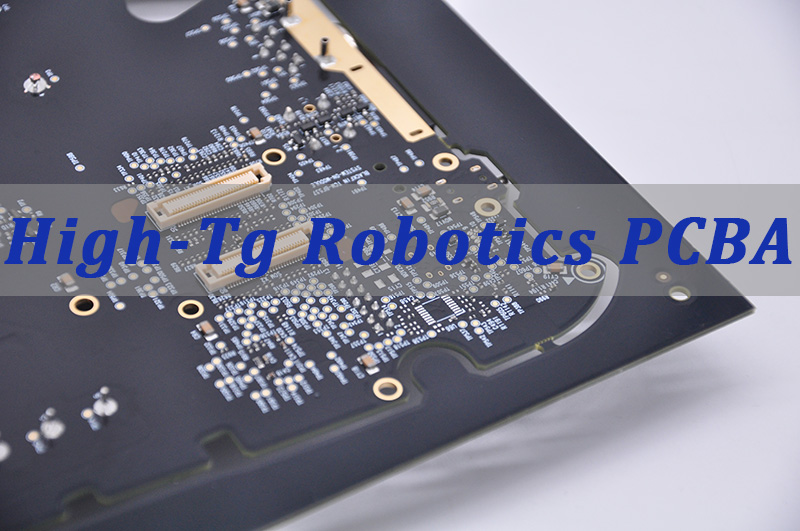
What Is High-Tg Robotics PCBA?
High-Tg Robotics PCBA refers to a printed circuit board assembly built on high glass transition temperature (High-Tg) PCB materials. These materials are designed to remain stable under high thermal stress, which is common in robotics systems such as motor drives, power modules, and robotic controllers.
The Glass Transition Temperature (Tg) is the temperature at which the PCB substrate changes from a rigid, glass-like state to a softer, rubber-like state. Once the temperature approaches this threshold, the mechanical strength and electrical stability of the board begin to decline.
Standard FR-4 PCBs usually have a Tg value of 130–140°C. In high-power robotics electronics, this range may not be sufficient. Heat generated by motors, power devices, and embedded processors can push the board close to its thermal limit, which may lead to several reliability risks:
- PCB deformation under sustained heat
- Delamination between PCB layers
- Reduced insulation reliability
- Premature failure of solder joints
A High-Tg robotics PCBA, typically using materials with Tg ≥ 170°C, offers much better thermal resistance. These boards maintain structural stability and electrical performance even under continuous thermal load.
Because of these advantages, High-Tg PCB assemblies are widely used in robotics electronics such as:
- robotic arm control boards
- motor driver PCBs
- sensor interface boards
- industrial robot control systems
By using High-Tg materials, robotics manufacturers can significantly improve the reliability and lifespan of critical control electronics.
What Materials Are Used in High-Tg Robotics PCBA?
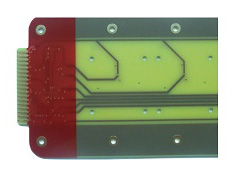
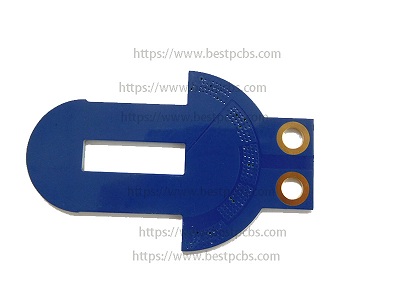
The reliability of a High-Tg robotics pcb starts with its core materials. Selecting the right substrate is paramount for withstanding thermal, mechanical, and environmental stress.
- High-Tg FR-4: The most common upgrade, with Tg ratings of 170°C, 180°C, and above. It offers a excellent balance of performance, processability, and cost for most high temperature robotics PCB applications.
- Polyimide: A premium material with an exceptionally high Tg (>250°C), outstanding chemical resistance, and flexibility. Ideal for extreme environments or flexible-rigid designs in advanced robotics.
- Thermal Management Materials: These are often used in conjunction with High-Tg laminates.
- Metal Core PCBs (MCPCBs): Aluminum or copper cores to dissipate heat from high-power components like motor control pcbs for robots.
- Insulated Metal Substrates (IMS): Similar to MCPCBs, with a dielectric layer for electrical isolation.
- High-Tg Prepreg and Copper Foil: Compatible high-Tg prepregs are used for lamination, and various copper weights are selected based on current-carrying requirements for High-Tg industrial robot electronics.
How High-Tg PCB Improves Robotics PCBA Reliability?
The primary advantage of a High-Tg robot control PCB is its ability to remain stable under thermal stress. Compared with standard FR-4 materials, High-Tg substrates provide better mechanical strength, electrical stability, and long-term reliability in robotics electronics.
Standard PCB vs High-Tg PCB
| Reliability Factor | Standard Tg PCB | High-Tg PCB |
|---|---|---|
| Thermal endurance | Deformation near Tg | Stable at high temperature |
| Z-axis stability | High CTE stress | Lower expansion |
| Moisture resistance | Higher moisture absorption | Reduced CAF risk |
| Mechanical strength | Weakens under heat | Maintains rigidity |
| Long-term aging | Faster degradation | Slower aging |
Robotics systems generate continuous heat from motors, drivers, and processors. Under these conditions, PCB materials must maintain structural stability and electrical performance.
High-Tg PCB materials improve robotics PCBA reliability by:
- Maintaining layer bonding during high-temperature operation
- Reducing stress on plated through holes and copper structures
- Improving resistance to moisture-related failures such as CAF
- Preserving mechanical strength for stable component mounting
- Ensuring long-term electrical stability and insulation reliability
Because of these advantages, High-Tg robotics PCB assembly is widely used in industrial robot controllers, motor driver boards, and other high-reliability robotics electronics where failure is not acceptable.
What Are the Design Challenges in Robotics High-Tg PCBA?
Designing for High-Tg industrial robot pcb involves unique considerations beyond standard PCB layout.
- Material Knowledge Gap: Designers must understand the dielectric constant (Dk) and dissipation factor (Df) of specific High-Tg materials at operating frequencies, as these differ from standard FR-4 and impact signal integrity.
- Thermal Management Integration: Simply using a High-Tg board doesn’t solve heat dissipation. Design must incorporate thermal vias, heatsinks, and proper component placement to move heat away from sensitive parts.
- DFM for High-Tg Materials: The lamination and drilling parameters differ. Designs must account for potential differences in via quality, layer-to-layer registration, and available final finish options.
- Increased Cost-Benefit Analysis: High-Tg materials are more expensive. The design must strategically apply High-Tg where needed (e.g., near processors, motor drivers) rather than as a blanket solution, optimizing cost.
- Supply Chain for Specialized Materials: Ensuring a stable supply of the chosen High-Tg laminate, especially for polyimide or very high-Tg FR-4, requires planning and a manufacturer with established supplier relationships.
In summary, successful High-Tg robotics PCBA design requires careful material selection, thermal management planning, and close collaboration with manufacturers to balance reliability, manufacturability, and cost.
Key Design Considerations for Robotics High-Tg PCB Assembly
To overcome these challenges, follow these essential design guidelines for a successful robotics pcba using high-tg materials:
- Collaborate Early with Your PCBA Manufacturer: Engage a specialist like Best Technology during the schematic phase. Their 20 years of PCBA expertise can guide material selection and DFM rules.
- Prioritize Thermal Analysis: Use simulation tools to model thermal hotspots. Strategically place thermal vias, define copper pours for heat spreading, and plan for auxiliary cooling if needed.
- Optimize Layer Stack-up: Work with your fabricator to define a stack-up that manages impedance, supports power integrity, and facilitates heat dissipation. Use thicker copper layers for power planes in High-Tg robot motor control pcb.
- Component Selection and Placement: Choose components with operating temperature ratings that exceed your system’s max ambient temperature. Place high-heat generators away from sensitive ICs and near the board edge or cooling features.
- Design for Testability and Rework: Include test points. Understand that rework on High-Tg boards may require adjusted temperature profiles to avoid damaging the board while removing components.
In short, careful thermal design, optimized stack-up planning, and early collaboration with an experienced PCBA manufacturer are essential to ensure reliable and manufacturable robotics High-Tg PCB assemblies.
How to Choose a Reliable Robotics High-Tg PCBA Manufacturer?
Selecting the right partner is as critical as the design itself. Look for a manufacturer that offers:
- Proven High-Tg Experience: Seek a portfolio with real-world examples of High-Tg industrial robot pcb assembly.
- In-House Engineering Support: Access to engineers who understand both pcb assembly and robotics system requirements.
- Robust Quality Management: Certifications (ISO, IATF) and stringent testing protocols (In-Circuit Test, Functional Test, Thermal Cycling).
- Supply Chain Mastery: Strong relationships with top-tier material suppliers (e.g., Isola, Shengyi) to ensure quality and availability.
- Full-Turnkey Capability: Handling everything from component sourcing and High-Tg robotics pcb manufacturing to final box-build assembly streamlines the process.
- Transparent Communication: A dedicated project manager providing clear timelines and regular updates.
Overall, a reliable High-Tg robotics PCBA manufacturer should combine proven material expertise, strong engineering support, robust quality control, and stable supply chain management to ensure consistent performance and long-term reliability.
Why Choose Best Technology for High-Tg Robotics Electronics PCB Assembly?
Our two decades of focused experience translate into tangible benefits for your high temperature pcb assembly project:
- Deep Material Expertise: We guide you to the most cost-effective High-Tg board material for your specific thermal, electrical, and mechanical needs.
- Design for Excellence (DfX) Review: Our engineers perform thorough reviews to optimize your design for manufacturability, testability, and reliability, preventing costly revisions.
- State-of-the-Art Manufacturing: Our facilities are equipped for precise High-Tg robotics pcb assembly, including advanced SMT lines, conformal coating, and comprehensive testing.
- End-to-End Project Ownership: We manage your project from initial quote and High-Tg robotics pcb manufacturing to final delivery, ensuring consistency and quality control.
Ultimately, our expertise in High-Tg materials, engineering-driven DfX support, and advanced manufacturing capabilities ensures reliable and high-performance robotics PCB assemblies for demanding applications.
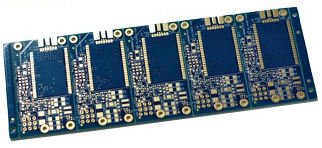
To sum up, high-Tg Robotics PCBA is the essential enabler for the next generation of robust, reliable robotic systems that must perform in thermally challenging conditions. This article has outlined the critical role of High-Tg materials, the design and manufacturing nuances, and the vast application landscape for this specialized technology. Success hinges on a synergistic combination of intelligent design and partnership with a manufacturer possessing deep, practical expertise. With 20 years of PCBA expertise, Best Technology provides the material science knowledge, engineering support, and manufacturing precision required to bring your most ambitious High-Tg robotics electronics pcb assembly projects to life with unwavering reliability. For a consultation on your next project, pls feel free to contact our team at sales@bestpcb.vn.
FAQs About High-Tg Robotics PCBA
Q1: How high of a Tg rating do I really need for my robotics application?
A: A good rule of thumb is to select a PCB Tg at least 20-25°C higher than the maximum operating temperatureof the board’s hottest point. For environments with high ambient heat (e.g., near engines or ovens), add that ambient temperature to the component-generated heat. Tg 170°C is suitable for many applications; Tg 180°C or Polyimide is recommended for extreme cases.
Q2: Is a High-Tg PCB always necessary for robotics?
A: No. For low-power, consumer, or benchtop robots operating in stable, cool environments, standard Tg PCBs are sufficient and more cost-effective. High-Tg becomes critical for industrial robot control High-Tg pcb, automotive robots, or any application with sustained high power dissipation or external heat.
Q3: Does using a High-Tg material improve the PCB’s heat dissipation?
A: Not directly. The primary role of High-Tg material is to resist softening and degradation fromheat. To dissipate heat (move it away), you need thermal management techniques like metal cores, thermal vias, or heatsinks. Often, a High-Tg industrial robot pcb will be combined with an aluminum baseplate for this reason.
Q4: Are there any downsides to using High-Tg PCBs?
A: The main downsides are increased cost (both material and slightly more complex processing) and potentially more demanding drilling requirements for some high-Tg laminates. The key is to use High-Tg material strategically where its benefits are required.