 language
 english


SMD vs Through Hole: What’s the Difference in PCB Assembly?
SMD vs through hole is one of the most common questions engineers face when designing a new circuit board. This guide explains the key distinctions between SMD and through hole components, including manufacturing processes, cost differences, common defects, and typical applications in modern electronics. Best Technology is an experienced PCB and PCBA manufacturer specializing in both SMD assembly and through hole PCB assembly for global electronics companies. With advanced SMT production lines and strict quality control, we support projects from prototype to mass production with reliable manufacturing solutions. If you are looking for a trusted partner for your PCB assembly projects, feel free to contact our team at sales@bestpcb.vn for professional support and a quick quote.
What Are SMD and Through Hole Components?
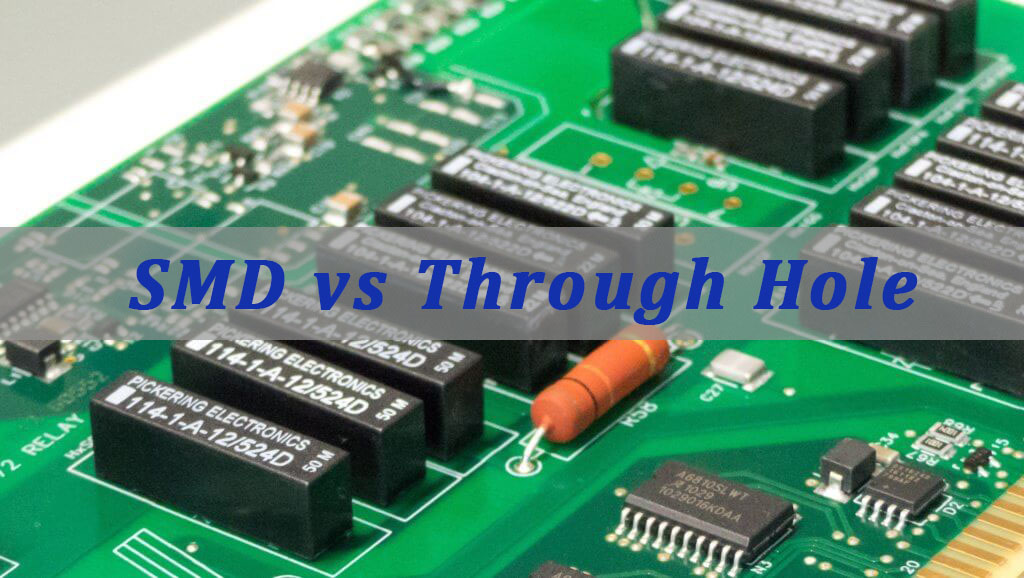
SMD and through hole refer to two different methods of mounting electronic components on a printed circuit board.
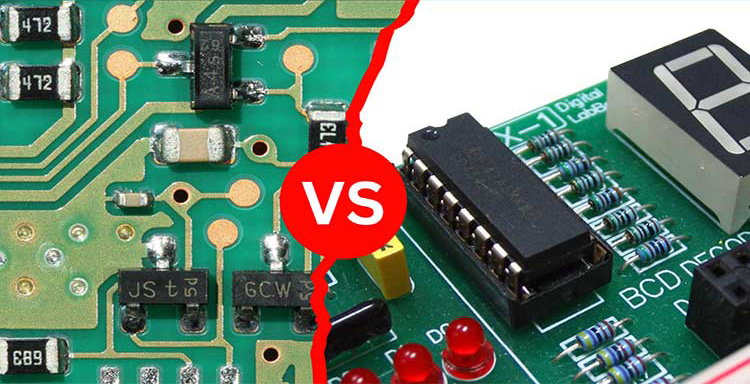
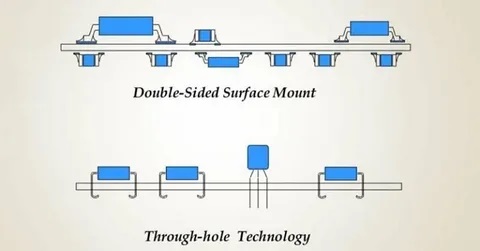
SMD (Surface Mount Device) components are designed to be soldered directly onto the surface of the PCB. Their terminals sit on solder pads, allowing automated placement using SMT machines.
Typical SMD components include:
- SMD resistors and capacitors
- SMD LEDs
- IC packages such as QFN, QFP, and BGA
- SMD diodes and transistors
SMD technology allows very compact PCB designs because components occupy minimal space and can be placed on both sides of the board.
Through hole components, on the other hand, have leads that pass through drilled holes in the PCB. These leads are then soldered on the opposite side of the board.
Common through hole components include:
- Electrolytic capacitors
- Connectors
- Transformers
- Large power resistors
- Mechanical switches
This mounting style creates a stronger mechanical bond between the component and the PCB.
What Are the Key Differences Between SMD vs Through Hole?
Although both technologies serve the same purpose—electrically connecting components to a PCB—they differ in several important ways.
| Feature | SMD Components | Through Hole Components |
|---|---|---|
| Mounting method | Soldered directly on PCB surface | Leads inserted through PCB holes |
| Assembly process | Automated SMT placement | Often manual or semi-automatic |
| Component size | Very small and compact | Larger physical size |
| PCB density | High component density | Lower density |
| Mechanical strength | Lower mechanical stability | Strong mechanical connection |
| Manufacturing efficiency | Highly automated | Labor intensive |
In most modern electronics, SMD technology dominates because it supports automated assembly and high-density PCB layouts. However, through hole components still play a vital role in applications requiring strong mechanical attachment.
When Should You Use SMD vs Through Hole Components?
Choosing between SMD and through hole components depends on the design requirements of the electronic product.
When SMD Components Are Preferred
SMD components are commonly used in applications that require:
- Compact PCB layouts
- High-volume production
- Automated manufacturing
- Lightweight electronic devices
Typical products include:
- Smartphones
- Wearable devices
- IoT sensors
- consumer electronics
- communication modules
For example, SMD LEDs and resistors are widely used in LED lighting and display applications due to their small size and efficient heat dissipation.
When Through Hole Components Are Preferred
Through hole components remain essential in certain situations, such as:
- High-power electronics
- Connectors exposed to mechanical stress
- Transformers and large inductors
- Industrial equipment
- aerospace electronics
For instance, connectors and large capacitors are usually through hole components because they must withstand mechanical forces during use.
Many modern PCBs combine both technologies in a mixed assembly design.
What Is the Cost Difference Between SMD vs Through Hole?
Cost is another important factor when comparing SMD vs through hole assembly.
SMD Assembly Cost
SMD assembly typically offers lower cost in high-volume production because:
- Automated pick-and-place machines handle component placement
- High placement speed reduces labor cost
- Reflow soldering supports batch processing
This makes SMD ideal for mass-produced consumer electronics.
Through Hole Assembly Cost
Through hole assembly tends to be more expensive due to:
- PCB drilling requirements
- manual component insertion
- slower production speeds
Wave soldering can automate part of the process, but many components still require manual placement.
As a result, SMD assembly usually has a lower unit cost in large production runs.
What Are the Manufacturing Processes of SMD vs Through Hole Assembly?
The manufacturing processes for SMD and through hole assembly differ significantly.
SMD Assembly Process
The typical SMT production process includes:
- Solder paste printing
Solder paste is applied to PCB pads using a stencil. - Component placement
Pick-and-place machines accurately position SMD components. - Reflow soldering
The PCB passes through a reflow oven where solder melts and forms electrical connections.
This process is highly automated and supports very high production speeds.
Through Hole Assembly Process
Through hole assembly generally involves:
- Component insertion
Leads are inserted through drilled holes. - Wave soldering or manual soldering
The PCB passes through a wave solder machine or is hand soldered.
Compared with SMT, this process is slower and often requires manual work.
What Common Manufacturing Defects Occur in SMD vs Through Hole Assembly?
Both assembly methods can encounter manufacturing defects if process control is inadequate.
Common SMD Assembly Defects
Typical SMT defects include:
- solder balls
- tombstoning of small components
- insufficient solder joints
- component misalignment
These issues often result from improper solder paste printing or inaccurate component placement.
Common Through Hole Defects
Common defects in through hole assembly include:
- insufficient hole fill
- solder bridging
- lifted pads
- poor solder wetting
Maintaining proper solder temperature and flux quality is critical to prevent these issues.
What Is the Role of Flux in SMD vs Through Hole Soldering?
Flux plays an essential role in both SMD and through hole soldering processes.
Its primary functions include:
- Removing oxidation from metal surfaces
- Cleaning minor contaminants
- Improving solder wetting performance
- Reducing solder balls and solder beads
- Activating metal surfaces during heating
- Minimizing thermal stress during soldering
In wave soldering and reflow soldering, flux ensures strong and reliable solder joints by promoting proper metallurgical bonding between the solder and PCB pads.
Which Is Better: SMD vs Through Hole for Modern Electronics?
The answer depends on the application requirements.
For most modern electronic products, SMD technology is the preferred choice because it supports compact designs, automated production, and lower manufacturing costs.
However, through hole components remain important in applications requiring strong mechanical stability or high current capacity.
As a result, many circuit boards use a hybrid design, combining SMD components for logic circuits with through hole components for connectors, transformers, and power devices.
This combination provides the best balance between reliability, cost, and performance.
To sum up, understanding the differences between SMD vs through hole technologies is essential for engineers designing modern electronic systems. SMD components offer compact layouts and efficient automated assembly, while through hole components provide durability and mechanical stability.
Choosing the right technology depends on the product’s electrical requirements, mechanical stress, manufacturing volume, and cost targets. For projects that require reliable PCB fabrication and assembly support, working with an experienced manufacturer can significantly improve production quality and efficiency. If you need assistance with PCB fabrication, SMT assembly, or mixed SMD and through hole PCB assembly, feel free to contact our engineering team at sales@bestpcbs.com for technical support and manufacturing solutions.
FAQs About SMD vs Through Hole
Is SMD cheaper than through hole assembly?
Yes, in most cases SMD assembly is cheaper for large production volumes because it uses automated SMT equipment. Through hole assembly often requires manual insertion, increasing labor costs.
Are through hole components more reliable than SMD?
Through hole components provide stronger mechanical connections, making them more suitable for connectors and high-power components exposed to physical stress.
Why are SMD components widely used in modern electronics?
SMD components are smaller, lighter, and compatible with automated production lines. This allows higher PCB density and lower manufacturing costs.
Can a PCB use both SMD and through hole components?
Yes. Many PCB designs combine both technologies. SMD components handle most circuit functions, while through hole parts provide mechanical strength for connectors and power devices.