 language
 english


PCBA Conformal Coating – Protective Coating for PCB Assembly
PCBA conformal coating is a thin protective layer applied over assembled circuit boards to guard against moisture, dust, chemicals, and temperature stress. As electronics continue to shrink while performance demands rise, exposed components become more sensitive to environmental risks.
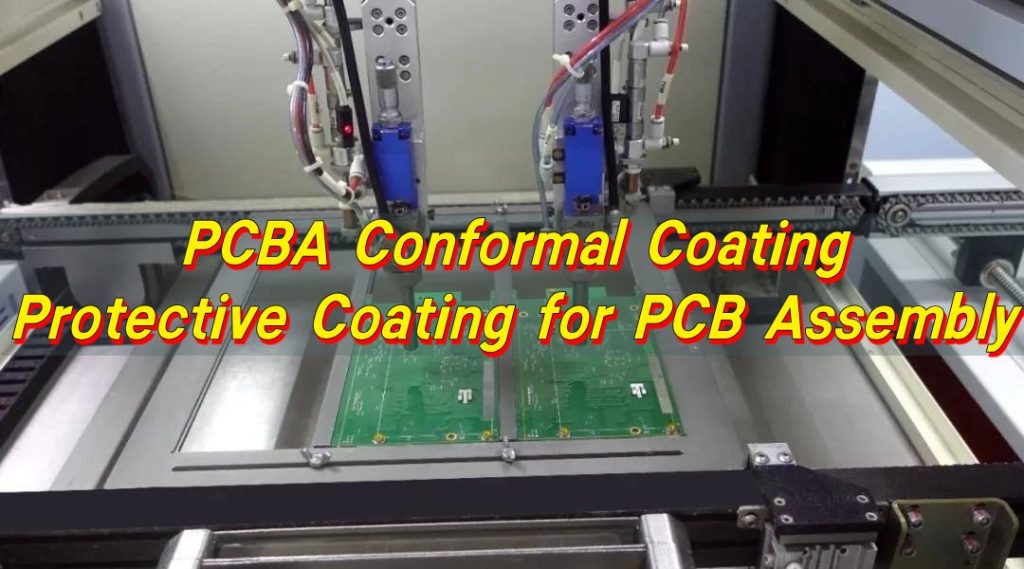
What is conformal coating for PCBA?
PCBA conformal coating is a thin polymer film applied over an assembled circuit board to protect sensitive electronic components from moisture, dust, chemicals, and temperature stress. The coating “conforms” to the contours of the board, covering solder joints, traces, and component leads without affecting electrical performance.
A typical conformal coating layer ranges from 25 to 75 microns thick. The film may look transparent, matte, or slightly glossy depending on the chemistry used. Acrylic, silicone, polyurethane, epoxy, and parylene are among the most common conformal coating materials. Each type balances flexibility, chemical resistance, and ease of rework differently.
From a manufacturing perspective, conformal coating is not just a finishing step. It requires controlled cleaning, masking, application, curing, and inspection processes. At Best Technology, coating is integrated into the PCBA workflow to ensure compatibility with SMT soldering, selective wave soldering, and final testing.
Why use PCBA conformal coating?
Electronic assemblies are becoming more compact and densely populated. Fine-pitch components and high-frequency circuits are more sensitive to environmental exposure than older designs. Conformal coating offers a practical solution that improves durability without increasing enclosure size.
There are several reasons manufacturers apply coating during PCB assembly:
- Protection against humidity and condensation in outdoor or marine environments
- Resistance to dust, salt spray, and chemical vapors
- Improved insulation to prevent leakage currents or corrosion
- Enhanced long-term reliability in harsh industrial conditions
- Added defense against mechanical stress and thermal cycling
At Best Technology, engineers often recommend coating for applications involving vibration, high humidity, or outdoor deployment. By adding coating during assembly, customers avoid secondary processing and shorten their supply chain timeline.
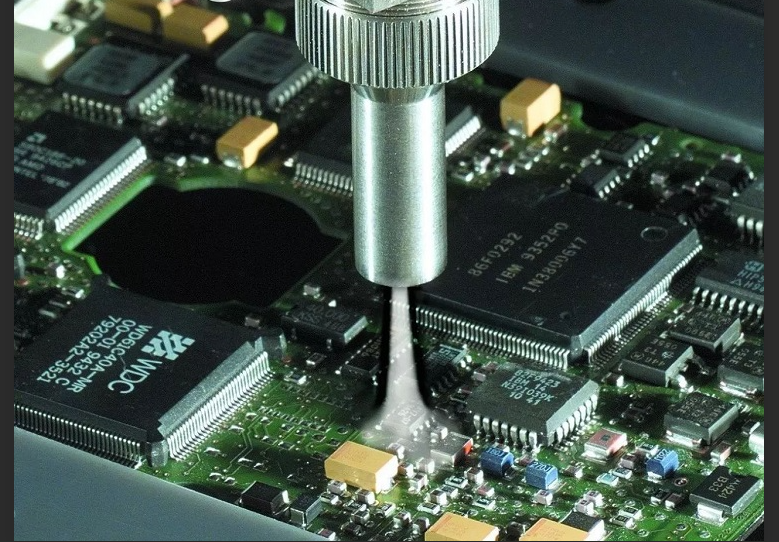
Does conformal coating make PCB waterproof?
The short answer is no. Conformal coating improves moisture resistance, but it does not seal the assembly like potting or full encapsulation.
Conformal coating forms a thin protective layer. Water droplets may bead on the surface, but connectors, uncoated edges, and mechanical openings remain potential entry points. If the device must operate underwater or withstand immersion, engineers usually combine conformal coating with sealed enclosures or gasket systems.
However, coating still provides strong defense against:
- High humidity environments
- Light splashes or condensation
- Salt mist exposure
- Atmospheric pollutants
The effectiveness of waterproofing depends on several factors. Coating thickness, curing quality, and material selection all play a role. Silicone coatings often perform well in humid conditions due to their flexibility and moisture resistance. Acrylic coatings offer easier rework but slightly lower chemical resistance.
What types of PCBA conformal coating exist?
Different applications require different coating chemistries. Each type has unique electrical, thermal, and mechanical properties. Selecting the right coating involves balancing protection level, reworkability, and production efficiency.
The most common conformal coating types include:
- Acrylic coatings – Easy to apply and remove. Suitable for general electronics and consumer devices.
- Silicone coatings – Flexible and resistant to temperature extremes. Often used in automotive and LED lighting assemblies.
- Polyurethane coatings – Strong chemical resistance and durability. Ideal for industrial environments.
- Epoxy coatings – Hard and robust with excellent adhesion. Best for high-reliability electronics requiring strong mechanical protection.
- Parylene coatings – Applied through vapor deposition. Provides uniform coverage and excellent dielectric performance.
Acrylic coatings are popular because they cure quickly and allow simple rework with solvents. Silicone coatings perform well in environments with vibration or thermal cycling. Polyurethane and epoxy coatings offer stronger resistance but may be harder to remove during repair.
What is the best coating for PCB?
There is no single “best” conformal coating for all PCB assemblies. The right choice depends on the application environment, cost targets, and repair strategy.
For example, silicone coatings are preferred when flexibility and thermal resistance are critical. Automotive electronics exposed to engine heat often use silicone to prevent cracking during thermal expansion. Acrylic coatings suit consumer electronics where easy rework is important.
Polyurethane coatings provide excellent resistance to fuels and solvents. They are often used in industrial control systems or transportation equipment. Epoxy coatings deliver strong mechanical protection but can be challenging to repair if components fail later.
Best Technology works with multiple conformal coating materials to match project requirements. By testing coating adhesion and thickness during pilot builds, the engineering team ensures stable process control before full-scale production begins.
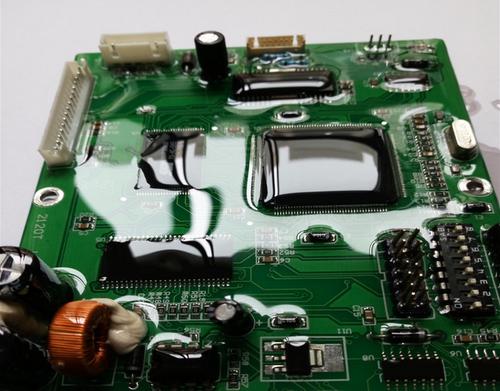
How to clean PCB before conformal coating?
Proper cleaning is essential before applying conformal coating. Residues from soldering flux, dust, or handling can prevent the coating from bonding correctly. Even small contaminants may lead to coating defects or electrical leakage over time.
The cleaning process usually begins after final soldering and inspection. Assemblies pass through a cleaning stage that removes ionic and organic residues.
A typical PCB cleaning workflow may include:
- Pre-clean inspection to identify heavy contamination
- Aqueous cleaning or solvent cleaning depending on flux type
- Rinse cycles using deionized water
- Drying through hot air or vacuum systems
- Surface inspection under UV light
At Best Technology, cleaning and coating processes are linked within the production line. This reduces handling time and keeps contamination risk low. Clean surfaces allow coating materials to form a smooth and uniform film across the assembly.
How to apply conformal coating on PCB?
Applying conformal coating requires careful process control. The goal is to achieve uniform thickness without damaging sensitive components. Several application methods exist, each suited to different production volumes.
Common conformal coating application methods include:
- Spray coating – Uses automated spray guns to deliver even coverage. Suitable for medium to high volume production.
- Selective coating – Robotic systems apply coating only to defined areas. Reduces masking work and improves precision.
- Dip coating – Boards are immersed in coating liquid. Useful for simple designs but less common for dense assemblies.
- Brush coating – Manual application for prototypes or repair work.
Selective coating has become popular in modern electronics manufacturing. It allows precise control of coating location and thickness. Automated systems can handle complex board geometries and minimize overspray.
Best Technology integrates automated conformal coating spray systems into the PCBA production line. This ensures repeatable quality and supports projects ranging from small batch prototypes to large-scale electronics manufacturing.
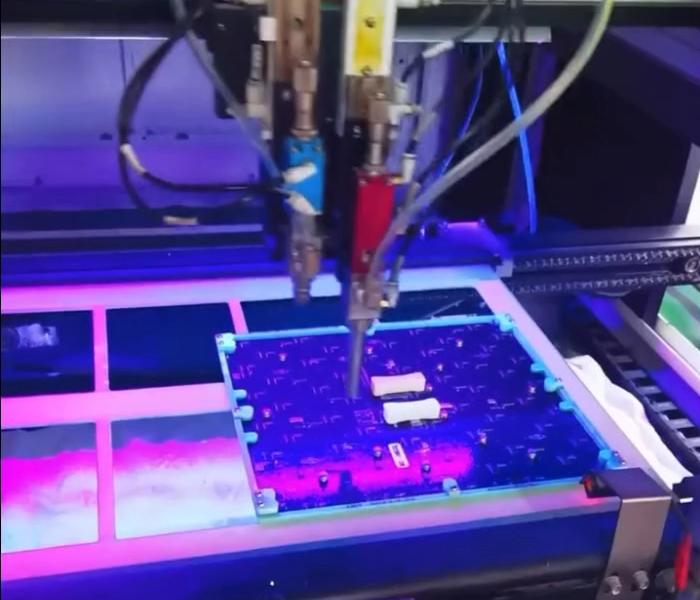
How to test PCBA conformal coating?
Testing confirms that the coating performs as intended and meets quality standards. Inspection typically begins immediately after curing. Technicians use ultraviolet light to verify coverage because many coatings include fluorescent tracers.
Visual inspection checks for defects such as bubbles, uneven edges, or missed areas. Automated optical inspection systems may also be used for higher production volumes.
Common conformal coating testing methods include:
- Thickness measurement using micrometers or ultrasonic gauges
- Adhesion testing to ensure coating bonds to the PCB surface
- Insulation resistance testing under humidity conditions
- Thermal cycling to evaluate durability
- Salt spray testing for corrosion resistance
Quality-focused PCBA suppliers maintain detailed process records for coating operations. At Best Technology, inspection data integrates with MES traceability systems. This allows engineers to track coating parameters, curing time, and inspection results for each assembly batch.
Conclusion:
PCBA conformal coating is a practical way to protect electronic assemblies from environmental stress while keeping designs lightweight and serviceable. By choosing suitable coating materials, preparing surfaces correctly, and applying precise application methods, manufacturers can enhance reliability across industries such as automotive, medical, and industrial electronics.
If you are planning a coated PCB assembly project or want technical support selecting the right coating process, feel free to contact the engineering team at sales@bestpcb.vn for further discussion.