 language
 english


Reliable Rapid Prototyping PCB Assembly for Engineering Validation
Rapid Prototyping PCB Assembly enables engineering teams to validate designs, shorten development cycles, and reduce manufacturing risk before committing to volume production. This article explains who provides reliable rapid prototyping PCB assembly, what capabilities truly matter, how equipment and process discipline affect outcomes, and how to evaluate service providers—so engineering teams can make confident, scalable decisions.
Early-stage hardware development rarely fails on schematics alone. Real risk appears when boards are built, assembled, tested, and revised under time pressure. Have you faced any of these challenges?
Common pain points engineers and product teams encounter:
- Prototype boards assemble poorly despite passing design reviews
- Frequent ECOs disrupt schedules and increase cost
- Assembly suppliers offer execution but little engineering feedback
- Equipment capability is unclear until defects appear
- Early prototypes fail to scale into production smoothly
Practical manufacturing solutions that address these risks:
- Engineering-led DFM before any assembly begins
- Flexible processes designed for frequent revisions
- Clear visibility into equipment, process limits, and yield risks
- Tight coordination between PCB fabrication and PCBA
- Process planning aligned with future production from day one
EBest Circuit (Best Technology) supports a myriad of rapid prototyping PCB assembly requirements, including Ceramic PCB Assembly, Flex PCB Assembly, Through-Hole Assembly, and BGA Assembly Service, allowing engineering teams to validate diverse designs under real manufacturing conditions. As a professional medical PCBA SMT manufacturer, we strictly abide by ISO 13485 requirements at every stage of the manufacturing process, from material control to assembly and inspection. Our engineering and customer service teams operate within clearly defined areas of specialisation and expertise, supported by regular technical training, with several team members bringing more than a decade of hands-on experience in the PCBA industry. For more information or inquiries, please contact us via the form on our Contact page.
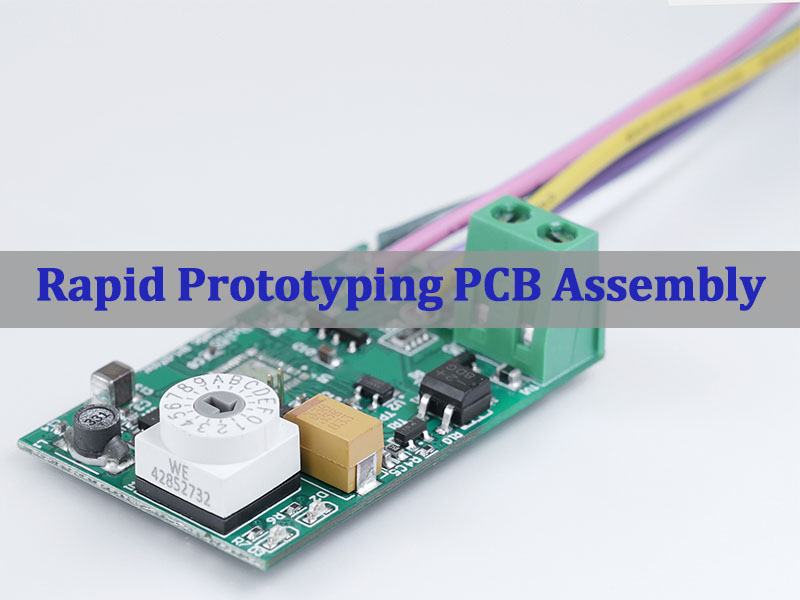
Who Builds Rapid Prototyping PCB Assembly?
Rapid prototyping PCB assembly is best delivered by manufacturers that combine engineering ownership, process control, and in-house execution, rather than brokers or fragmented service providers.
EBest Circuit (Best Technology) specializes in rapid prototyping and low-volume PCBA for engineering validation. Each customer project is supported by a dedicated three-engineer team covering design, process, and production expertise. This structure ensures that prototype builds are treated as engineering exercises, not just short production runs.
With over 20 years in the PCBA industry, EBest Circuit has accumulated not only manufacturing capability but also deep human expertise. Many of our engineers and account managers have worked with us for more than a decade, enabling continuity, technical judgment, and a strong grasp of the nuts-and-bolts of complex PCBA projects. As a result, customers receive actionable feedback rather than generic assembly output.
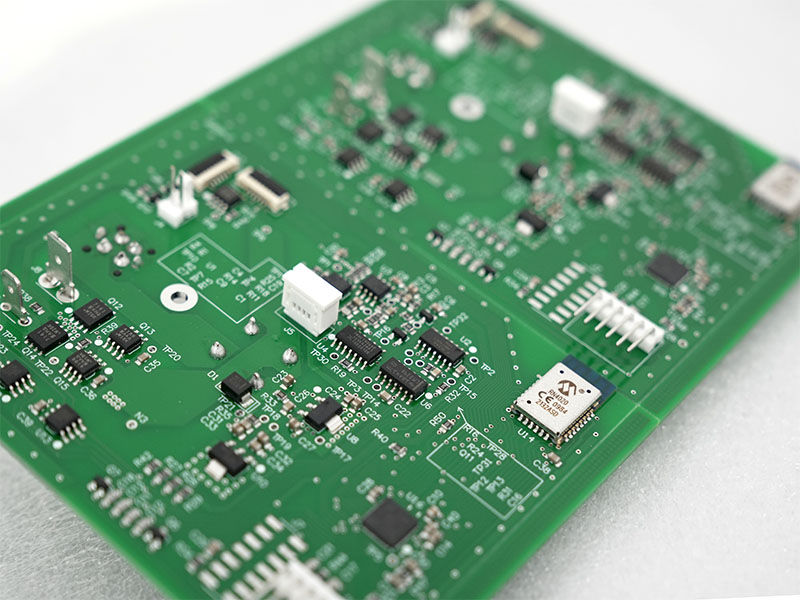
Top 10 Rapid Prototyping PCB Assembly Service Provider in China
In China, rapid prototyping PCB assembly providers are primarily differentiated by the types of PCBs and PCBA applications they focus on, rather than by prototyping speed alone. This specialization directly affects delivery flexibility, engineering depth, and suitability for early-stage validation projects.
Most mainstream manufacturers fall into several clear categories:
- FR4 PCBA manufacturers
Focused on standard multilayer FR4 boards for industrial control, consumer electronics, and embedded systems, where SMT density is moderate and materials are widely available. - Ceramic PCBA specialists
Concentrated on alumina or aluminum nitride substrates for power electronics, LED modules, RF circuits, and high-temperature applications, typically with longer setup and iteration cycles. - Metal-core PCB (MCPCB) and power assembly suppliers
Serving thermal-critical designs such as automotive lighting, power conversion, and high-current products. - Volume-oriented PCBA factories
Optimized for stable BOMs and repeat production, where rapid prototyping is treated as a preliminary step rather than a core engineering service.
Because of these structural differences, not every supplier labeled as “rapid prototyping” is equally suitable for engineering-driven validation, frequent ECOs, or smooth prototype-to-production transitions.
| Company | Delivery Capability | Production Capacity |
|---|---|---|
| EBest Circuit (Best Technology) | ~1.5-week PCBA, strong ECO support | In-house medical PCB + PCBA, high-mix low-volume |
| PCBWay | Fast standard prototyping | Medium, shared lines |
| JLCPCB | Very fast for standard FR4 | High-volume oriented |
| Seeed Fusion | Quick platform-based delivery | Medium, partly outsourced |
| ALLPCB | Competitive prototype lead time | Medium |
| RayMing PCB | Flexible PCB prototyping | Medium, PCB-focused |
| PCBCart | Stable prototype scheduling | Medium, PCB-heavy |
| Hitech Circuits | Advanced multilayer PCB lead time | Large PCB, limited PCBA |
| Kinwong (Prototype Division) | High-end PCB prototyping | Large PCB capacity |
| Sierra Circuits (China sourcing) | Engineering-led, offshore coordination | Distributed capacity |
From an engineering and sourcing perspective, rapid prototyping PCB assembly success depends less on the number of machines and more on how PCB fabrication, PCBA execution, and engineering decision-making are integrated. While many Chinese manufacturers excel in specific board types such as FR4, ceramic, or metal-core PCBs, EBest Circuit (Best Technology) stands out by structuring rapid prototyping around engineering validation, controlled iteration, and future scalability—making early builds a reliable foundation for long-term production.
Core Pain Points When Working With Any Rapid Prototyping PCBA Service Provider in China
Even experienced teams encounter systemic challenges when sourcing rapid prototyping PCBA services.
Common issues include:
- Overreliance on machines without engineering interpretation
- Limited accountability when designs change mid-build
- Poor communication between PCB fabrication and SMT assembly
- Inconsistent documentation across revisions
- Hidden process limits discovered too late
These problems are rarely caused by equipment alone. They stem from process ownership gaps and insufficient engineering oversight during early builds.
How Does Rapid PCB Prototyping Machine Capability Impact Rapid Prototyping PCB Assembly?
Rapid PCB prototyping machine capability influences assembly quality, but it does not guarantee success on its own. Machines define what is possible, while engineering determines what is repeatable.
In real projects, issues often arise not from lack of advanced equipment, but from:
- Incomplete understanding of machine tolerance limits
- Poor coordination between PCB fabrication and SMT parameters
- Inconsistent setup across revisions
- Lack of process learning documentation
At EBest Circuit, machine capability is tightly coupled with engineering rules, MES-based traceability, and controlled setup procedures. This ensures that equipment performance translates into predictable assembly results rather than isolated successes.
What Manufacturing Capabilities Are Required for Rapid Prototyping PCB?
Effective rapid prototyping PCB assembly depends on process coverage, consistency, and execution discipline, rather than speed alone. At EBest Circuit (Best Technology), our rapid prototyping PCB capability is designed to support assembly-ready prototypes that behave like real production boards during validation. Based on nearly two decades of hands-on PCBA experience, the following manufacturing capabilities are essential for delivering reliable, high-quality prototype PCBs under compressed development schedules.
1. Production-Grade Material Coverage From the First Build
A capable rapid prototyping partner must work with the same materials used in production, without relying on limited prototype stock or extended sourcing cycles. Material choice directly affects solderability, thermal stability, and assembly yield during validation.
At EBest Circuit, our material capability is aligned with real product requirements rather than convenience-based substitutions.
- Full FR4 Range:
Standard Tg (130–140°C), High-Tg (170–180°C), and high-CTI materials from qualified suppliers such as Shengyi, KB, and ITEQ, supporting stable reflow behavior and reduced board deformation. - Specialty Substrates:
RF laminates (Rogers, Taconic), multiple Metal Core PCB options (aluminum and copper), and ceramic substrates for RF, power, and LED designs—ensuring prototype assemblies accurately reflect thermal and electrical behavior.
2. Production-Intent Layer Counts and HDI Structures
Modern prototypes are expected to validate final product complexity rather than simplified layouts. Rapid prototyping PCB manufacturing must therefore support production-level stackups and via structures from the outset.
- High Layer Counts:
Prototype builds up to 50 layers, enabling full functional, signal integrity, and power integrity validation. - Microvia Capability:
Laser-drilled microvias down to 0.10 mm (minimum 0.07 mm), supporting dense BGA fan-out and compact routing without compromising assembly reliability. - Advanced Stackups:
Sequential lamination for blind and buried vias, allowing controlled impedance and stable high-speed signal performance during assembly and testing.
3. Dimensional Control for Fine Features
For advanced electronics, dimensional accuracy directly impacts assembly yield and inspection effectiveness. Prototypes must meet tight tolerances consistently to provide meaningful validation data.
- Fine Line Capability:
Standard support for 3.5/4 mil outer layers and 3/3 mil inner layers (1/2 oz copper), with extended capability down to 3/3 mil outer and 2.5/2.5 mil inner layers for demanding designs. - Drilling Accuracy:
Mechanical drilling tolerance of ±0.05 mm and aspect ratios up to 25:1, ensuring reliable plating and consistent via quality in thick and complex boards.
4. Assembly-Compatible Surface Finishes and Special Processes
Surface finish selection has a direct impact on solder joint formation, inspection reliability, and long-term performance. Rapid prototyping must therefore support the same finishes and special processes used in production.
- Standard and Advanced Finishes:
ENIG, Immersion Silver, Immersion Tin, OSP, ENEPIG, and hard or soft gold for edge connectors and gold fingers. - Special Processes:
Copper-filled via-in-pad, resin plugging, and peelable solder mask integrated into accelerated prototype workflows without compromising process control.
5. Compressed Lead Times Without Cutting Process Corners
Speed in rapid prototyping is achieved through process optimization and coordination, not by skipping critical controls.
- Fast PCB Fabrication:
24-hour shipment for 1–2 layer FR4 boards and 48–72 hours for 4–8 layer multilayer boards. - Turnkey Assembly Integration:
Complete PCBA services with component sourcing and SMT assembly in as little as 1–5 days, supporting component sizes down to 01005.
This integration allows PCB fabrication and assembly constraints to be addressed simultaneously rather than sequentially.
6. Quality Control Embedded Throughout the Process
In rapid prototyping, quality must be built into each manufacturing step, as post-process inspection alone cannot recover lost validation time.
- Real-Time Monitoring:
AOI inspection and impedance control with tolerances as tight as ±4 Ω (for <50 Ω traces) during fabrication. - Electrical Verification:
100% flying probe testing to confirm netlist connectivity and ensure functional boards are delivered for engineering evaluation.
In practice, rapid prototyping requires a manufacturer that operates as an engineering partner—one with proven material knowledge, controlled processes, and disciplined execution under time pressure. At EBest Circuit, these capabilities are not aspirational goals; they represent the baseline standards applied to every prototype build. By integrating PCB fabrication, PCBA assembly, and quality control under one roof, we enable faster feedback loops and more meaningful learning throughout the prototyping stage.
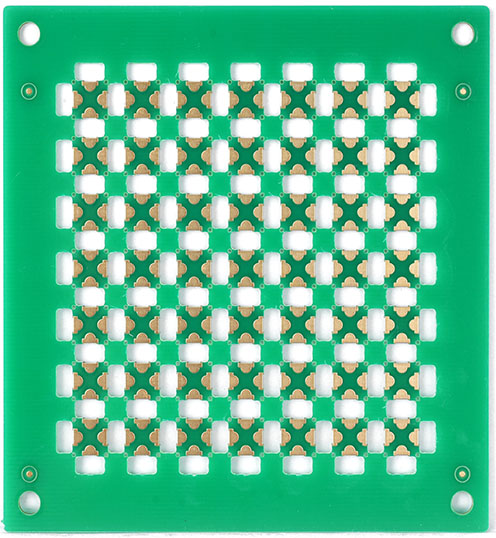
How to Evaluate Rapid Prototyping PCB Assembly Service Providers in China?
When evaluating rapid prototyping PCB assembly providers, engineers should look beyond price and stated lead time.
Critical evaluation questions include:
- Who owns DFM decisions when risks appear?
- Are PCB and PCBA processes truly integrated?
- How are ECOs managed across revisions?
- Is traceability available at the prototype stage?
- Can the provider explain process limits clearly?
A reliable provider will answer these questions transparently and demonstrate how early builds support future scalability.
Why EBest Circuit Excels in Rapid Prototyping PCB Assembly Projects?
EBest Circuit (Best Technology) approaches rapid prototyping PCB assembly with an engineering-first mindset. We avoid getting caught up in a rat race driven purely by pricing and instead focus on manufacturability, learning efficiency, and long-term customer success.
Our strengths include:
- Dedicated three-engineer support per project
- Free DFM review with practical optimization feedback
- In-house PCB fabrication and PCBA assembly
- No MOQ policy supporting true prototyping needs
- MES-enabled traceability and disciplined inventory management
Ultimately, we help engineering teams move from concept to production with clarity, and control.
To summarize, rapid Prototyping PCB Assembly enables engineering teams to validate designs, manage risk, and prepare for scalable production. This article explained how rapid prototyping assembly works in practice, what capabilities truly matter, and how to evaluate reliable service providers. EBest Circuit (Best Technology) delivers engineering-led execution, integrated PCB and PCBA manufacturing, and disciplined processes that support long-term success. For project discussions or inquiries, please contact us at sales@bestpcb.vn.
FAQ: Rapid Prototyping PCB Assembly
What is the typical turnaround time for rapid prototyping PCB assembly?
Most projects are completed within 7–15 working days, depending on design complexity and component availability.
Is rapid prototyping PCB assembly suitable for complex designs?
Yes. It is especially valuable for complex, high-density, or high-risk designs that require validation before scaling.
What files are required for rapid prototyping PCB assembly?
Gerber files, BOM, centroid data, assembly drawings, and test requirements are typically required.
Can rapid prototyping PCB assembly scale into production smoothly?
Yes—when process rules, documentation, and engineering feedback are established early, scaling becomes significantly more predictable.