 language
 english


PCBA Boards Manufacturer with Digital Manufacturing Control
PCBA boards are fully assembled circuit boards where components are mounted and soldered onto a PCB to deliver real, testable electronic functions in end products. This blog explains how a PCBA Boards Manufacturer with Digital Manufacturing Control reduces OEM production risk, improves quality consistency, and accelerates scaling from prototype to mass production.
What Are The Most Pressing Challenges OEMs Face When Bringing A PCBA To Market?
- Process Becomes A “Black Box”: You cannot trace failures back to a specific station, shift, or parameter.
- Parts Risk Spikes: Shortages, alternates, and questionable sourcing disrupt build stability.
- Defects Spread Before They’re Caught: One weak control point turns into batch-level fallout.
- Quotes Don’t Match Reality: Hidden test scope, rework, and material volatility inflate cost later.
- RMA Gets Slow And Costly: No build history means slow diagnosis and repeated failures.
Digital Manufacturing Control turns these issues into measurable, controllable variables across materials, process, test, and shipment.
- Real-Time Traceability And Genealogy: Unit-level records linked to materials, machines, and test results.
- Controlled Sourcing And Incoming QC: Lot/date-code checks, AVL discipline, and risk-based alternates.
- Closed-Loop Quality Gates: SPI/AOI/ICT/FCT gates that prevent escapes and stop the line early.
- Transparent Quote Structure: Clear scope tied to BOM, test coverage, volumes, and yield assumptions.
- Faster RMA Root Cause: Immediate retrieval of build/test history for targeted containment and CAPA.
EBest Circuit (Best Technology) is a professionalPCBA manufacturer with in-housePCB + PCBA capability and a digitally managed shop floor. With a 1+3 technical service team, DFM pre-review, BOM optimization support, qualified systems (ISO 9001/13485, IATF 16949, AS9100D), and a MES-driven traceability workflow that can track materials and lots within seconds, we help OEM teams build with controlled quality and traceability—fromprototype and small batch to long-term production programs. For inquiries, pls feel free to contact us via sales@bestpcb.vn.
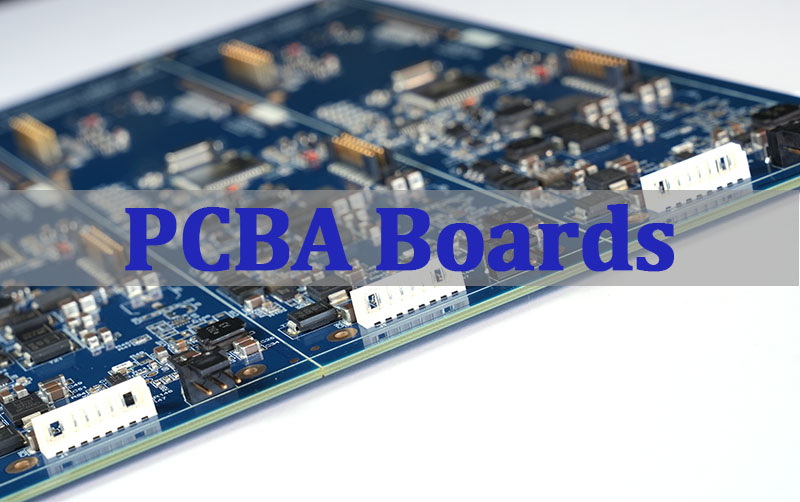
What Are PCBA Boards?
PCBA boards are not “just PCBs”—they are functional assemblies that must perform consistently across batches, builds, and environments, which is why digital control matters from the first run.
Key definition points (quick clarity):
- PCB vs PCBA: PCB is the bare board; PCBA is the populated and soldered assembly.
- Function First: A PCBA board is judged by electrical behavior under load, not by appearance alone.
- Manufacturing Sensitivity: Same design can yield different results if process and sourcing are not controlled.
- Testability Matters: Without defined test points and strategy, mass production risk increases.
- Traceability Adds Accountability: Serial/lot linkage enables fast containment and credible root cause analysis.
Fast comparison:
| erm | What It Means | Typical Decision Point |
|---|---|---|
| PCB | Bare board | Stackup, impedance, materials |
| PCBA | Assembled board | BOM, process windows, test coverage |
In practice, if you are sourcing printed circuit board assembly PCBA for OEM products, treat PCBA boards as controlled manufacturing outputs, not commodities.
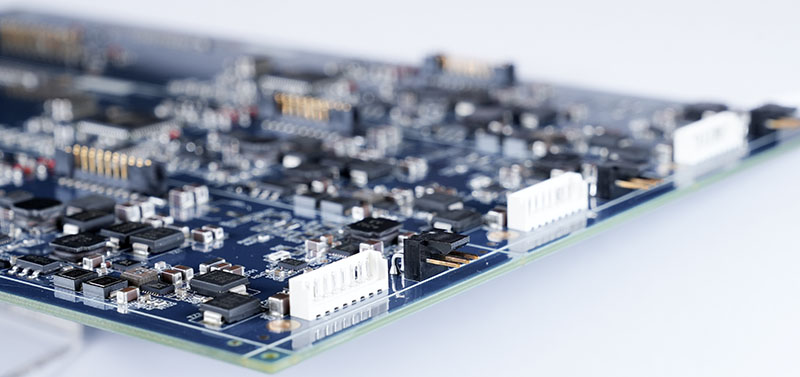
What Capabilities Should A PCBA Board Factory Provide For Mass Production?
Mass production success depends on whether a PCBA board factory can control variability—not only “place parts.”
Core capabilities (decision-grade):
- Digitally Controlled Process Flow: MES routing, enforced stations, real-time WIP visibility.
- Stable SMT Capacity: High-speed pick-and-place, controlled reflow profiles, verified feeders/nozzles.
- Quality Gates That Prevent Escapes: SPI → AOI → ICT/FCT sequence aligned to your risk profile.
- Powerful Incoming Quality Control (IQC): Lot/date-code control, visual + electrical sampling, ESD discipline.
- Engineering-Led NPI: DFM review, stencil strategy, solder joint risk review, first-article signoff.
- Documented Change Control: ECO/ECR handling, revision control, controlled alternates.
- Traceability That Works Under Pressure: 5-second lot and process lookups when issues happen.
As a result, a real mass-production factory is defined by how it controls change, not how it describes equipment.
What Is Included In PCBA Board Manufacturing And Assembly Services?
PCBA board manufacturing and assembly services should cover the full manufacturing chain from build readiness to verified shipment, especially when OEM schedules are tight.
Typical scope (what you should expect):
- DFM + BOM Review: Manufacturability checks and BOM risk flags before build.
- Procurement And Kitting: Authorized sourcing, alternates workflow, and line-ready kits.
- SMT + THT Assembly: Reflow for SMT, wave/hand solder for through-hole as needed.
- Programming And Functional Bring-Up: Firmware loading and product-specific test flow.
- Testing Coverage: AOI/SPI plus ICT or FCT depending on volume and criticality.
- Conformal Coating / Potting (If Needed): For harsh environments and reliability requirements.
- Packaging And Shipment Control: ESD packaging, labeling, and shipment traceability.
Micro-table (what to clarify in a quote):
| Scope Item | Clarify Up Front |
|---|---|
| Test | ICT, FCT, coverage %, fixtures |
| Sourcing | Customer-supplied vs turnkey |
| Yield | Assumptions and rework policy |
In practical manufacturing, strong PCBA board services are defined by verified outputs (test records, yields, traceability), not by vague “one-stop” claims.
Which Industries Commonly Use Automotive PCBA Board Solutions?
Automotive PCBA board programs require controlled manufacturing because product failures become safety and liability events.
Common industry use cases (and what they typically demand):
- Automotive: ECU modules, sensors, power conversion—high traceability and process control.
- Industrial Control Board PCBA: PLC modules, drives, HMI boards—long lifecycle and stable sourcing.
- Medical Equipment PCBA Board: monitoring, diagnostics—documentation, consistency, and disciplined change control.
- Wireless Charger PCBA Board: Qi transmitters—EMI control, coil integration discipline, stable functional test.
- Telecom And Networking: controlled impedance designs—process stability and test coverage.
As a result, these industries select manufacturers who can prove control over materials, process data, and test evidence—exactly where Digital Manufacturing Control creates differentiation.
What Factors Affect PCBA Board Pricing And Quotation Accuracy?
PCBA board pricing is not a single number—it is the result of BOM risk, process complexity, test scope, and volume assumptions, which is why quote accuracy matters as much as quote speed.
Primary pricing drivers (fast scan):
- BOM Cost And Availability: IC lead times, alternates, allocation risk.
- Assembly Complexity: fine pitch, BGAs, double-sided assembly, thermal pads.
- Testing Scope: AOI/SPI only vs ICT/FCT, fixture build, coverage expectations.
- PCB Technology Level: multilayer PCBA board vs high density PCBA boards vs rigid-flex PCBA board vs metal core PCBA board.
- Quality Requirements: documentation, traceability depth, sampling plans.
- Volume And Mix: prototypes vs mass runs; product mix impacts line efficiency.
A quote should clearly state (what to look for in PCBA board quote details):
- Build quantities and assumed yield
- Test method and coverage
- Sourcing model (turnkey vs consigned)
- Rework policy and handling of alternates
In real-world production, accurate quotes come from controlled inputs; Digital Manufacturing Control reduces surprises by tying scope to measurable process and test outputs.
What Determines Whether A PCBA Board Manufacturer Is Suitable For OEM Production?
A PCBA board manufacturer is “OEM-suitable” when it can keep output stable while inputs change—parts, revisions, ramp volumes, and schedule pressure.
OEM suitability checklist (practical, not promotional):
- Traceability Depth: Can you trace board → reel → machine → profile → test result?
- Change Discipline: Controlled alternates and revision management with customer approval workflows.
- Test Ownership: Ability to build and maintain FCT, not only run AOI.
- Supply Chain Reach: Proven sourcing network and risk-based procurement strategy.
- NPI Execution Speed: DFM feedback, first-article control, fast iteration.
- Delivery Reliability: Planning, capacity, and WIP visibility—not just promised lead times.
- Evidence Culture: Reports, logs, and data trails that make problems solvable.
Ultimately, OEMs do not buy “capacity”; they buy repeatability, accountability, and predictable outcomes.
Where Do Customized PCBA Board Projects Most Often Fail In Production?
customized PCBA board projects often fail at the handoff points—where engineering intent meets manufacturing reality.
Most common failure points (and what they usually signal):
- BOM Ambiguity: Missing MPNs, unclear alternates, incomplete AVL.
- DFM Gaps: Poor pad design, thermal imbalance, insufficient spacing for assembly.
- Test Underdefinition: No FCT plan, missing test points, unclear pass/fail thresholds.
- Process Mismatch: Stencil/aperture issues, reflow profile not tuned for component mix.
- Uncontrolled Changes: Silent substitutions or revision drift.
- Weak Traceability: Inability to isolate affected lots when issues appear.
Technically speaking, digital Manufacturing Control reduces failure by enforcing clean data inputs, controlled process flow, and measurable test evidence.
When Does OEM PCBA Board Manufacturing Become A Long-Term Advantage?
OEM PCBA board manufacturing becomes a long-term advantage when the supplier relationship reduces program risk over time—through learning, data, and controlled execution.
Signals you are building a durable advantage:
- Stable Yield Trends: Fewer escapes and lower rework rates across batches.
- Faster Engineering Cycles: DFM + quick iteration from prototype to small batch.
- Predictable Ramp: Smooth scaling without quality drift.
- Supply Chain Resilience: Alternates qualified faster with traceable history.
- RMA Learning Loop: Field returns feed back into process and design improvements.
- Lifecycle Support: Long-term component management and controlled changes.
Across long-running programs, the best OEM programs treat manufacturing data as an asset—Digital Manufacturing Control is what turns routine production into repeatable program performance.
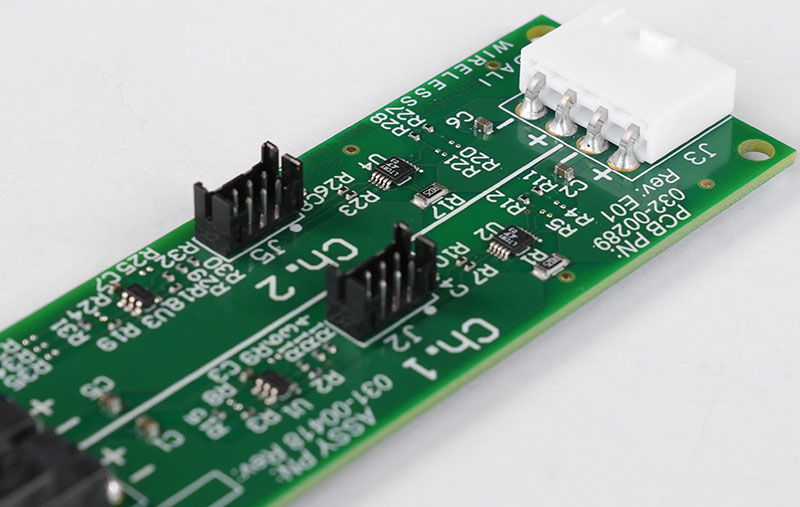
In summary, PCBA boards are the functional core of modern electronics, and their reliability depends on how well manufacturing is controlled, measured, and repeatable. This article showed how OEM teams can evaluate factory capability, service scope, industry fit, pricing drivers, and common production failure points through the lens of Digital Manufacturing Control. EBest Circuit (Best Technology) combines in-house PCB + PCBA, a strong supply chain, engineering-led DFM support, and MES-driven traceability to deliver stable outcomes for prototypes, small batches, and long-term OEM programs. For inquiries, pls contact us via sales@bestpcb.vn.