 language
 Vietnam
 english


The PCBA Custom Manufacturers in the USA
The PCBA custom manufacturers in the USA play a critical role in supporting product innovation across medical, industrial, aerospace, IoT, and emerging technology sectors. This article explains the real capabilities of American PCBA custom manufacturers, how custom PCBA technology is evolving, what drives cost, how defects are controlled, and how to select the right partner for scalable production—while also examining why many US-focused projects increasingly rely on global manufacturing partners.
EBest Circuit (Best Technology) firmly believes that quality is the cornerstone of reliable PCBA manufacturing. We contribute practical, engineering-driven solutions across different PCBA applications by offering informed recommendations tailored to each project’s technical requirements. Our custom services cover an assorted range of PCBAs, including HDI PCBs, heavy copper PCBs, extra-thin PCBs, high-frequency PCBs, and high-speed PCBs. If you require any consultancy service related to custom PCBA solutions, please feel free to contact us at sales@bestpcb.vn.
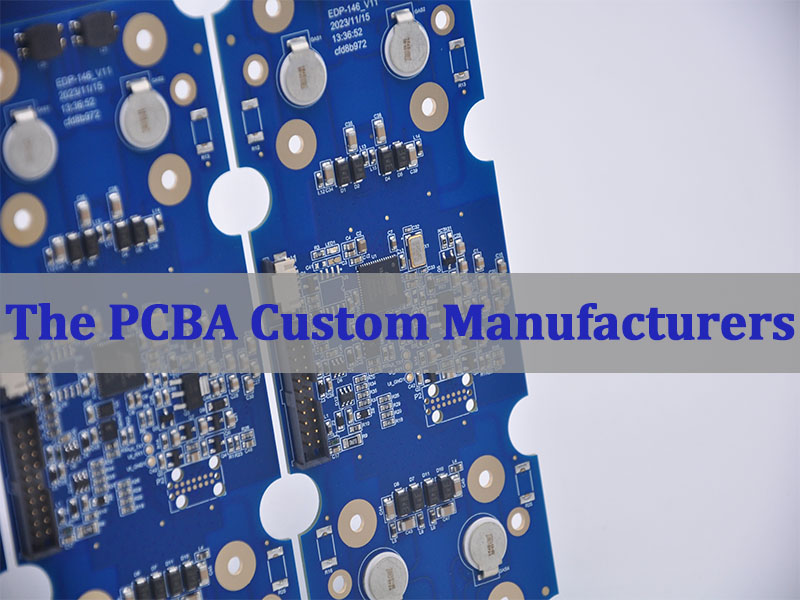
How Is the Capability of the PCBA Custom Manufacturers in the USA
The capability of the PCBA custom manufacturers in the USA is defined less by sheer production volume and more by engineering depth, compliance strength, and proximity to customers. Most US manufacturers focus on high-mix, low-to-medium volume builds rather than mass production.
From an engineering perspective, US-based PCBA custom manufacturers typically excel in:
- Complex BOM handling and frequent ECO changes
- Design-for-manufacturing (DFM) collaboration
- Regulated industries such as medical, aerospace, and defense
- Prototyping, pilot builds, and early production runs
In real manufacturing scenarios, these companies often trade speed and engineering interaction for higher unit cost and limited scaling capacity, which is why many USA projects later transition to hybrid or offshore production models.
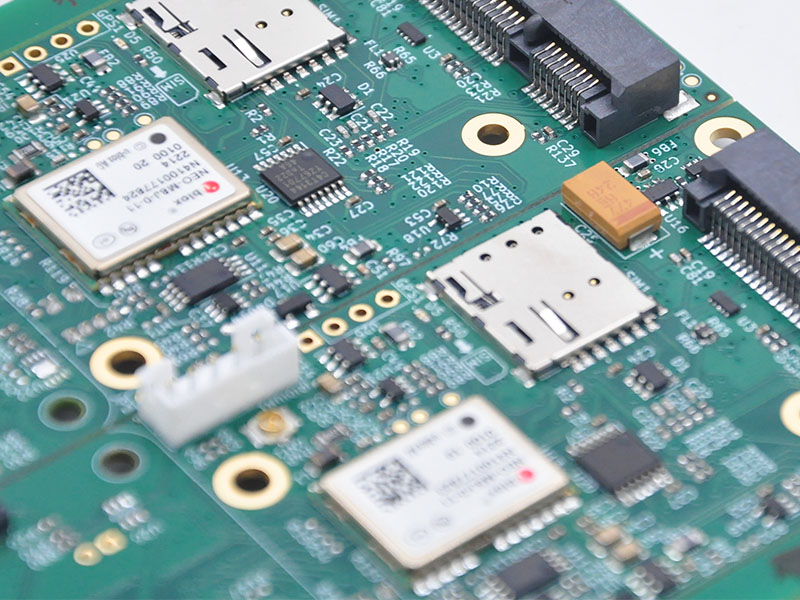
What Is the Future of the Custom PCBA Technology
Custom PCBA technology is moving toward higher integration, tighter tolerances, and deeper digital traceability, driven by shrinking form factors and rising reliability requirements.
Key technology trends shaping the future include:
- High-density interconnect (HDI) and fine-pitch BGA assembly
- Mixed SMT/THT and embedded component designs
- Increased use of MES systems for traceability and yield control
- Design-for-automation to support future scaling
In practice, the future of custom PCBA is less about geography and more about process maturity and engineering discipline, which determines whether a prototype can become a manufacturable product.
How Much Does It Cost to Have a Custom PCBA Made
Custom PCBA cost is driven primarily by engineering effort, setup complexity, and risk, not just component price or labor rate.
Typical cost drivers include:
- BOM complexity and component availability
- NRE costs (programming, tooling, test development)
- Assembly complexity (fine pitch, mixed technology, special processes)
- Inspection and testing depth
This also explains why custom PCBA is often perceived as expensive: early-stage builds absorb disproportionate engineering and setup costs that disappear at scale. Understanding these drivers early helps engineering teams make better cost-versus-risk decisions.
How Many Types of Custom PCBA Are There
Custom PCBA is not a single category but a spectrum of build types shaped by application requirements, board structures, and manufacturing constraints. In practice, custom PCBA can be classified from two complementary perspectives: application-driven builds and PCB type–driven builds.
Classification by Application Scenario
From a product lifecycle and regulatory standpoint, common types of custom PCBA include:
- Prototype and Engineering Validation Builds
Used during EVT/DVT stages to verify functionality, layout feasibility, and assembly risks. - Low-Volume, High-Mix Production
Designed for early market entry, customized equipment, or frequent design revisions. - Medical and Regulated PCBA
Manufactured under controlled processes with strict documentation, traceability, and compliance requirements. - Industrial Control and Automation PCBA
Focused on long-term reliability, wide operating conditions, and stable component sourcing. - High-Power and Thermal-Management PCBA
Optimized for current handling, heat dissipation, and mechanical robustness.
In real projects, a single product often moves across several of these categories before reaching stable production, which makes process continuity and engineering consistency critical.
Classification by PCB Type and Structure
From a manufacturing and design perspective, custom PCBA is also defined by the underlying PCB construction, each introducing different assembly challenges and process controls:
- Single-Sided PCB Assembly
Simple layouts, often used for cost-sensitive or basic control applications. - Multilayer PCB Assembly
Supports dense routing, power integrity, and complex signal interaction in advanced electronics. - Semi-Rigid and Rigid-Flex PCB Assembly
Combines mechanical flexibility with stable interconnections, common in compact and wearable devices. - RF PCB Assembly
Requires controlled materials, impedance consistency, and precise assembly for signal integrity. - High-Tg PCB Assembly
Designed for higher thermal endurance during reflow and long-term operation. - Heavy Copper PCB Assembly
Enables high current carrying capacity and improved thermal performance. - HDI PCB Assembly
Involves microvias, fine-pitch components, and tight tolerances for miniaturized designs. - Extra-Thin PCB Assembly
Demands careful handling, fixturing, and controlled reflow to avoid warpage or damage. - Busbar PCB Assembly
Integrates solid copper conductors for high-current power distribution. - IC Substrate Assembly
Focused on ultra-fine features and advanced packaging interfaces. - High-Speed and Impedance-Controlled PCB Assembly
Requires precise stack-up design, impedance verification, and signal-aware assembly processes.
Understanding custom PCBA through both application intent and PCB structure helps engineering teams select the right manufacturing strategy early. It also ensures that prototype results remain representative of final production behavior, reducing redesign cycles and scaling risks.
In essence, effective custom PCBA is not defined by volume alone, but by how well the assembly process adapts to board complexity, performance requirements, and future production goals.
What Are Common PCBA Defects and How Are They Prevented
Common PCBA defects typically originate from design gaps, process variation, or insufficient inspection, rather than isolated operator error.
Frequently observed defects include:
- Solder bridging and insufficient solder joints
- Tombstoning or component misalignment
- BGA voiding and head-in-pillow defects
- Missing or incorrect components
Prevention relies on disciplined process control:
- Early DFM and DFA reviews
- Controlled stencil design and paste deposition
- AOI, X-ray, and functional testing
- Closed-loop feedback between engineering and production
In practice, defect prevention is a systems problem, not a single-process fix.
Top 10 American PCBA Custom Manufacturers
The USA PCBA market is characterized by engineering-centric EMS providers that emphasize customization over scale. Below is a representative overview of well-known American PCBA custom manufacturers, each with different strengths and market focus.
| Company Name | Core Strength | Typical Focus |
|---|---|---|
| Veris Manufacturing | Aerospace & defense EMS | High-reliability PCBA |
| DCA Manufacturing | Industrial & medical PCBA | High-mix production |
| Bestronics Inc | Complex electronics | Engineering-driven builds |
| Emerald Technologies | Global EMS presence | Regulated industries |
| Impact Electronic Solutions | Industrial EMS | Medium-volume PCBA |
| Valley Electronics | Regional EMS | Custom assemblies |
| Sanmina | Large-scale EMS | Global production |
| Jabil | Tier-1 EMS | High-volume programs |
| Benchmark Electronics | Advanced engineering | Complex systems |
| Plexus Corp | Design-led EMS | Medical & industrial |
While these manufacturers are strong in engineering collaboration, many customers eventually face capacity, lead time, or cost constraints when scaling beyond early production.
Why Choose EBest Circuit as One of the PCBA Custom Manufacturers for the USA Projects
EBest Circuit (Best Technology) supports USA projects as a global PCBA custom manufacturer, combining engineering discipline with scalable production.
Unlike price-driven suppliers, EBest Circuit focuses on process stability and manufacturability from day one, offering:
- Free DFM and process adaptation suggestions
- One-stop PCB fabrication, component sourcing, and PCBA
- No MOQ support for custom and early-stage builds
- ISO 9001, ISO 13485, IATF 16949, and AS9100D systems
- MES-enabled traceability across PCB and PCBA
For USA customers, this model delivers engineering continuity without sacrificing cost or lead time, making it suitable for both custom builds and long-term production. For inquiries or project discussions, pls feel free to contact us via sales@bestpcb.vn.
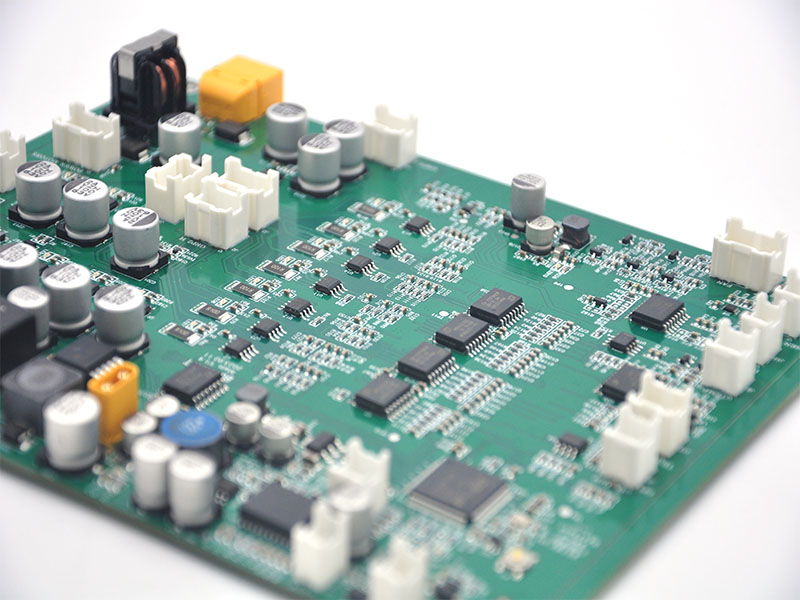
To conclude, the PCBA custom manufacturers landscape in the USA is engineering-strong but scale-limited. By combining US-level engineering rigor with global manufacturing execution, EBest Circuit (Best Technology) helps customers move from custom design to reliable production. For a technical discussion tailored to your application, pls feel free to contact our team at sales@bestpcb.vn.
FAQ About the PCBA Custom Manufacturers
What Is PCBA Manufacturing?
PCBA manufacturing refers to assembling electronic components onto a printed circuit board, including SMT, THT, inspection, and testing.
What Is the Difference Between PCB and PCBA?
A PCB is the bare board, while PCBA is the completed assembly with components mounted and soldered.
Can Custom PCBA Scale to Mass Production?
Yes, if DFM rules, documentation, and process controls are aligned from the prototype stage.
How Do I Start a Custom PCBA Project?
You typically begin with Gerber files, BOM, assembly drawings, and test requirements, followed by an engineering review.